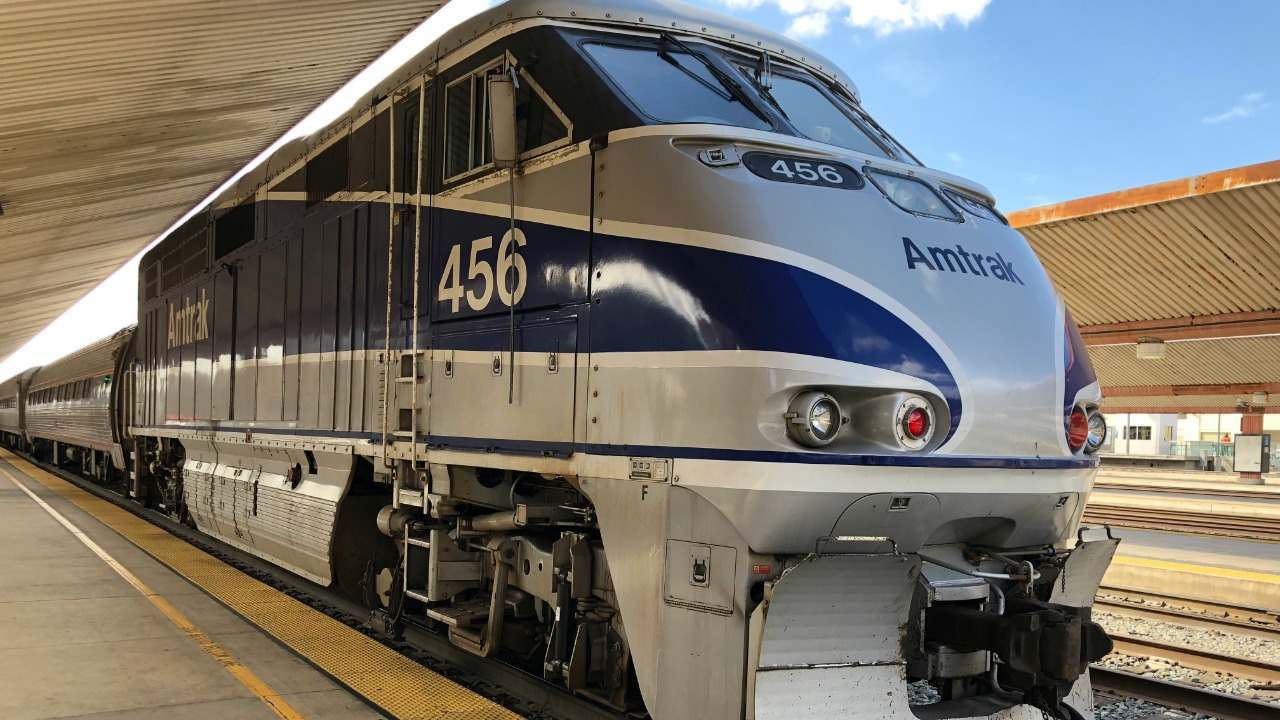
Amtrak is redirecting a significant slice of its executive bonus pool to the people who keep its trains running, handing out $900 holiday payments to union workers after managers agreed to give up half of their own awards. The move delivers a rare year-end windfall to tens of thousands of front-line employees and signals a broader rethink of how the railroad values labor on the ground compared with leadership in the boardroom.
Instead of quietly cutting checks to executives, the company is using the bonus shift to reward the workers who staff trains, maintain equipment, and interact with passengers every day. I see it as a test case for whether a legacy transportation giant can rebalance its internal incentives in a way that feels fair to the workforce while still satisfying political overseers and financial watchdogs.
How $900 bonuses ended up in union paychecks
The core of the story is simple: Amtrak’s unionized employees are receiving $900 holiday bonuses that are being funded by a reduction in management payouts. Over 18,000 union workers are slated to share in this year-end benefit, a scale that turns what might have been a routine executive perk into a systemwide gesture of recognition for the people who actually operate and maintain the railroad’s services, according to reporting on $900 bonuses for 18,000 employees. For many of those workers, the payment will not transform their finances, but it does represent a tangible acknowledgment that their contribution during a turbulent period for national rail travel is being taken seriously.
Another account describes how more than 18,000 unionized Amtrak workers will receive what it characterizes as a $90 payout, a figure that sits awkwardly beside the $900 number but underscores the same basic point: a large group of front-line employees is benefiting from a redirected bonus pool. That discrepancy in reported amounts highlights how the mechanics of the program have been communicated, but both accounts agree that the money is flowing from management’s pocket to the rank and file, with Amtrak Managers Forfeit Bonuses To help fund the expanded Worker Payouts.
Executive cuts, political pressure, and a shift in priorities
The decision did not emerge in a vacuum. At the urging of the current administration, Amtrak’s executive leaders agreed to forgo 50% of their bonus packages, a significant sacrifice for top managers who had grown accustomed to richer incentive structures. Reporting on the internal changes notes that executives will receive only half of what they would have been paid under the previous system, with the freed-up funds redirected to the workforce, a shift described in detail in coverage that explains how leaders will forgo 50% of their bonuses. That kind of top-down haircut is rare in large transportation bureaucracies, where executive compensation often moves in the opposite direction of worker pay.
The political context is just as important as the internal math. The Trump administration has been pushing Amtrak to rethink what the Department of Transportation has described as “misplaced priorities,” pressing the railroad to move money away from executive rewards and toward the front lines. The Transportation Department framed the change as part of a broader effort to align the company’s spending with public expectations, with Trump officials emphasizing that Amtrak should reward the people who interact with passengers and maintain safety standards rather than concentrating incentives at the top. That political pressure, combined with internal union advocacy, set the stage for the current bonus reallocation.
Union pressure and a long campaign to redirect rewards
For organized labor, the bonus shift is the payoff from a long-running campaign. The Transport Workers Union and other labor groups had spent years arguing that Amtrak’s budget should be restructured so that more resources flow to the front lines instead of being locked up in executive compensation. One union account describes how, after sustained pressure, Amtrak finally agreed to redirect executive bonus money to front-line workers, with some executives, including former leaders, voluntarily giving up their awards to help fund the Amtrak $900 bonus. That history matters because it shows that the current payouts are not a one-off holiday gesture but the result of a sustained push to change how the railroad values its workforce.
Some unions have publicly endorsed the decision to distribute the $900 bonuses, framing it as evidence that Amtrak is finally making “real progress” in addressing long-standing concerns about pay equity and recognition. In statements cited in rail industry coverage, union leaders praised the company for listening to their members and redirecting money to the people who keep trains moving, with Some labor representatives highlighting that the $900 figure, while modest compared with executive packages, still represents a meaningful acknowledgment of front-line contributions by Amtrak. That endorsement from organized labor gives the company political cover and suggests that, at least for now, the bonus shift is easing some of the tension between management and the unions that represent its workers.
Reconciling the numbers: 18,000 workers and competing figures
Even as the broad outlines of the program are clear, the reporting contains some conflicting details that are worth unpacking. One account states that Amtrak’s 18,000 workers will receive $900 bonuses funded by executive cuts, presenting a clean narrative in which a large group of employees each receives the same substantial payment. That framing emphasizes the scale of the reallocation, with Amtrak’s 18,000 employees each receiving $900 as part of a deliberate restructuring of the previous executive bonus structure. That version of events underscores the idea that the company is making a clear, quantifiable tradeoff between executive and worker compensation.
Another report, however, describes the payout as $90 for more than 18,000 unionized workers, a figure that is an order of magnitude smaller and suggests either a different tranche of payments or a miscommunication about the exact amount. Both accounts agree on the scale of the workforce involved and on the fact that the money is coming from executive cuts, but they diverge on the size of the individual checks. Based on the available sources, that discrepancy remains unresolved and must be treated as Unverified based on available sources in terms of which exact figure applies to every worker, even as the broader narrative of executives sacrificing part of their bonuses to fund payments for thousands of employees remains consistent.
What this signals for Amtrak’s culture and future labor fights
Beyond the immediate cash in workers’ pockets, the bonus shift sends a cultural signal inside Amtrak about whose work is being prioritized. For years, front-line employees have argued that they bear the brunt of service disruptions, passenger frustrations, and safety risks while executives collect bonuses tied to financial metrics and on-time performance. By redirecting a portion of those executive rewards to union members, the company is implicitly acknowledging that the people who repair tracks, operate locomotives, and staff stations are central to its success and deserve a share of the upside when performance improves. That message is reinforced by the fact that the change came after sustained union pressure and political scrutiny, rather than as a quiet internal adjustment.
At the same time, the move raises questions about whether this is a one-time rebalancing or the start of a more durable shift in how Amtrak structures incentives. If executives are giving up half their bonuses this year, will that sacrifice become the new normal, or will management push to restore the old structure once public attention fades. Unions are likely to treat the $900 payments as a floor rather than a ceiling in future negotiations, pointing to the current program as proof that the company can afford to share more of its rewards with the people who keep trains running. For a publicly supported railroad that sits at the intersection of politics, labor, and national infrastructure, the answer to that question will shape not just paychecks, but the broader relationship between leadership and the workforce for years to come.
More From TheDailyOverview

Grant Mercer covers market dynamics, business trends, and the economic forces driving growth across industries. His analysis connects macro movements with real-world implications for investors, entrepreneurs, and professionals. Through his work at The Daily Overview, Grant helps readers understand how markets function and where opportunities may emerge.

