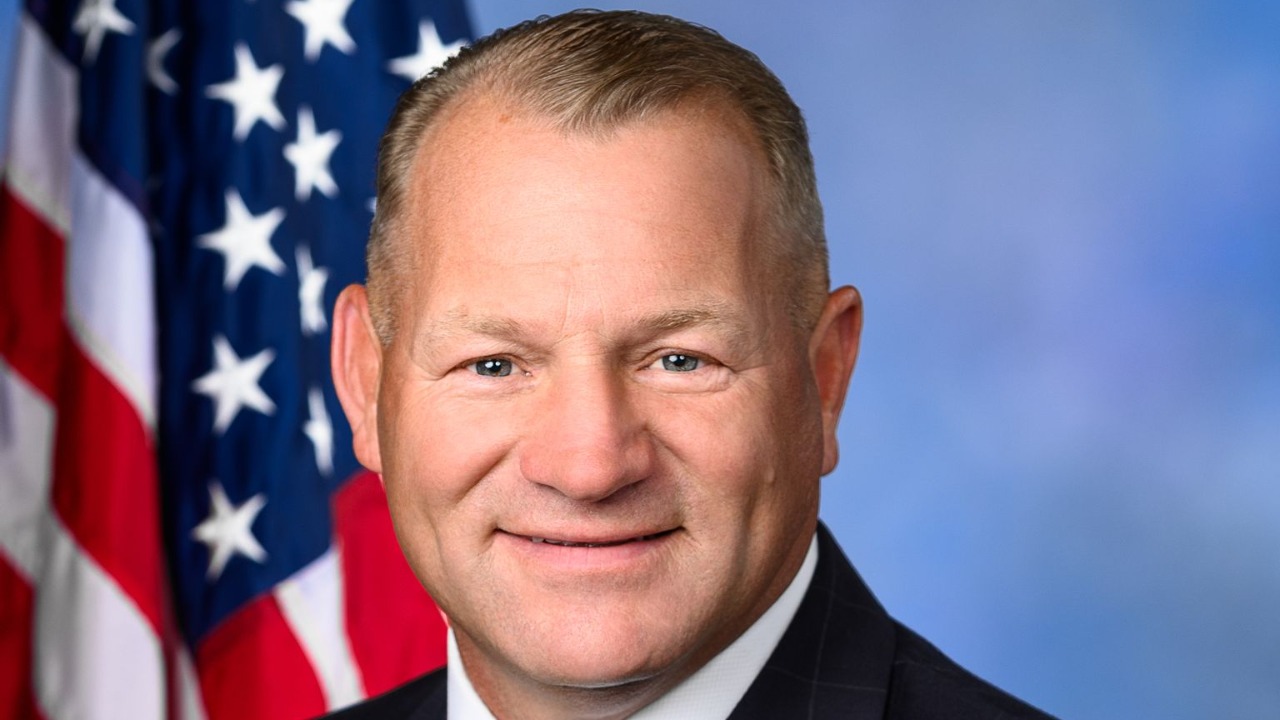
Rep. Troy Nehls of Texas is stepping away from Capitol Hill, removing one of President Donald Trump’s most vocal House allies from the next Congress and opening a rare vacancy in a deep-red district. His decision to retire at the end of his current term adds another name to a growing list of Republicans opting out of reelection, even as the party fights to hold a narrow majority.
Nehls’ exit is not a quiet fade into the background. By signaling his plans to leave while encouraging his identical twin brother to run for the seat, he is trying to shape both the future of his district and the direction of a Republican conference that has been defined by loyalty to Trump and escalating internal strain.
Why Troy Nehls is walking away now
Rep. Troy Nehls chose to make his move public in late Nov, telling supporters that this would be his last term in Congress and that he would not seek reelection in 2026. In doing so, he joined a wave of Republican lawmakers who have concluded that the current House environment, marked by constant leadership battles and narrow margins, is no longer where they want to spend their political capital, a trend that has been documented as a growing list of GOP departures from Congress. He framed the decision as a capstone to his current service rather than a repudiation of his party, but the timing underscores how many Republicans are reassessing their future in Washington.
Several accounts describe Nehls as a loyalist who wanted to manage his exit on his own terms, not under pressure from leadership or primary challengers. Reporting notes that the Republican US Representative Nehls, identified in one dispatch as Republican US Representative Nehls, was first elected in 2020 and is now choosing to step aside rather than extend his tenure into another cycle. That relatively short stint, combined with his high profile in conservative media, suggests he sees more opportunity outside the grind of committee hearings and procedural fights than within them.
A Trump ally signals his departure directly to the president
What sets Nehls apart from some of his departing colleagues is how closely he has tied his political identity to President Donald Trump of. Before he went public, Nehls said he notified President Donald Trump of his plans, a courtesy that underscores how central Trump has been to his brand and how carefully he wanted to manage the optics of leaving. That detail, reported in coverage of the announcement, highlights that Rep. Troy Nehls still sees alignment with the president as a political asset, even as he exits the House.
His decision landed on Nov 29, 2025, the same day multiple outlets noted that Republican U.S. Rep. Troy Nehls of Texas says he will retire in 2026, placing his departure squarely in the middle of a high-stakes election cycle. That timing means Trump and House Republicans will have to navigate a transition in a district that has been a reliable source of support for the president, even as they try to expand their majority. The fact that Troy Nehls of Texas is leaving while remaining firmly in Trump’s camp illustrates how the former president’s influence can coexist with, and sometimes accelerate, churn inside the Republican ranks.
A twin brother steps forward to keep the seat in the family
Nehls is not simply walking away and leaving an open field behind him. After Nehls announced his plans to retire, his identical twin brother, Trever Nehls, quickly declared that he would run for the seat, signaling an effort to keep the district’s representation within the family and within the same ideological lane. That succession plan, described in detail in coverage that notes how After Nehls made his move his brother stepped up, suggests that local Republican power brokers are not eager to see a major shift in the district’s political posture.
In practical terms, Trever Nehls’ entry gives GOP voters a familiar name and a clear signal that the next representative is likely to mirror Troy Nehls’ approach on Trump, border security and party infighting. Reporting on the retirement notes that after Nehls announced his plans to retire, his identical twin brother, Trever Nehls, said he would be running for his brother’s seat, a detail that has been highlighted as part of the broader narrative about how Trever Nehls aims to “take up that fight.” For a district accustomed to a certain style of combative conservatism, the handoff from one twin to another could feel more like continuity than change.
Part of a broader Republican exodus from Congress
Nehls’ retirement is not happening in isolation. On the same day he made his plans public, national coverage pointed out that Republican Rep. Troy Nehls announced he will not seek reelection, becoming the latest lawmaker to leave Congress as a wave of defections intensify. That framing, which describes him as Republican Rep Troy Nehls, places his decision squarely within a pattern of Republicans who are either exhausted by the constant brinkmanship or calculating that their political futures are brighter outside the House.
Local and regional outlets have echoed that theme, noting that U.S. Rep. Troy Nehls, a Fort Ben County Republican in his third term in Cong, is leaving after the current Congress and that his brother wants to replace him. That description of Troy Nehls as a longtime Fort Ben County Republican in his third term in Cong underscores how even relatively entrenched incumbents are choosing to exit rather than ride out another tumultuous session. When a member who has aligned himself so closely with Trump and conservative media decides to step aside, it reinforces the sense that the pressures inside the House are reshaping careers, not just policy debates.
What Nehls’ exit means for Texas and Trump’s GOP
For Texas Republicans, Nehls’ departure introduces both risk and opportunity. The district has been reliably conservative, but any open seat can attract ambitious challengers and test the strength of local party structures. Coverage that describes Rep. Troy Nehls of Texas announcing he will not seek re-election in 2026, and notes that his identical twin brother is running to replace him, makes clear that the goal is to keep the seat firmly in Republican hands and maintain a strong pro-Trump voice in the delegation. The fact that Rep. Troy Nehls of Texas is stepping aside while trying to engineer a smooth handoff shows how seriously state Republicans take the prospect of any opening that could, even theoretically, give Democrats an opening to compete.
Nationally, Nehls’ move adds another data point to the story of a party in flux. A video segment on his announcement notes possible changes in Congress as representative Troy Nells, described as a longtime Fort Ben County Republican in his third term in Cong, prepares to leave, highlighting how his exit feeds into broader questions about who will define the next generation of GOP leadership. That portrayal of Troy Nells as both a local fixture and a symbol of change captures the tension facing Trump’s GOP: even as the former president maintains a firm grip on the party’s base, the roster of lawmakers willing to endure the daily grind of governing under his banner is shifting, one retirement at a time.
More From TheDailyOverview
- Dave Ramsey says these two simple questions show whether you’re rich or poor
- Retired But Want To Work? Try These 18 Jobs for Seniors That Pay Weekly
- IRS raises capital gains thresholds for 2026 and what’s new
- 12 ways to make $5,000 fast that actually work

Grant Mercer covers market dynamics, business trends, and the economic forces driving growth across industries. His analysis connects macro movements with real-world implications for investors, entrepreneurs, and professionals. Through his work at The Daily Overview, Grant helps readers understand how markets function and where opportunities may emerge.

