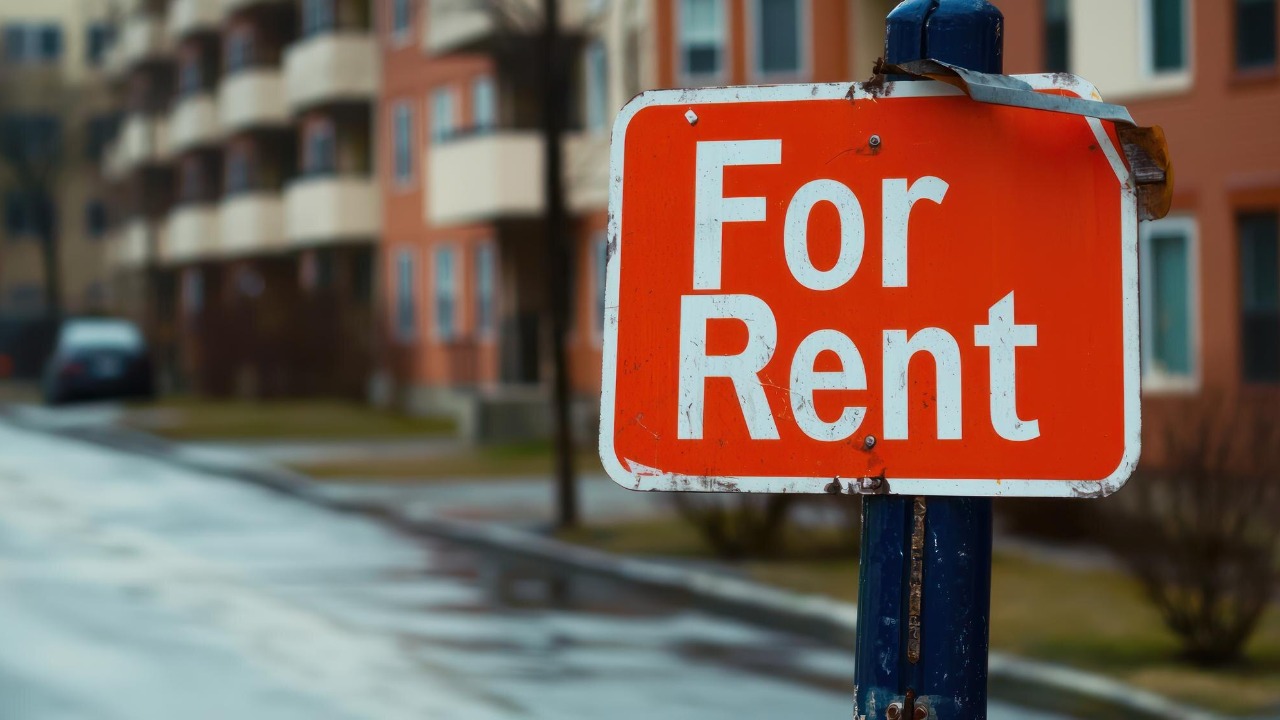
Apartment tenants are finally gaining some leverage. After years of relentless increases, typical lease costs are slipping while empty units pile up to levels not seen in the current data era. The shift reflects a rental market that has swung from scarcity to surplus, with national trends now pointing to softer pricing and record vacancies.
The national median rent has fallen again, and the share of unoccupied apartments has climbed to a new peak, signaling a decisive turn in the balance of power between landlords and renters. The question now is how long this window of relief will last, and how both sides of the lease adapt to a market that suddenly looks very different from the one that dominated the first half of the decade.
Rents are slipping as vacancies hit a record
The clearest signal of the shift is that typical asking prices are no longer grinding higher month after month. The national median rent dropped by 1.0 percent in November, a modest move on its own but a meaningful reversal after years of steady gains, and it came as vacancies reached a record high for the index that tracks them, a combination that would have been hard to imagine during the recent housing crunch. That pattern of falling prices alongside swelling empty units is now being reported across the country as part of a broader trend of Rent Drop Continues conditions that are reshaping negotiations between landlords and tenants.
Apartment buildings are feeling the pressure most acutely. Apartment rents continued to edge lower as multifamily vacancies hit new highs, a pattern that is especially visible in large professionally managed properties where owners track occupancy and pricing in real time. For mortgage professionals and multifamily investors, the fact that Rents are sliding while empty units accumulate is forcing a reassessment of revenue projections and debt coverage assumptions that were built on the expectation of ever-rising lease rates.
New supply and weaker demand are driving the imbalance
The record vacancy rate is not a mystery. A massive influx of new units has arrived on the market at the same time that demand has cooled, leaving more doors unlocked and lights off in buildings that only recently opened. According to one detailed assessment of the American rental market under pressure, this situation is explained by that surge in new construction colliding with a fragile labor market and softer household formation, a combination that leaves landlords competing for a smaller pool of qualified tenants.
Earlier this year, the national multifamily vacancy rate rose to 7.1% in July, a multiyear high that signaled just how quickly conditions were loosening. That figure, drawn from Apartment List data, marked a sharp contrast with the tight conditions that defined the pandemic-era rental surge. As new buildings lease up more slowly than expected and existing properties see more move-outs, owners are increasingly turning to concessions, shorter lease terms, and lower asking rents to keep occupancy from slipping further.
What record vacancies mean for landlords’ bottom lines
For property owners, high vacancy is not an abstract statistic, it is a direct hit to income and asset performance. A core principle of rental investing is that the vacancy rate directly impacts rental income and property performance, since every empty unit represents lost revenue and a drag on returns. As one guide for owners puts it, Vacancy Rate Directly Impacts Rental Income and Property Performance, which is why landlords are now scrutinizing pricing, marketing, and amenities to protect occupancy in a softer market.
In practical terms, that means owners are being pushed to make strategic adjustments rather than simply raising rents at renewal. Some are trimming asking prices or offering a free month to bring effective rents down without cutting headline numbers, while others are investing in upgrades like in-unit laundry or better common spaces to stand out in a crowded field of new buildings. The pressure is particularly acute for leveraged investors who underwrote deals assuming near-full occupancy and steady rent growth, and who now must navigate a landscape where higher vacancies and lower rents are compressing net operating income even as financing costs remain elevated.
Why high vacancies do not automatically solve the housing shortage
It might be tempting to read record vacancies as proof that the housing shortage is over, but the relationship is more complicated. A thoughtful analysis of what vacancy rates really signal about scarcity notes that they can move for reasons that have little to do with long term supply, such as short term demand shocks or shifts in household size. As one What Vacancy Rates Tell You About discussion explains, this simple thought experiment illustrates that a market can have a high vacancy rate and still be unaffordable if the available units do not match what residents need in terms of price, size, or location.
That nuance is crucial in the current cycle. Many of the empty apartments are in newly built, amenity-rich properties that target higher income renters, while lower cost units in older buildings remain tight. The result is a split market where some tenants can negotiate better deals in new towers, but others still struggle to find anything affordable near jobs, schools, or transit. High vacancies in one segment do not automatically translate into relief for households that are already stretched, which is why policymakers and advocates continue to focus on how to expand the stock of truly affordable homes even as the overall rental market loosens.
How the national rent slide is playing out on the ground
The national numbers are striking, but the lived experience of renters and landlords is shaped by local dynamics. Over the summer, the rise to a 7.1% vacancy rate coincided with reports of apartment rents dropping in July as vacancies moved to a multiyear high, a turning point that signaled the market was starting to favor tenants in more places. By late in the year, the national median rent for apartments fell 1% in Novemb, and vacancies climbed to a record high, a combination that highlighted how quickly the pendulum had swung from scarcity to surplus in many cities, according to detailed tracking of Apartment rents and occupancy.
Some regions are feeling the shift more sharply than others. Markets that saw the most aggressive construction booms, especially in fast growing Sun Belt metros and certain downtown cores, now face the steepest competition for tenants, while areas that added fewer units or still attract strong in-migration remain relatively tight. At the same time, a separate look at how Apartment rents drop further with vacancies at record high underscores that some of the softest conditions and weakest demand were in the Midwest, where new supply and slower population growth are combining to push landlords into deeper discounts and more generous concessions.
What comes next for renters and owners
For tenants, the current environment offers a rare chance to push back on automatic increases and shop around. With the national median rent having already slipped and vacancies at a record high for key indices, many renters can now negotiate smaller hikes, ask for upgrades, or move into buildings that would have been out of reach when competition was fiercer. The fact that Vacancies are at a Record High gives tenants more leverage than they have had in years, particularly in large multifamily properties where owners are under pressure to keep occupancy up.
For landlords and investors, the adjustment will likely continue into the next leasing season. Those who respond quickly by aligning asking rents with local realities, improving property management, and targeting the right tenant segments will be better positioned to ride out the soft patch. Others who cling to peak-era pricing or ignore the signals from rising vacancies risk longer periods of lost income and weaker property valuations. As the market digests the recent construction wave and the broader economy finds its footing, the balance between rent levels and vacancy rates will determine whether this period of relief for renters becomes a brief pause or a more durable reset in the cost of apartment living.
More From TheDailyOverview
- Tennessee loses $2.6B megafactory and faces major layoffs
- Retired But Want To Work? Try These 18 Jobs for Seniors That Pay Weekly
- What to do with your pennies after the U.S. stops minting them
- Home Depot CEO warns of a troubling customer trend in stores

Elias Broderick specializes in residential and commercial real estate, with a focus on market cycles, property fundamentals, and investment strategy. His writing translates complex housing and development trends into clear insights for both new and experienced investors. At The Daily Overview, Elias explores how real estate fits into long-term wealth planning.