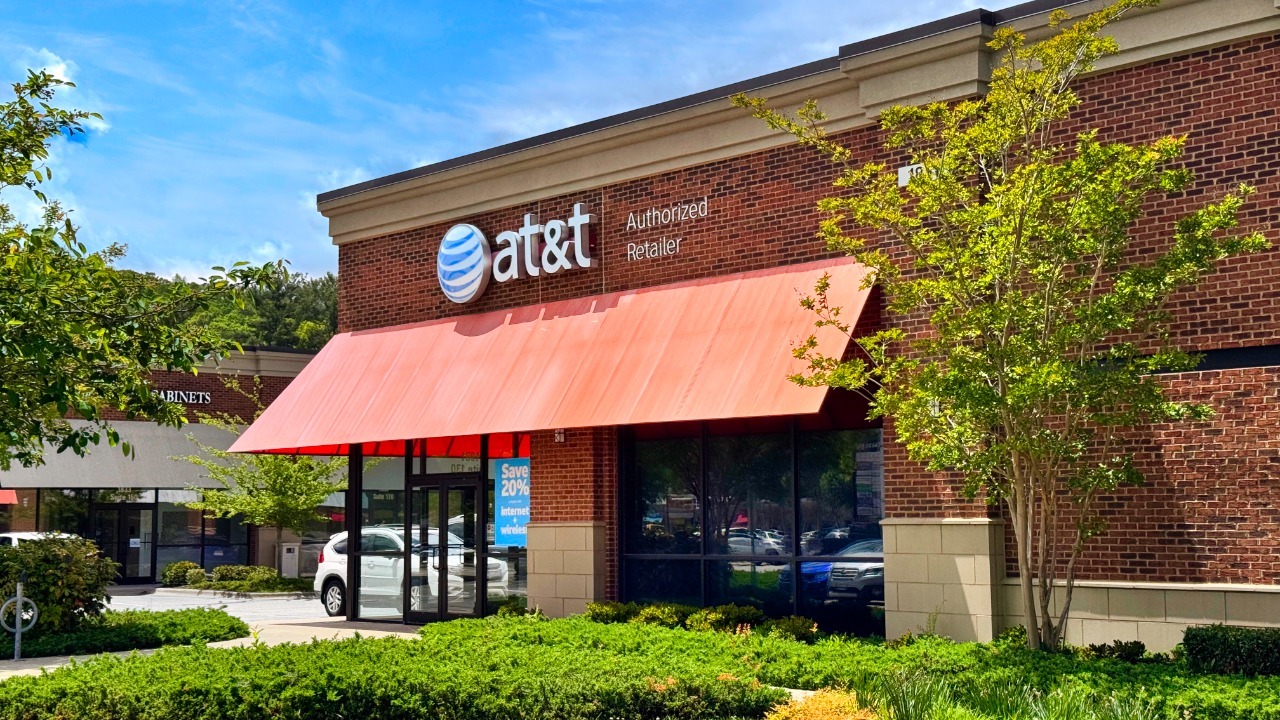
AT&T is again raising the cost of staying online, even as its core business delivers hundreds of millions of dollars in fresh revenue and steady profit growth. The company’s latest round of price increases has landed badly with customers, who are venting across social media and warning they are ready to walk.
I see a widening gap between how AT&T talks about investment and inflation, and how its subscribers experience yet another higher bill. The numbers from its earnings reports tell one story of disciplined growth, while the reaction from living rooms and Reddit threads tells another, angrier one.
AT&T’s new $5 internet hike lands on already stretched households
The latest increase is simple and blunt: AT&T is adding another five dollars a month to most home internet plans, a flat charge that hits every bill the same way regardless of income or usage. For a typical family already juggling streaming subscriptions, cloud backups and remote work, that extra fee is not abstract, it is one more fixed cost that cannot easily be cut without losing a basic utility. The move follows what has already been described as a second straight rise in monthly charges, turning what might have been dismissed as a one off into a pattern of steadily more expensive connectivity.
Customers are being told that this is part of a broader adjustment to pricing, but the practical effect is that their internet bill is simply more expensive again. Reports describing how AT&T Hits Customers with a Second Straight Internet Hike underline that this is not a targeted surcharge on heavy users or a premium tier, it is a broad based increase that sweeps in long time subscribers and casual browsers alike.
Exceptions and fine print: who escapes the latest increase
Not everyone will feel the higher charge immediately, and that uneven impact is part of what is frustrating loyal customers. People who signed up for AT&T home internet within the past year are being given a temporary reprieve, a kind of grace period that shields them from the new rate for now. That carve out effectively rewards newer sign ups while leaving long standing subscribers, who have already weathered previous adjustments, to absorb the full effect of the latest change.
The company’s own language around these carve outs makes clear that there are some exceptions to the latest cash grab, but that the broader trend of rising connectivity costs is expected to continue across the industry. The description that There are some exceptions for certain Customers, paired with an expectation that similar moves will ripple through competitors, suggests AT&T is betting that subscribers will have nowhere cheaper to go for comparable service.
Revenue growth and the $800M question
Behind the billing changes sits a company that is not in crisis but in controlled expansion. AT&T’s latest quarterly results show that its Total Revenue Growth reached 1.6% year over year, a modest but real increase that translates into hundreds of millions of additional dollars flowing into the business. That same period delivered Adjusted EBITDA Growth of 1.6% and 2.4% respectively, a sign that profitability is improving even as the company spends heavily on fiber and 5G infrastructure.
When a firm is adding something on the order of $800 million in extra revenue while also lifting monthly bills, it invites scrutiny about who is really being asked to tighten their belt. The narrative from executives is that higher prices are necessary to fund network upgrades and keep pace with inflation, yet the combination of rising revenue and rising charges makes many subscribers feel they are underwriting shareholder friendly metrics rather than essential investment. The fact that both Total Revenue Growth and Adjusted EBITDA Growth are positive reinforces the perception that AT&T is choosing to lean on its customer base at a time when its own financial footing looks relatively solid.
“Another $5 Bite”: how the hike hits real budgets
For households, the label that sticks is not a percentage growth figure but the phrase that this is “Another 5 dollar Bite” out of their monthly budget. The new increase applies across all home internet plans, which means a retiree on a basic tier and a gamer on a gigabit line both see the same extra charge. Over a year, that is sixty dollars more for the same connection, enough to cover a month of a mid tier streaming service, a year of a password manager like 1Password, or a couple of tanks of gas for a 2018 Honda Civic.
Analysts have already framed this as yet another five dollar step up in a series of adjustments, a pattern that chips away at disposable income in increments that are small individually but significant in aggregate. The description of the latest move as Another $5 Bite captures how it feels to customers who have watched their internet bill climb from, say, 60 dollars to 70 and now 75 without any obvious new benefit. For families running multiple laptops, smart TVs and game consoles, there is no easy way to trim usage to offset the increase, so the only real options are to pay up or start shopping for a different provider.
Customer backlash: anger spills into public view
The reaction from subscribers has been swift and visceral, particularly in online communities where AT&T customers compare notes on their bills. One widely shared post describes how a user “Just got an email” announcing that the price of their Internet service will go up again in December, prompting dozens of replies from people who say they are seeing the same notice. The tone in these threads is not resigned, it is openly hostile, with long time customers accusing the company of taking advantage of their limited choices.
Scrolling through the comments, what stands out is how many people say this is the second or third increase they have endured in a relatively short span. Some talk about downgrading speeds, others about switching to cable or fixed wireless alternatives, and a few simply vent that they feel trapped because AT&T is the only viable high speed option in their neighborhood. The viral thread titled “Looks like another price increase” on Internet Just got an email captures that mix of frustration and resignation, with users emphasizing that their bills are going up AGAIN while their service remains essentially unchanged.
Profits, EPS and the optics of charging more
AT&T’s earnings figures add another layer to the backlash, because they show a company that is not merely surviving but hitting its financial targets. The firm’s Earnings Summary for the same quarter that saw the latest price moves reports an EPS of $0.54, a result that met analysts’ expectations and underscored management’s message of disciplined execution. For investors, that is reassuring. For customers staring at a higher bill, it can feel like confirmation that their monthly payments are being used to polish earnings per share rather than to fix dead zones or improve customer service.
When a company is able to report a solid EPS while also rolling out broad based price increases, it raises questions about balance and fairness. I hear from readers who say they do not begrudge AT&T a profit, but they do question why a business that is already delivering on its Earnings Summary needs to squeeze another five dollars from every household. The juxtaposition of a tidy $0.54 EPS with a new line item on the bill is part of what makes the current round of hikes feel less like a response to crisis and more like a strategic choice to lean on a captive customer base.
Risk of defections: how far can AT&T push before people leave
Price increases are always a gamble in a competitive market, and AT&T’s latest moves are no exception. Industry analysts have warned before that aggressive hikes could send frustrated subscribers into the arms of rivals, particularly in areas where cable or 5G home internet is a viable alternative. One expert, Entner, estimated that a large portion of AT&T’s customer base, likely tens of millions of people, would be affected by earlier price moves, and warned that some of them would inevitably look to Verizon or others if they felt pushed too far.
The question now is whether the cumulative effect of multiple five dollar increases, combined with the removal of certain discounts, will finally tip the balance for those on the fence. In urban and suburban markets where fiber from AT&T competes with cable from Comcast or Spectrum and wireless home internet from T Mobile or Verizon, even a modest price gap can be enough to prompt a switch, especially when promotional offers throw in free hardware or streaming bundles. If the perception hardens that AT&T is habitually raising rates while rivals hold steady or offer sweeter deals, the risk is that the company trades short term revenue gains for long term erosion of loyalty.
From inflation excuse to “test for carriers”
AT&T has framed previous price increases as a response to inflation and rising costs, a narrative that resonated during the pandemic when supply chains were snarled and labor was tight. At that time, industry observers described the wave of hikes as a kind of Test for carriers, a way to see how much they could raise rates without triggering a surge in cancellations. The pandemic period also produced record low wireless churn, because While people were locked at home they were less inclined to shop around or risk service disruptions.
Those conditions have changed, but the habit of leaning on inflation as a justification has lingered. The earlier framing of the situation as a Test for the industry, with churn suppressed While customers stayed put, helps explain why AT&T may feel emboldened to keep nudging prices higher. Yet as inflation cools and more people regain the confidence to switch providers, the old rationale wears thin. I hear more skepticism now when executives cite cost pressures, especially from subscribers who see their own wages stagnate while their telecom bills climb.
Discounts disappear and cross subsidies resurface
The latest five dollar hike is not happening in isolation. Earlier this year AT&T moved to eliminate a key discount that many customers had come to rely on, one that reduced their bill based on how they paid. Starting with upcoming billing cycles, those who previously qualified for that break will see their charges rise, in some cases by roughly the same five dollar amount that is now being added to internet plans. An AT&T spokesperson, Kyle Loomis, has already acknowledged that certain customers who received those discounts will be hit with higher charges as the policy changes take effect.
For affected households, the combination of a lost discount and a new surcharge can feel like a double blow. Someone who once enjoyed a small reduction for autopay or paperless billing might now find that advantage wiped out, replaced by a higher baseline rate. Reporting that AT&T customers who receive discounts will see that benefit phased out Starting later this year underscores how the company is methodically closing off avenues that once softened the blow of higher sticker prices. In effect, AT&T is tightening the screws on both sides of the ledger, raising list prices while also trimming the incentives that kept some customers feeling valued.
Urban versus rural: who shoulders the heaviest load
There is also a structural question about who ends up subsidizing whom as AT&T adjusts its pricing. Regulatory filings from earlier eras of telecom reform show how companies have long balanced the economics of serving dense cities versus sparsely populated rural areas. Based on the numbers of city customers versus country customers under certain wholesale pricing regimes, operators have argued that higher charges in one segment are needed to support universal service obligations in another. That logic has not disappeared, even if it is rarely spelled out on a monthly bill.
In practice, that can mean urban and suburban subscribers, who are cheaper to serve and more profitable per mile of fiber, end up cross subsidizing harder to reach communities. The language in one filing that begins Based on the distribution of customers under ULL rules, and references a USO fund that purports to address those imbalances, hints at the complexity behind what looks like a simple five dollar hike. When AT&T raises prices across the board, it is not only padding margins, it may also be shoring up the economics of serving less profitable regions, a reality that does little to soothe city dwellers who feel they are paying more so others can stay connected.
More From TheDailyOverview
- Tennessee loses $2.6B megafactory and faces major layoffs
- Retired But Want To Work? Try These 18 Jobs for Seniors That Pay Weekly
- What to do with your pennies after the U.S. stops minting them
- Home Depot CEO warns of a troubling customer trend in stores

Silas Redman writes about the structure of modern banking, financial regulations, and the rules that govern money movement. His work examines how institutions, policies, and compliance frameworks affect individuals and businesses alike. At The Daily Overview, Silas aims to help readers better understand the systems operating behind everyday financial decisions.

