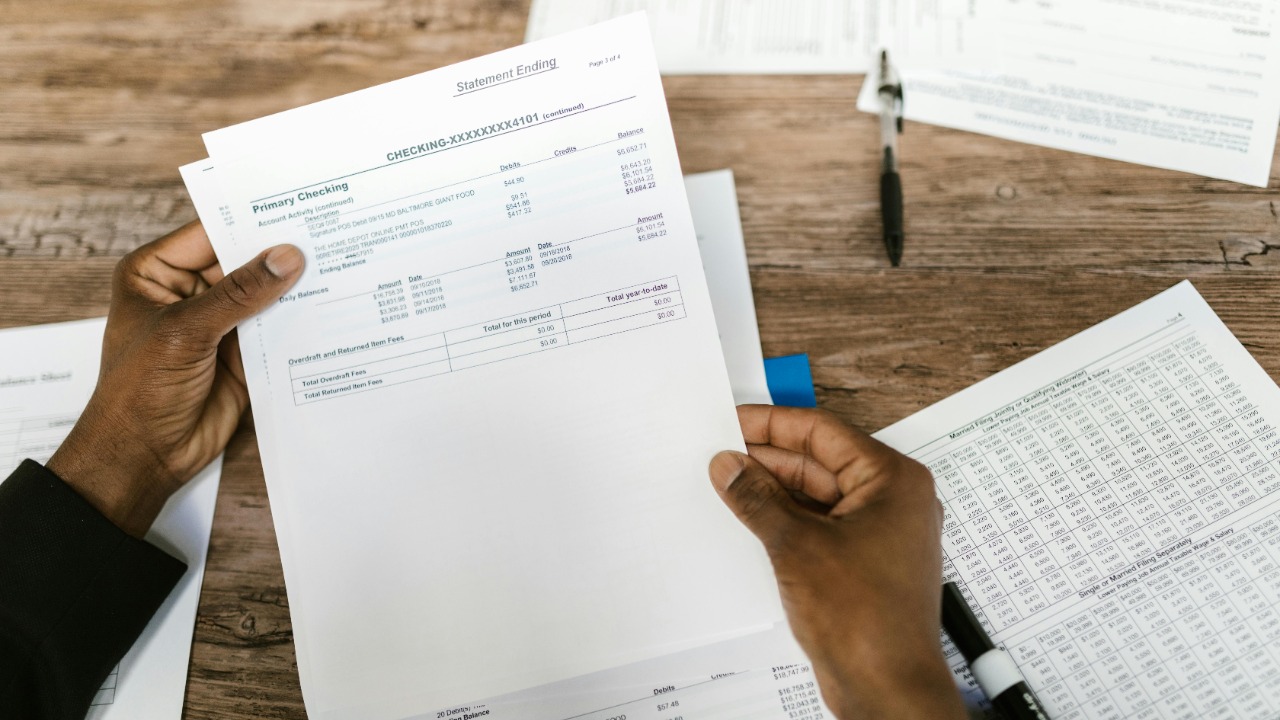
Bank statements are the kind of paperwork that quietly piles up until a drawer will not close or a downloads folder turns into a maze. Knowing exactly how long to keep those records, and when it is safe to get rid of them, is not just a decluttering exercise, it is a way to protect yourself in tax audits, billing disputes, and identity theft cases. I look at bank statements as a bridge between your day‑to‑day spending and your long‑term financial history, and the key is deciding which parts of that bridge you still need.
Why bank statements matter more than they look
On the surface, a bank statement is just a monthly snapshot of deposits, withdrawals, and fees. In practice, it is often the cleanest record you have of income, recurring bills, and big purchases, which means it can double as proof of payment, proof of assets, or a backup log when an app or merchant system fails. When I review my own statements, I am not only checking for fraud, I am also confirming that rent, utilities, and loan payments actually left my account and landed where they were supposed to.
Those same records can become crucial evidence later. Detailed transaction histories help document income, deductions, and business expenses that feed into your tax return, and they can support claims about when a debt was paid or a refund was received. Guidance on bank statements stresses that they are often used to substantiate financial information that might otherwise be scattered across multiple apps and receipts, which is why tossing them too early can leave you scrambling when a lender, landlord, or tax authority asks for documentation.
The basic rule: at least one year, sometimes longer
For most people, the starting point is simple, keep routine bank statements for at least one year so you can reconcile transactions, handle returns, and resolve billing errors. I treat that one‑year window as the minimum period when disputes are most likely to surface, whether it is a gym membership that did not cancel correctly or a subscription that kept charging after a free trial. Expert guidance notes that you should generally save your statements until you have checked them for accuracy and until any disputes are settled, which is why I avoid deleting a PDF or shredding a paper copy the moment it arrives.
Once that first year passes, the decision shifts from “do I need this for day‑to‑day banking” to “could this matter for taxes or legal questions.” Advice on how long you save statements often lands on a one‑year baseline for ordinary records, with a longer horizon for anything tied to tax deductions, business activity, or major purchases. In practice, that means I keep a rolling year of everyday statements handy, then pull out and separately archive any months that show big transactions I might need to reference later, such as a used 2021 Toyota RAV4 purchase or a large home repair.
Tax rules and the seven‑year question
The gray area that trips up many people is how long to keep statements for tax purposes. The Internal Revenue Service does not tell you to keep every bank statement forever, but it does tie record‑keeping to how long it can look back at your returns. Official guidance explains that you should keep records for 3 years if you file a return, 6 years if you underreport income by more than a certain threshold, and 7 years if you claim a loss from worthless securities or bad debt. The IRS frames it simply, the length of time you should keep a document depends on the action, expense, or event it supports, which is why I match my bank statement retention to those record rules instead of picking an arbitrary number.
Because bank statements can be the only place where certain deductible expenses show up clearly, many financial pros suggest keeping tax‑relevant statements for at least three years and up to seven years in edge cases. I take a conservative approach, if a statement includes transactions that fed into a tax deduction, a business expense for a side gig, or documentation for a mortgage application, I file it with my tax records and keep it for the same period I keep the return itself. That aligns with broader advice on how long to keep bank statements for taxes, which notes that most people can rely on a three‑year window but may want to hold on longer if they anticipate audits, amended returns, or complex investments.
What belongs in “Keep Forever” versus the shredder
Not every financial document should be treated the same way, and that is where a simple system helps. I like to sort paperwork into three buckets, “Keep Forever,” “Keep for seven years,” and “Short‑term.” The “Keep Forever” category mostly consists of items that prove identity, ownership, or long‑term obligations, such as birth certificates, Social Security cards, and property deeds, and some guidance explicitly labels this group as Keep Forever. Ordinary bank statements do not usually make that list, but statements tied to a major event, like the final payoff of a mortgage or a large inheritance, can be worth keeping indefinitely because they document a milestone that may matter decades later.
Everything else eventually belongs in the shredder, and how you destroy it matters. Bank statements contain account numbers, addresses, and sometimes partial Social Security numbers, which are exactly the details identity thieves look for in trash or recycling bins. Security experts recommend using at least a cross‑cut shredder for paper and secure deletion for digital files, and guidance on how long to keep documents before shredding stresses that digitizing and shredding your paper records can cut the risk of fraud and identity theft. I follow a simple rule, once a statement has outlived its tax, legal, or dispute value, it gets scanned if needed and then shredded, never tossed intact.
Going digital without losing control
As more banks default to online statements, the clutter problem shifts from filing cabinets to cloud storage. I see digital statements as an opportunity, not a risk, as long as you are deliberate about where and how you store them. Many banks let you download PDFs for years of history, but they do not always guarantee permanent access, so I regularly export statements for key accounts and save them in encrypted folders on a local drive and a reputable cloud service. Advice on digitizing and organizing financial documents highlights that scanning and storing files securely can both reduce paper and make it easier to search for a specific transaction when you need it.
Digital storage also makes it easier to follow a structured retention schedule. I create folders labeled by year and by category, such as “Checking 2025” or “Business expenses,” then set calendar reminders to review and prune anything that has aged out of its useful life. Guidance on how long to keep my bank statements notes that most people can safely delete routine statements after a few years, while considering longer retention for accounts tied to loans or investments. I also pay attention to security basics, using strong, unique passwords and two‑factor authentication for any app or cloud service that holds my financial history, and when I do finally delete old digital statements, I clear them from trash folders so they are not quietly sitting in limbo.
A practical checklist for what to keep and what to toss
To turn all of this into something you can act on, I find it useful to translate the rules into a simple checklist. For everyday checking and savings accounts, I keep monthly statements for at least one year, then archive any months that include tax‑relevant transactions or major purchases and delete or shred the rest. For accounts linked to a mortgage, auto loan, or student loan, I keep statements until the loan is paid off and then retain the payoff documentation in my long‑term files. Guidance on how long I should keep statements suggests that most people can rely on a one‑year to three‑year range for routine records, extending that window when the statements support taxes or legal claims.
On the disposal side, I treat every old statement as sensitive data until it is fully destroyed. That means shredding paper with a cross‑cut machine and using secure deletion tools for digital files, rather than simply dragging them to a recycle bin. Guidance on shredding bank statements underscores that proper destruction is a frontline defense against identity theft, especially for older records that may include outdated addresses or account numbers that are still useful to criminals. When I follow this checklist consistently, my bank statements stop being a source of clutter and start functioning as a curated archive, one that is lean enough to manage but deep enough to protect me when questions arise years down the line.
More From The Daily Overview

Silas Redman writes about the structure of modern banking, financial regulations, and the rules that govern money movement. His work examines how institutions, policies, and compliance frameworks affect individuals and businesses alike. At The Daily Overview, Silas aims to help readers better understand the systems operating behind everyday financial decisions.

