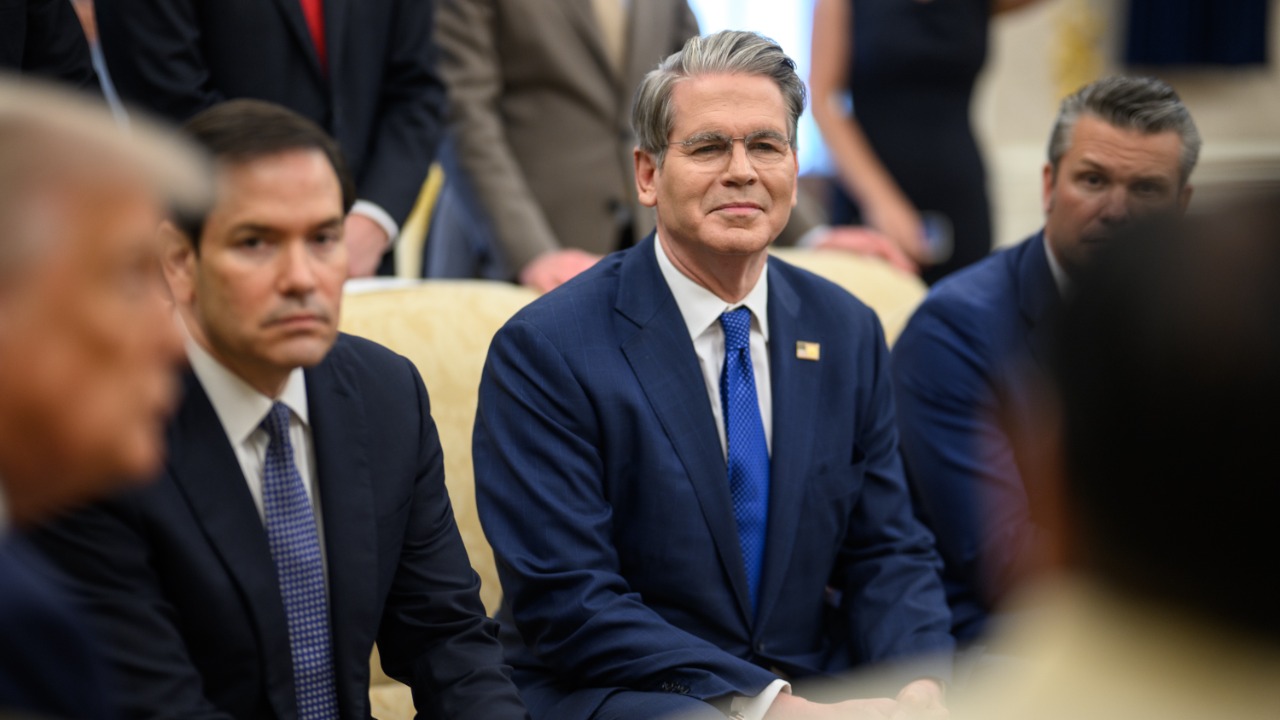
Treasury Secretary Scott Bessent is staking out one of the boldest positions in Washington: he insists the United States can skirt a full-blown recession even as parts of the economy strain under higher interest rates and lingering inflation. His message is not just that a downturn is unlikely, but that the overall expansion can hold together through 2026 despite clear pockets of weakness.
That optimism matters because it shapes how the Trump administration, markets and households think about jobs, borrowing and investment at a moment when confidence is fragile. It also reflects a deliberate shift from Bessent’s more cautious tone earlier this year, as he now leans on fresh data and policy choices to argue that the risks are real but manageable.
From guarded caution to a firm “no” on recession
When I look back at Bessent’s public comments over the year, the arc is striking: he has moved from hedged warnings to an unambiguous rejection of recession forecasts. Earlier in the year, on Mar 15, 2025, he acknowledged that “There are no guarantees,” signaling that a downturn was possible even as he stressed that he was not worried about stock market volatility and was focused on how tariffs and trade policy might affect growth, a stance captured in detailed reporting on Scott Bessent. That careful phrasing reflected a Treasury secretary who wanted to keep options open while the Federal Reserve and the White House were still calibrating their next moves.
By late autumn, however, his language had hardened into a clear call that the United States will avoid a broad contraction. In an interview reported on Nov 22, 2025, he was asked directly whether the country was at risk of entering a recession in 2026 and Treasury Secretary Scott Bessent simply said “no,” a one-word answer that underscored his confidence in the labor market and consumer spending and was later highlighted in a Nov 22, 2025 social media post. That shift from “no guarantees” to a flat denial of recession risk shows how much more comfortable he has become with the trajectory of growth heading into the election year.
Why Bessent thinks the U.S. can dodge a downturn
Bessent’s optimism is not just rhetorical, it rests on his view that the overall economy is resilient even as some industries struggle. In coverage dated Nov 22, 2025, he argued there was “no recession risk for [the] US economy as a whole,” pointing to steady hiring and consumer demand even while acknowledging that inflation has been “hard to bring down” and that the Federal Reserve has had to keep policy tight, a balance described in detail in a report that credits the assessment to “By Andrea Shalal and David Lawder” and notes it was “Updated Sun, November 23, 2025 at 8:15 AM PST 2 min read,” with the timeline framed as Nov 22, 2025. That argument hinges on the idea that as long as job losses remain limited and wage growth holds up, the country can absorb sector-specific pain without tipping into a national slump.
He has been even more explicit about the calendar, telling interviewers that there will not be a recession in 2026 and tying that outlook to the strength of household balance sheets and business investment. In one widely cited exchange, the Treasury secretary said there will not be a recession in 2026 and stressed that while interest rate sensitive sectors have experienced recession-like conditions, the broader economy has not, a view laid out in a detailed piece on Treasury secretary says there won’t be a recession in 2026. In that same spirit, a separate interview on Nov 23, 2025, emphasized that Scott Bessent believes the U.S. will not enter recession despite some sectors showing warning signs, reinforcing his conviction that the national picture remains solid even as manufacturing, commercial real estate or parts of tech feel more strain, a stance captured in video coverage that notes “Scott Bessent says U.S. will not enter recession despite some sectors showing warning signs” and ties his forecast directly to the health of the U.S. economy in 2026 in a segment on Scott Bessent says U.S. will not enter recession.
The warning signs Bessent still cannot ignore
For all his upbeat rhetoric, Bessent has been careful not to sound complacent about the uneven impact of higher rates and persistent inflation. In a conversation posted on Nov 1, 2025, he warned that “sections of the economy” could go into recession even if the national numbers stay positive, and he linked that risk directly to the path of inflation and the Federal Reserve’s next steps, arguing that if inflation is dropping then the Fed should be cutting rates, a line of reasoning laid out in a video that highlights his concern about how long tight policy can last and explicitly references the Fed. That nuance matters, because it acknowledges that a family trying to buy a 2025 Ford F-150 or a small builder financing a new apartment complex may feel like they are in a recession even if gross domestic product is still growing.
His more recent interviews have tried to square that circle by separating the national outlook from the pain in specific industries. In one segment shared on social media on Nov 22, 2025, Treasury Secretary Scott Bessent again said “no” when asked about the risk of a recession in 2026, but the same discussion conceded that some interest rate sensitive sectors have already experienced recession-like conditions, echoing his earlier warning that “There are no guarantees” from Mar 15, 2025 and that policymakers must stay alert to localized downturns, a tension that runs through both his early-year comments on There and his later insistence that the U.S. as a whole will avoid recession. That blend of confidence and caution is what defines his message now: the country, in his view, will dodge a formal downturn, but only if the Fed, the White House and businesses respond quickly when those stressed “sections of the economy” start to crack.
More From TheDailyOverview
- Dave Ramsey says these two simple questions show whether you’re rich or poor
- Retired But Want To Work? Try These 18 Jobs for Seniors That Pay Weekly
- IRS raises capital gains thresholds for 2026 and what’s new
- 12 ways to make $5,000 fast that actually work

Grant Mercer covers market dynamics, business trends, and the economic forces driving growth across industries. His analysis connects macro movements with real-world implications for investors, entrepreneurs, and professionals. Through his work at The Daily Overview, Grant helps readers understand how markets function and where opportunities may emerge.

