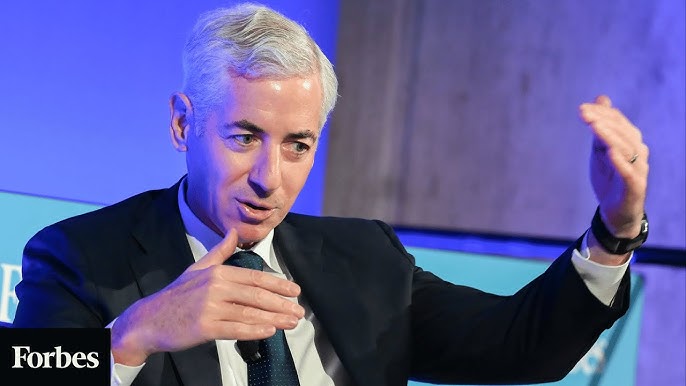
Bill Ackman is preparing to take his flagship hedge fund business to the public markets, potentially giving everyday investors a rare way to buy into one of Wall Street’s most closely watched managers. The plan centers on a new listed vehicle and a possible firm-level float in 2026, raising the question that matters most to readers: if Pershing Square finally lands on the New York Stock Exchange, should I buy it?
I see a compelling but highly specific opportunity taking shape, one that blends the upside of a proven stock picker with the structural quirks of a closed-end fund and a publicly traded asset manager. To decide whether it belongs in a portfolio, investors need to understand not just the hype around an initial public offering, but the mechanics, track record, and risks that will come with owning Pershing Square in listed form.
What Ackman is actually planning for 2026
The core of the story is that billionaire investor Bill Ackman is working on a two-step move into public markets: a large closed-end fund listing and, later, a float of his management company. Reporting indicates that Bill Ackman, described as a billionaire investor, has been eyeing a Pershing Square IPO since at least Nov 21, 2025, with discussions focused on bringing his strategy to a broader shareholder base through a listed structure that mirrors his existing hedge fund approach while remaining accessible to retail investors via the New York Stock Exchange. One account notes that a potential listing is expected in Q1 2026, although the people involved stressed the preliminary nature of those discussions, underscoring that the timeline and final structure remain subject to change as markets evolve and regulatory work continues.
Alongside the firm-level ambitions, Ackman is targeting a sizeable raise for a new U.S. closed-end fund that would sit at the center of this plan. Reports describe a target of about $5 billion for the initial public offering of this vehicle, with the fund designed to mimic his existing hedge fund but in a permanent capital format that trades on an exchange. The closed-end fund, first prepared for a listing last year, is expected to list on the New York Stock Exchange and to operate with a structure that allows Ackman to run a concentrated portfolio without the daily redemption pressure that comes with traditional mutual funds or exchange traded funds, which is a key part of how he has historically managed Pershing Square’s capital.
The $5 billion closed-end fund and how it will work
The new closed-end fund is not a side project, it is the financial engine that could make a future firm IPO viable. Ackman is reported to be targeting a $5 billion initial public offering for this U.S.-listed closed-end fund, with the size calibrated to give him enough scale to run a concentrated book while still leaving room to grow assets over time. The closed-end fund, which was first prepared for a listing last year, is expected to mimic Ackman’s existing hedge fund but offer shares that trade on the New York Stock Exchange, giving investors intraday liquidity even though the underlying capital is locked in at the fund level. That structure matters because it lets Ackman pursue long-term activist or high-conviction positions without worrying about sudden outflows, while shareholders can still buy or sell their exposure in the market.
There is also a sweetener built into the transaction that directly links the fund to the broader Pershing Square business. As part of the deal, investors in the closed-end fund are expected to receive some shares of Pershing Square Capital for free, effectively giving them a stake in the management company on top of their exposure to the portfolio itself. Earlier reporting noted that last year Ackman agreed to sell a 10% stake in Pershing in a private deal that valued the firm at more than $10 billion ahead of any public listing, and that context helps explain why he is now targeting a $5 billion raise for the fund as part of a broader push to scale the franchise. The plan is framed as one step toward a longer term ambition to grow assets from about $25 billion to $2 billion in incremental capital through new vehicles, a goal that highlights how central this closed-end fund is to Pershing Square’s expansion strategy.
Track record: how Pershing Square has actually performed
Any decision to buy into a Pershing Square listing has to start with performance, and here the numbers are hard to ignore. One detailed analysis from Dec 4, 2024, framed Pershing Square Holdings, often referred to as PSH, as a compelling investment opportunity for long term value investors, pointing to several reasons to consider investing in PSH, including an impressive track record of returns that has outpaced broad equity benchmarks over extended periods. That same discussion highlighted that there are several compelling reasons to consider investing in PSH, including an impressive track record and a disciplined, concentrated approach that has delivered a strong compounded return over the same period, even after accounting for fees and the occasional high profile misstep.
More recent performance data reinforces that story. Earlier in 2025, reporting noted that Bill Ackman’s main fund is up 25% in 2025, with Pershing Square Holdings returning 25% in the period compared with the S&P 500’s 11.7% gain, and that two specific investments were helping drive that outperformance. That kind of spread versus the index is exactly what investors hope for when they back an active manager, and it explains why Ackman believes there is appetite for a listed vehicle that mirrors his hedge fund strategy. It also sets a high bar for the IPO, because buyers will expect that level of alpha to continue even as assets scale and the strategy becomes more widely owned.
Why Ackman thinks Pershing Square can be a “modern Berkshire”
Beyond the mechanics, Ackman is clearly pitching a narrative about what Pershing Square could become in public markets. Coverage from Nov 25, 2025, described how Pershing Square might IPO as early as Q1 2026, with commentary that the firm has ambitions to become a kind of modern Berkshire Hat, a reference to Berkshire Hathaway’s model of compounding capital through concentrated, long term holdings and a growing operating platform. The idea is that a listed Pershing Square could use its permanent capital base to take large stakes in high quality companies, influence strategy where necessary, and reinvest cash flows into new opportunities, all while giving shareholders a liquid way to participate in that compounding.
Other reporting underscores that this is not just about one fund, but about building a broader financial platform. One account noted that billionaire investor Bill Ackman is targeting a $5bn IPO for the new closed-end fund and a firm listing, with both moves remaining subject to market conditions and regulatory approvals. Another report pointed out that Pershing Square declined to comment to Fortune and has not publicly commented on the matter in other reports, even as sources described a plan to grow assets from about $25 billion to $2 billion in additional capital through new vehicles and listings. Taken together, these details suggest Ackman is positioning Pershing Square as a scaled, publicly traded asset manager with multiple products, not just a single hedge fund, which is exactly the kind of structure that can support a long term “compounder” story if execution matches the ambition.
Should investors buy the IPO if it comes?
With the pieces of the plan on the table, the practical question is whether I would consider buying into a Pershing Square listing if and when it arrives. On the positive side, the combination of a strong historical track record, a concentrated and transparent investment style, and the potential for a “modern Berkshire Hat” type of compounding story is attractive. The fact that Bill Ackman, described as a billionaire investor, is personally driving a Pershing Square IPO plan, and that a potential listing is expected in Q1 2026 according to some reports, signals that he is willing to put his reputation on the line in a very public way. The structure of the closed-end fund, including the possibility that fund investors will receive some shares of Pershing Square Capital for free as part of the transaction, adds another layer of potential upside by giving early buyers exposure to both the portfolio and the management company.
There are, however, real risks that I would weigh carefully before committing capital. Closed-end funds can trade at persistent discounts to their net asset value, which means that even if Ackman continues to pick winners, the market price of the fund could lag the underlying portfolio. The broader plan to target a $5 billion IPO for the closed-end fund and a later firm listing, as described in detailed coverage of Ackman’s Pershing targets, also introduces execution risk, since both steps remain subject to market conditions and investor appetite at the time of launch. Finally, the fact that Pershing Square has declined to comment publicly on many of these reports, even as sources describe ambitious targets for asset growth and valuation, is a reminder that the details could still shift, and that investors should treat the current outlines as provisional rather than guaranteed.
More From TheDailyOverview
- Dave Ramsey warns to stop 401(k) contributions
- 11 night jobs you can do from home (not exciting but steady)
- Small U.S. cities ready to boom next
- 19 things boomers should never sell no matter what

Grant Mercer covers market dynamics, business trends, and the economic forces driving growth across industries. His analysis connects macro movements with real-world implications for investors, entrepreneurs, and professionals. Through his work at The Daily Overview, Grant helps readers understand how markets function and where opportunities may emerge.

