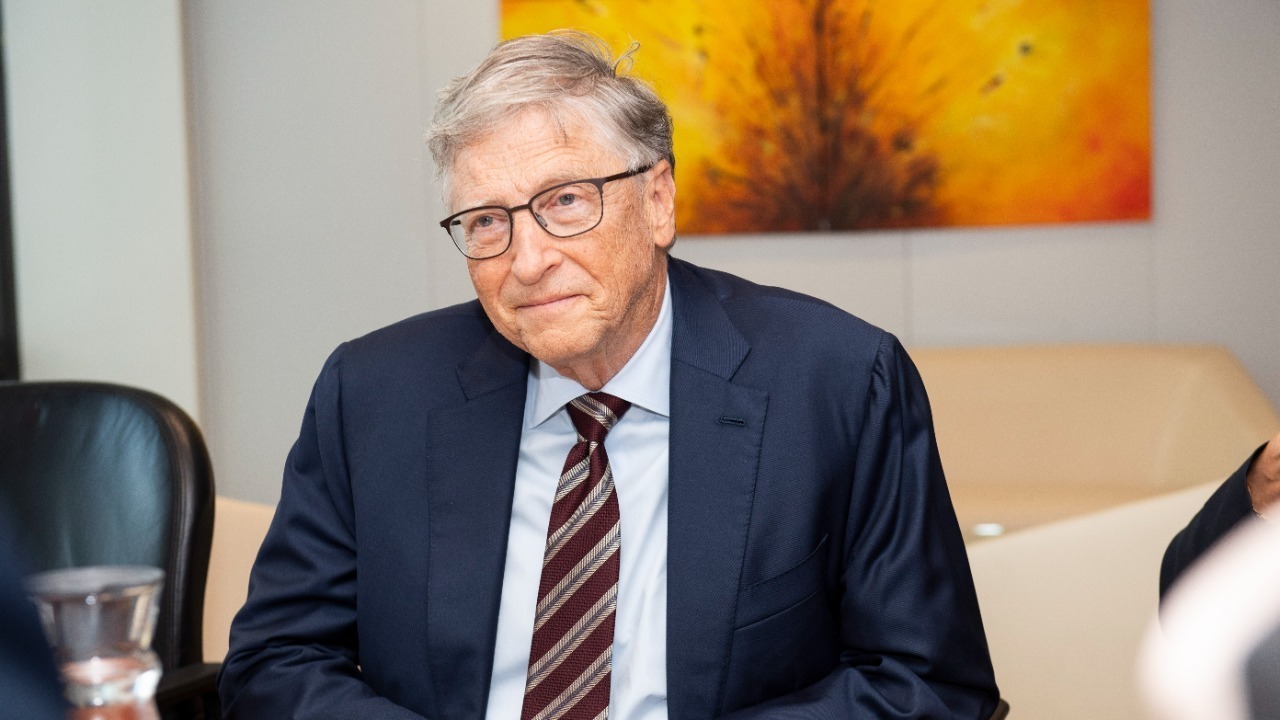
Bill Gates has quietly become one of the most powerful landowners in the United States, controlling a patchwork of fields and orchards that add up to roughly one out of every 4,000 acres in the country. His stake, which various reports put at about 270,000 to 275,000 acres of U.S. farmland, has turned a once niche asset class into a mainstream talking point and raised sharp questions about who will own the soil that feeds America in the decades ahead. I see his bet as a window into how the ultra-wealthy are positioning for a future shaped by food security, climate pressure and the search for stable returns.
How Gates quietly amassed a coast‑to‑coast farm empire
Bill Gates did not start buying fields with a tractor and a for‑sale sign, he did it with a family office. Starting in 2013, Starting his push into agriculture, Gates began channeling money through Cascade Investment, the firm that manages his fortune, into large tracts of cropland. That strategy has left him with roughly 275,000 acres of U.S. farmland, a scale that, according to the 2025 Land Report, puts According Gates at 43rd among America’s largest private landowners. By his math, that is about one out of every 4,000 acres in the country, a sliver of the national total but an enormous footprint for a single private owner.
The holdings are spread widely. Gates quietly purchased over 270,000 acres of farmland across dozens of states, including some of the most productive corners of the Mississippi Delta and the Pacific Northwest. His top five largest farm holdings include 69,071 acres in Louisiana, 47,927 acres in Arkansas and 25,750 acres in Arizona, according to one detailed breakdown of His portfolio. Other reports note large tracts in Louisiana, Arkansas, Nebraska, Florida and even one acre in New Mexico, underscoring how his reach now stretches from the bayous to the desert to the Corn Belt across Louisiana and beyond.
Why farmland fits the billionaire playbook
At its core, Gates’s strategy reflects a simple financial logic: farmland is a scarce, productive asset that tends to hold its value through inflation and economic shocks. Analysts who track this market point out that cropland has historically delivered strong real returns from two distinct sources, the annual cash rent or crop income and the long term appreciation of the land itself, a pattern highlighted in one assessment of Farmland as an asset class. For an investor sitting on tens of billions of dollars, even modest percentage gains on hundreds of thousands of acres translate into a powerful engine of wealth preservation.
Farmland also behaves differently from stocks and bonds, which is a feature, not a bug, for someone trying to diversify a massive portfolio. One analysis of global and American farmland notes that institutional buyers increasingly see cropland as a way to build diversified investment portfolios that can smooth volatility, thanks to unique income patterns, capital requirements and American tax incentives. Gates himself has pushed back on the idea that there is “some” grand conspiracy behind his land purchases, telling one interviewer that there is not some hidden agenda even as he acknowledged that owning 275,000 acres across the U.S. is a significant position, a point captured in a widely shared discussion titled Why Are You.
The Cascade Investment machine behind the fields
To understand how this land grab unfolded, I look to Cascade Investment, the low profile firm that manages Gates’s fortune and executes his strategy. Cascade Investment Buying Up Farmland is not a side hobby, it is a deliberate allocation choice that has seen the fund commit hundreds of millions of dollars to cropland and related assets. Cascade’s single largest investment was made in 2017, when the fund acquired $520 million worth of farmland and related operations, a figure that illustrates how $520 million can be deployed in a single transaction when a billionaire decides to scale up.
That institutional approach has ripple effects for ordinary investors. Some platforms now pitch fractional stakes in farmland as a way for smaller savers to mimic what Cascade is doing, promising passive income with just $100 while pointing to Gates’s 275,000 acre footprint as proof that sophisticated capital is moving into the space, a pitch that leans on the same Land Report data that ranks Roug Gates among the country’s biggest landowners. In effect, Cascade has turned farmland into another institutional asset class, complete with funds, benchmarks and marketing copy, even as the underlying properties remain the same fields that family farmers have worked for generations.
From philanthropy to profit: the agriculture through‑line
Gates’s farmland buying spree does not exist in a vacuum, it sits alongside a long running philanthropic focus on food and rural livelihoods. Through his foundation, he has poured money into programs that treat Agriculture as a lever for lifting several hundred million people out of poverty and hunger, with a key goal of helping smallholder farmers adapt to climate change, improve yields and fight crop pests and diseases, according to the foundation’s own description of its Agriculture work. That dual role, as both a champion of sustainable agriculture and America’s biggest private farmland owner, has fueled debate over whether his market moves align with his public mission.
Critics worry that when one billionaire controls so much land, it can tilt local markets and make it harder for young farmers to buy in, especially when purchases are handled quietly through entities like Cascade Investment. Supporters counter that large, well capitalized owners can invest in better irrigation, soil health and technology, potentially boosting productivity and creating jobs on the ground, an argument that often surfaces in defenses of Land Report style rankings. I see the tension as a sign of a deeper shift: farmland is no longer just a family inheritance, it is a strategic asset at the intersection of philanthropy, climate policy and high finance.
What Gates’s bet signals for the future of U.S. farmland
Gates’s accumulation of fields has helped spotlight a broader trend, the rise of billionaires and institutional money in rural real estate. Commentators now talk openly about a new trend in the U.S. market, with billionaires buying up farmland all across America, a pattern captured in a widely viewed video that frames the shift as a structural change in who owns the countryside across America. Some analysts argue that this is partly a defensive move, a way for wealthy investors to secure hard assets before foreign buyers, including China, expand their own holdings, a concern that surfaces in debates about how much land should be open to overseas capital in states like Texas and North Dakota.
For smaller investors and landowners, the Gates playbook offers both a warning and a roadmap. On one hand, it underscores how arable land is increasingly seen as a hedge against inflation and a store of value, themes echoed in guides that ask Why Is Bill Gates Buying Farmland and tell readers You might be Surprised to learn that arable land is now marketed as a mainstream portfolio diversifier, as one explainer on Why Is Bill puts it. On the other hand, the sheer scale of his holdings, from Louisiana and Arkansas to Florida and New Mexico, raises hard questions about consolidation, rural power and whether the next generation of farmers will be tenants or owners on the land that feeds the country.
More From The Daily Overview

Grant Mercer covers market dynamics, business trends, and the economic forces driving growth across industries. His analysis connects macro movements with real-world implications for investors, entrepreneurs, and professionals. Through his work at The Daily Overview, Grant helps readers understand how markets function and where opportunities may emerge.

