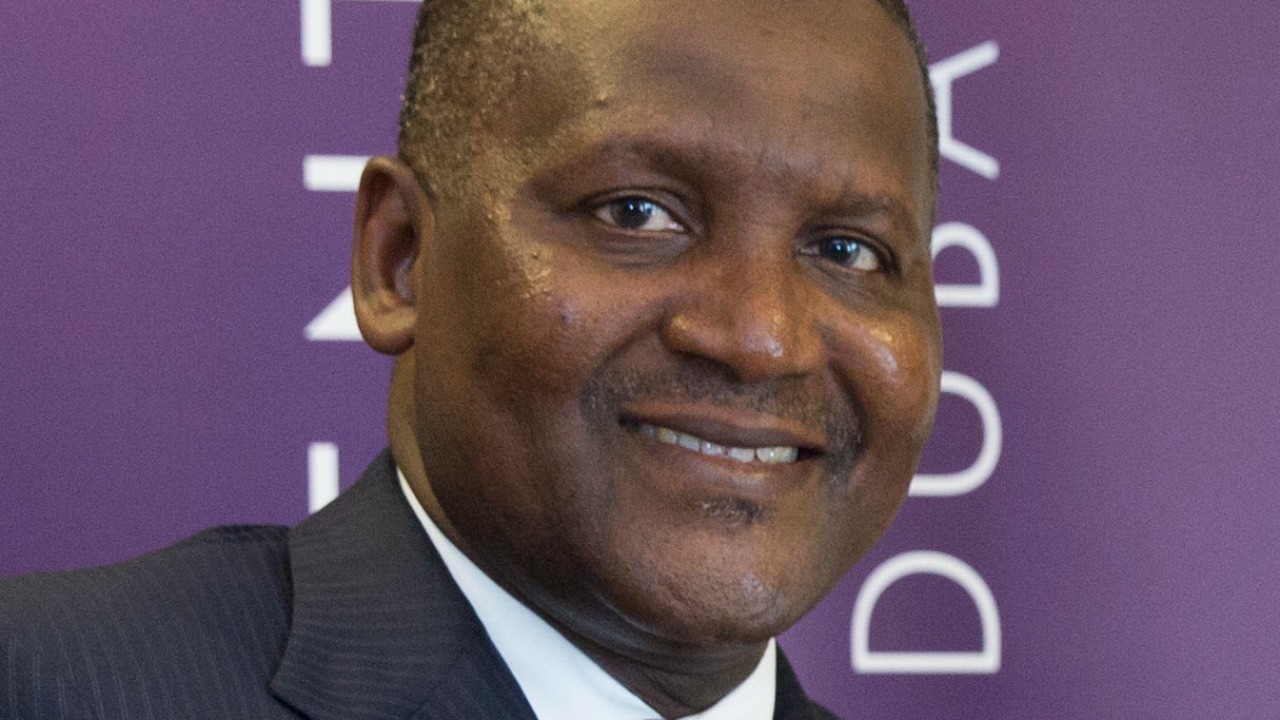
Africa’s richest person is making a generational bet on Nigerian classrooms. With a pledge of $688 million, routed through his namesake foundation, Aliko Dangote is positioning private capital as a central force in tackling one of Nigeria’s most stubborn crises: the chronic underfunding and uneven quality of public education. The scale of the commitment signals a shift from scattered philanthropy to a long-term, system-level intervention that could reshape how the country thinks about schooling, skills and opportunity.
Rather than a one-off donation, the new fund is structured to reach students directly, support schools and complement government efforts that have struggled to keep pace with a fast-growing population. If it delivers on its promise, the initiative will test whether a single, highly focused investment can move the needle in a sector where incremental reforms have rarely matched the urgency of the problem.
The $688 million bet on Nigeria’s classrooms
I see the headline number as more than a symbol of generosity; it is a statement about the scale of intervention Dangote believes Nigeria’s education system requires. The Aliko Dangote Foundation has committed ₦1 trillion, explicitly framed as $688 m and $688 million, to strengthen schooling across Nigeria, a figure that instantly places the initiative among the largest education-focused philanthropic efforts in Africa. By tying the fund to a clear monetary benchmark in both naira and dollars, the foundation is signaling that this is not a vague pledge but a defined financial envelope aimed at measurable impact in classrooms across the country.
What stands out is that the commitment is not being presented as charity in isolation but as part of a broader push to address Nigeria’s education crisis at scale. Reporting on the plan describes how $688 million will be deployed to reinforce the country’s schooling system, with the foundation explicitly acknowledging the depth of the challenge. In a context where public budgets are stretched and outcomes lag behind demographic growth, the sheer size of the fund is designed to close some of the most glaring gaps, from basic infrastructure to learning materials and student support.
Aliko Dangote’s evolving role as Africa’s top philanthropist
Aliko Dangote has long been known as Africa’s richest person, but this education fund marks a new phase in how he uses that status. Rather than scattering donations across disparate causes, he is concentrating a significant share of his giving on a single national priority, betting that focused capital can unlock broader reforms. The move also reflects a growing expectation that Africa’s wealthiest business leaders will not only create jobs through their companies but also underwrite public goods like education that underpin long-term economic stability.
The structure of the pledge underscores that shift. The initiative is being channeled through the Aliko Dangote Foundation, which is chaired by the industrialist and has become his primary vehicle for large-scale social investments. Public statements around the fund describe how Africa’s richest person, Aliko Dangote, is committing $688 m, explicitly framed as $688 million, to support education in Nigeria through this platform. That framing matters, because it ties his personal brand and business legacy to the long-term fortunes of Nigerian students, not just to the balance sheets of his cement and refinery operations.
Targeting 1.3 million students and the politics of nation-building
The most striking operational detail is the scale of the student population the fund is expected to touch. The initiative is designed to support 1.3m students, a figure that hints at a strategy focused on breadth as well as depth. Rather than limiting support to a handful of elite institutions, the plan appears oriented toward reaching a wide cross-section of learners, potentially spanning primary, secondary and tertiary levels. That ambition aligns with the reality that Nigeria’s education challenges are not confined to one tier of the system but run from overcrowded primary classrooms to under-resourced universities.
Political leaders have been quick to frame the move as a model of civic responsibility. Vice President Kashim Shettima, responding to the announcement, described Dangote’s action as “nation-building in its purest form” and urged others in the country’s elite to draw lessons from it. His remarks, captured in coverage of the launch, underline how the fund is being woven into a broader narrative about shared responsibility for Nigeria’s future. The same reporting notes that the initiative is structured as a ₦1 trillion education fund to support 1.3m students, with Shettima’s praise highlighting “What he has done here today is a lesson to each of us,” a line that casts the pledge as both a financial and moral benchmark for other wealthy Nigerians. Those details are laid out in accounts of how Dangote will support 1.3m students with the N1tn education fund, and they show how the project is being positioned as a template for public-private collaboration.
How the Aliko Dangote Foundation plans to reshape schooling
For a fund of this size to matter, it has to do more than write cheques; it has to change how schools function on the ground. The Aliko Dangote Foundation is presenting the ₦1 trillion package as a comprehensive effort to strengthen Nigeria’s education sector, not just a scholarship pool. That implies investments in infrastructure, teacher support, learning materials and possibly digital tools that can stretch limited public resources. In a system where many schools still lack basic facilities, targeted capital for classrooms, laboratories and libraries can have an outsized effect on learning outcomes.
The foundation’s own framing of the initiative hints at this broader ambition. Descriptions of the plan emphasize that The Aliko Dangote Foundation, chaired by Africa’s richest man, is committing ₦1 trillion, explicitly described as $688 m and $688, as part of one of the largest philanthropic investments in the country’s schooling system. That language suggests a multi-pronged strategy that could include upgrading public schools, backing teacher training programs and supporting curriculum improvements that align education with Nigeria’s evolving labor market. If executed well, such a package would not only ease immediate pressures in crowded classrooms but also help modernize how Nigerian students are prepared for work and citizenship.
Why this matters for Africa’s wider education landscape
Although the fund is focused on Nigeria, its implications extend across Africa. The continent’s education systems face similar pressures: young populations, limited public budgets and a growing gap between what students learn and what economies demand. By committing $688 million to a single national education agenda, Dangote is effectively testing a model that other African philanthropists and governments will be watching closely. If the initiative can demonstrate measurable gains in enrollment, retention or learning outcomes for 1.3m students, it could encourage similar large-scale, targeted funds in countries from Ghana to Kenya.
There is also a reputational dimension that matters for how African philanthropy is perceived globally. When a figure routinely described as Africa’s richest person channels such a large sum into education, it challenges outdated narratives that the continent’s social sectors depend primarily on foreign aid. Instead, it highlights how domestic capital, organized through vehicles like The Aliko Dangote Foundation and similar institutions, can drive long-term investments in human capital. If other business leaders follow suit, the Dangote education fund could mark the beginning of a new era in which African wealth plays a more central role in financing the continent’s classrooms, teachers and students.
More From TheDailyOverview

Grant Mercer covers market dynamics, business trends, and the economic forces driving growth across industries. His analysis connects macro movements with real-world implications for investors, entrepreneurs, and professionals. Through his work at The Daily Overview, Grant helps readers understand how markets function and where opportunities may emerge.

