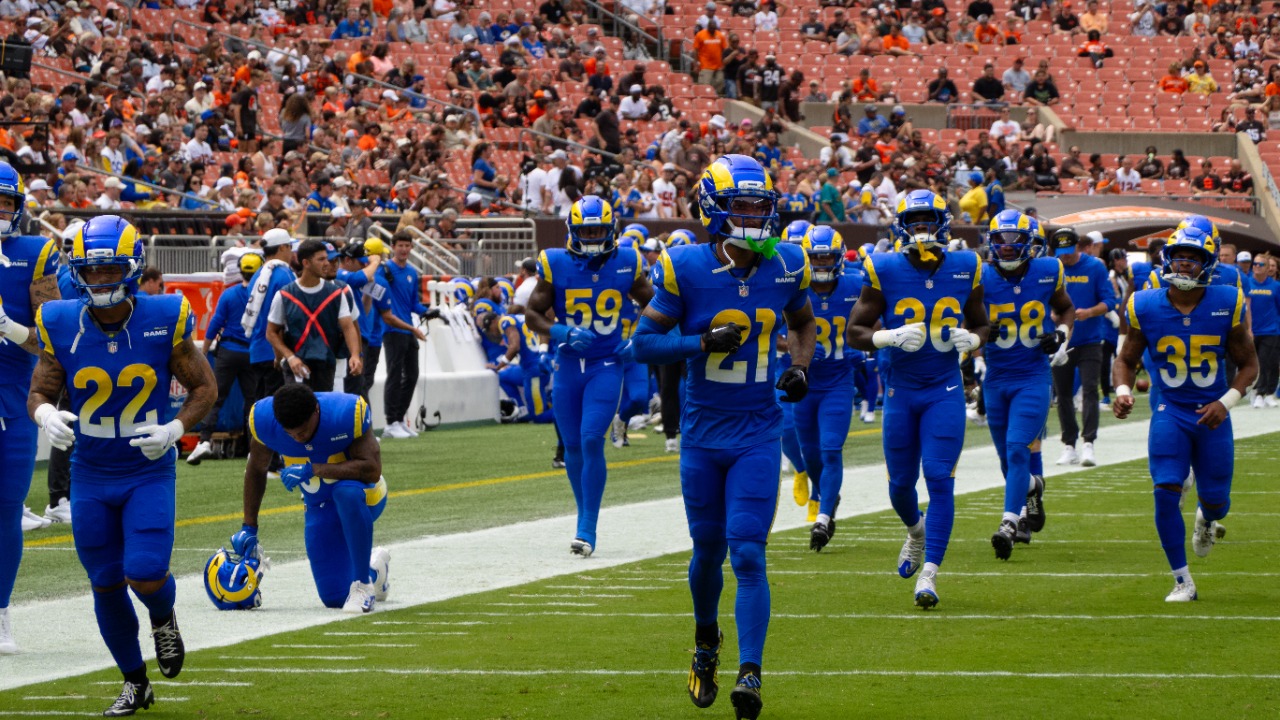
Stan Kroenke has spent years building a reputation as the low‑profile billionaire behind the Los Angeles Rams and a global sports portfolio. Away from stadium lights, he has been assembling something even more sweeping: a patchwork of ranches and open range that now makes him the largest private landowner in America. His holdings stretch from the Northern Plains to the desert Southwest, turning a sports magnate into the country’s dominant private land baron.
The scale of that footprint, measured in the millions of acres, is starting to reshape debates over who controls rural America, how land is managed, and what happens when a single investor can buy territory larger than some national parks. I see Kroenke’s rise to the top of the land ladder as a window into how wealth, real estate and resource security are converging in the hands of a small group of ultra‑rich buyers.
The quiet deal that vaulted Kroenke to No. 1
The turning point came with a single, sprawling transaction in New Mexico that barely registered outside ranching and real‑estate circles. Earlier this year, Los Angeles Rams owner Stan Kroenke acquired nearly 1 million acres of New Mexico ranchland, a purchase that instantly pushed his total holdings to a level unmatched by any other private individual in America. The deal, described as roughly the size of 2 million football fields, transformed him from a major land player into the country’s dominant private owner of open space, with the New Mexico acquisition serving as the capstone of a long‑running buying spree across the interior West and Great Plains, according to detailed accounts of the New Mexico purchase.
Another account of the same transaction describes it as a 900K‑acre land sale that instantly made the Rams owner the nation’s largest private landholder, underscoring just how concentrated the market for mega‑ranches has become. That report ties the leap in his ranking directly to the acquisition of a New Mexic property that had long been one of the largest contiguous ranches left on the market, a reminder that such deals are as much about scarcity as they are about price, with the 900K‑acre figure now a shorthand for his sudden ascent.
A land portfolio bigger than Yellowstone
With the New Mexico ranch folded in, Kroenke’s empire now spans 2.7 m acres, a number that is hard to grasp until it is stacked against public landmarks. One detailed breakdown notes that Kroenke’s total acreage is larger than Yellowstone National Park, a comparison that drives home how a single private owner can now control more land than one of America’s most iconic protected landscapes. The same analysis equates his holdings to roughly 2 million football fields, a scale that reflects not just trophy ranches but working cattle, farming and horse‑breeding operations spread across multiple states, as described in the 2.7 m figure.
Industry rankings now place Kroenke at the top of the LR 100 list of major landowners, a position that reflects years of steady accumulation rather than a single splashy buy. The same rankings show how narrow the gap is between the very largest players: Kroenke is followed by Red Emmerson and his family, who hold 2,440,000 acres in California, Oregon and Washington through a timber and wood‑products business, illustrating how industrial forestry and ranching dominate the upper tier of private land control in the United States, according to the 2,440,000 acre comparison.
From sports tycoon to “billionaire cowboy”
Kroenke’s land grab is easier to understand when set against his broader business identity. He is best known as the Billionaire behind the Los Angeles Rams and other franchises, but recent analysis of his investments argues that he is part of a wider shift in which ultrawealthy sports owners are using land as a hedge against inflation, market swings and geopolitical shocks. In that view, Kroenke’s ranches are not just lifestyle properties but a strategic allocation of capital into hard assets that can generate income from cattle, crops and mineral rights while also appreciating over time, a pattern highlighted in coverage of the Billionaire sports owner trend.
His public image has also been shaped by a kind of frontier mythology that has grown up around his ranches. A documentary‑style look at his holdings refers to Stan Krunka the “billionaire cowboy,” describing how, in 2016, Stan Krunka, owner of the Los Angele football franchise, stepped in as the answer when a vast Western property needed a deep‑pocketed buyer. That narrative, which casts him as both investor and steward of fading cowboy culture, helps explain why he has been willing to sink billions into remote acreage, as chronicled in the profile of Stan Krunka the billionaire cowboy persona.
Signature ranches and the Land Report 100
Long before the New Mexico deal, Kroenke had been methodically stitching together a ranch portfolio that made him a fixture in land‑industry rankings. He appears prominently in Signature Studies of the LR_JeffBezos‑LR100 and other Top 100 Landowners features that track who owns the largest private tracts in America, alongside lists of America Best Brokerages and LR_TopAuctionHouses‑01 that help facilitate such mega‑deals. Those rankings, which now place him at #1 on the LR 100, show how his holdings have grown from a handful of ranches into a coast‑to‑coast empire, as documented in the Signature Studies of major landowners.
Some of his most notable purchases read like a tour of the modern American West. In Montana, Kroenke bought the 124,000-acre Broken O Ranch, a vast property known for both cattle and crop production, and later added the Winecup Gamble Ranch to his holdings, further cementing his presence in the Northern Rockies. At the same time, Kroenke Ranches has been taking bold new steps on Texas’s WAGGONER RANCH, adopting a holistic approach to the ecology of that historic spread and signaling that he intends to be an active manager rather than a passive landlord, according to profiles of Broken O Ranch and the evolving strategy on the Kroenke Ranches holdings in Texas.
What Kroenke’s rise says about land, power and the rural future
When I look at Kroenke’s ascent, I see more than a personal trophy case. His status as America’s largest private landowner crystallizes a broader shift in which a handful of ultrawealthy buyers are locking up vast swaths of rural territory, often with little public scrutiny. Analysts who track these deals argue that land has become a preferred store of value for the global rich, a way to ride out inflation and market volatility while also gaining control over water, minerals and carbon‑rich grasslands, a pattern that is evident in the way Los Angeles Rams owner Stan Kroenke has diversified far beyond stadiums and urban real estate.
That concentration of ownership raises practical questions for the communities that live in and around these properties. Local officials and ranching families now find themselves dealing not with neighboring families but with corporate structures tied to global sports and entertainment fortunes, as highlighted in coverage of how Rams Owner Stan Kroenke Becomes Largest Private Landowner and the ripple effects in towns from Des Moines to Denver that intersect with his business orbit. At the same time, land‑industry insiders note that Kroenke’s rise to the top of the Land Report 100 has reset the benchmark for what it means to be a major private landholder, with the LR 100 now serving as a kind of scoreboard for who controls the American countryside, as reflected in the latest Land Report 100 rankings.
More From The Daily Overview

Silas Redman writes about the structure of modern banking, financial regulations, and the rules that govern money movement. His work examines how institutions, policies, and compliance frameworks affect individuals and businesses alike. At The Daily Overview, Silas aims to help readers better understand the systems operating behind everyday financial decisions.

