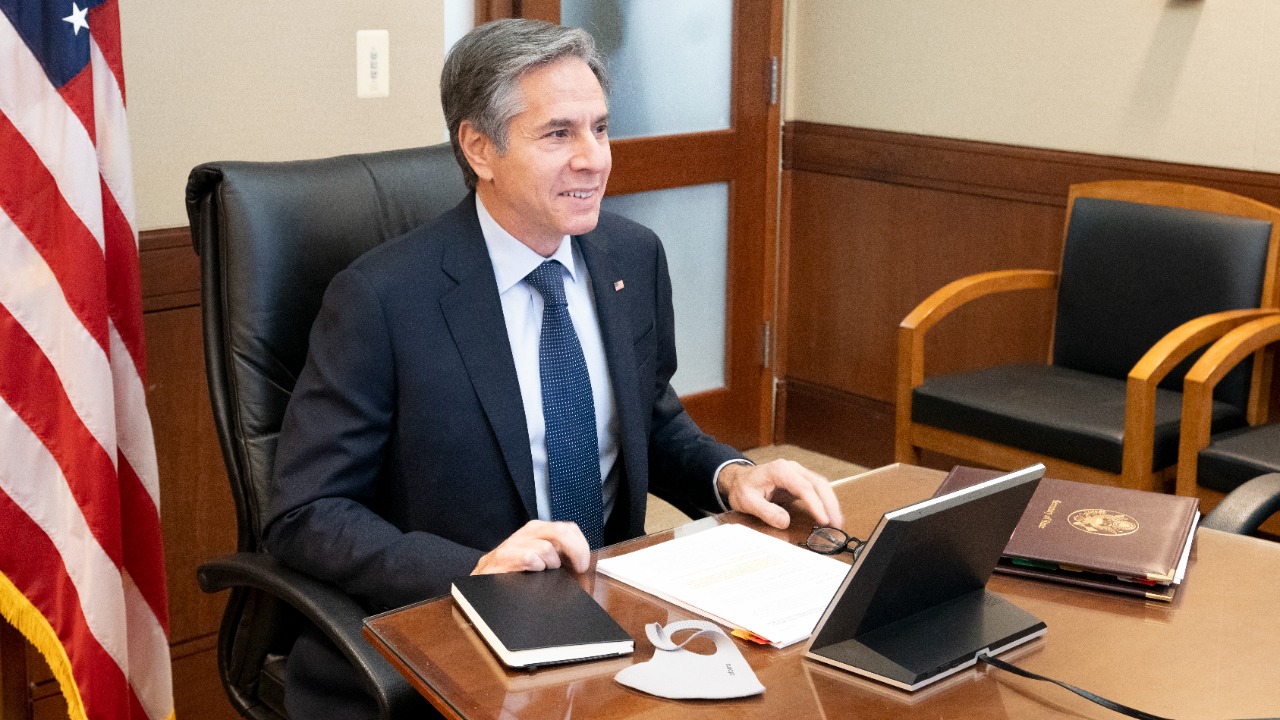
Antony Blinken has been warning that if major powers carve the globe into exclusive zones of control, the result will not be stability but a slide toward confrontation. His argument is that a world organized around “spheres of influence” invites coercion, invites miscalculation, and ultimately invites war, because it treats smaller states as prizes rather than as sovereign actors. I see his latest comments as part of a broader struggle over whether the next era of geopolitics will be defined by cooperation or by a return to nineteenth‑century style great‑power rivalry.
From warning to doctrine: Blinken’s case against spheres of influence
When Antony Blinken speaks about spheres of influence, he is not offering an abstract seminar point, he is describing what he sees as a concrete path to conflict. In a recent television appearance, the former Secretary of State argued that a “retreat into a spheres‑of‑influence world” would push countries toward confrontation because big powers would feel entitled to “take over the place” rather than work with others to get what they need. In that interview, he framed the choice as one between cooperative problem‑solving and a scramble for dominance, and he was explicit that the latter is a recipe for instability, not security.
Blinken has been building this case for years. Earlier in his tenure as Secretary of State, he stated plainly that the United States does not accept a world in which powerful states dictate the choices of their neighbors, warning that such a system is “not a recipe for stability and security” but “for conflict.” That line, delivered in comments aimed at Moscow, underscored a broader rejection of any arrangement that would give Russia or any other power a veto over the sovereignty of nearby countries, a stance captured in his insistence that the United States rejects formal spheres of influence.
History’s verdict: why past “zones of control” ended badly
Blinken’s argument rests heavily on historical experience, and here I find his logic difficult to dismiss. He has pointed to earlier eras when great powers divided the map into zones of control and noted that these arrangements did not insulate anyone from catastrophe. In a wide‑ranging conversation on American foreign policy, he argued that “history teaches” that once the world is organized into rigid blocs, crises in one region quickly pull in others, and no country can assume it will be left “immune” or “unscathed.” That warning, delivered as he reflected on a more turbulent geopolitical age, was part of a broader case that a return to such blocs would not leave the United States or its partners safe, a point he made explicitly in a discussion of a turbulent age.
In that sense, his critique is less about moral outrage and more about strategic prudence. When powerful states assume they are entitled to dominate their neighbors, smaller countries are forced into defensive alignments, arms races accelerate, and miscalculations become more likely. Blinken’s warning that a spheres‑of‑influence mindset would not “leave us unscathed” is a reminder that even distant powers are eventually dragged into conflicts that begin as regional coercion. The lesson he draws from history is that once the norm of sovereign equality is eroded, the resulting insecurity spreads far beyond the original fault line.
Venezuela, Iran and the new flashpoints of influence
The current map of crises shows how quickly influence politics can turn combustible. In a recent appearance on the program Squawk Box, Antony Blinken, introduced as the former Secretary of State, was asked to assess the political fallout from the ouster of Venezuelan leaders and the broader contest over that country’s future. He linked the turmoil in Caracas to a wider pattern in which outside powers treat Venezuela as a pawn in a regional chess match, rather than respecting the choices of its citizens, a point he made while discussing the Venezuelan situation and its implications for regional stability on Squawk Box.
In the same conversation, Blinken also addressed escalating protests in Iran, another arena where outside powers are tempted to see domestic unrest primarily through the lens of influence and alignment. When regional and global actors treat Iran’s internal dynamics as an opportunity to expand their own reach, they risk turning a domestic struggle into a proxy confrontation. That is precisely the kind of dynamic Blinken warns against when he talks about a “retreat into a spheres‑of‑influence world,” a phrase he used again in a separate clip that highlighted his concern that such a retreat “will lead to conflict,” a message amplified in a segment inviting viewers to watch his warning.
Trump’s gambit and the great‑power rivalry frame
Any discussion of spheres of influence today inevitably runs through the foreign policy of President Donald Trump. Analysts have described Trump’s approach as a “sphere of influence gambit,” particularly in Latin America, where his administration and senior advisers have sometimes framed the region as a traditional backyard for Washington. One assessment argued that this gambit was “sloppy” and “self‑sabotage,” because it undercut the very norms of sovereignty and non‑coercion that the United States has long claimed to defend, especially in places like Latin America.
At the same time, the broader context is a renewed era of great‑power rivalry. Commentators in Moscow had expected a sharp shift in relations with Washington after Trump took office, but instead they saw more sanctions and a recognition in Washington that competition among major powers is once again the defining feature of international politics. One analysis noted that the United States, even under Trump’s presidency, has accepted that this rivalry will help “dictate the course of history,” a phrase used to describe how The US now sees its strategic environment. Blinken’s concern is that if this rivalry is managed through rigid zones of control rather than shared rules, the world will move from competition to confrontation.
Allies, autocracies and the shrinking space for diplomacy
Blinken’s warnings also resonate with the anxieties of key allies. In Washington, Germany’s top diplomat has been quietly testing how far the United States might go in acting alone, and how much room remains for genuine consultation. Behind the warm public language, there is deep concern in Berlin that unilateral moves by Washington could set a precedent that fractures long‑standing alliances and weakens the shared commitment to sovereignty. Those worries were captured in a report that described how such statements from German officials reflect fears that unilateral action could “fracture long‑standing” arrangements and undermine global security, a concern highlighted in coverage of debates in Washington.
At the same time, Blinken has warned that the relative stability of the post‑Cold War period has given way to a more contested landscape in which autocracies are coordinating more closely. He has described how the “promise” of that earlier era has faded, replaced by a world in which authoritarian powers openly challenge democratic norms and even proclaim a “no limits partnership” in their cooperation. That phrase has been used to describe the alignment between major autocracies, a trend analyzed in detail in a discussion of how decades of relative calm have given way to open contestation. In that environment, I see Blinken’s plea for cooperation over domination not as idealism, but as a hard‑headed attempt to prevent a slide into bloc politics that history suggests would end badly for everyone.
More From The Daily Overview

Grant Mercer covers market dynamics, business trends, and the economic forces driving growth across industries. His analysis connects macro movements with real-world implications for investors, entrepreneurs, and professionals. Through his work at The Daily Overview, Grant helps readers understand how markets function and where opportunities may emerge.

