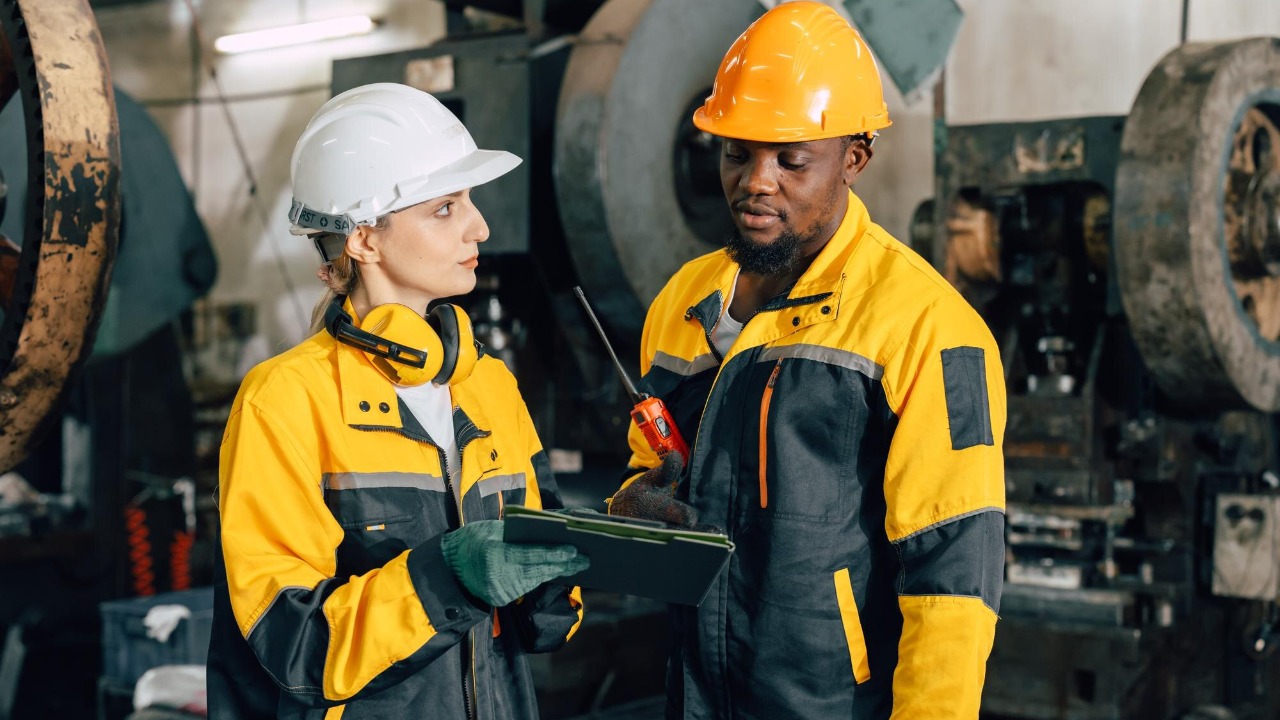
Blue-collar workers were supposed to be the winners of President Donald Trump’s economic agenda, yet the latest labor data show their foothold in the job market is eroding. Even as overall employment holds up, core industrial and manual roles are shrinking, leaving the very workers Trump has courted facing fresh insecurity. The trend is not a blip but a broad shift that is reshaping who carries the risks of a slowing economy.
Manufacturing’s promise collides with a harsher reality
President Donald Trump has spent years presenting tariffs and industrial policy as a way to bring factory work back to the United States, but the numbers now point in the opposite direction. Earlier this year, President Donald Trump highlighted his aggressive tariff strategy as proof that manufacturing was being reshored, yet blue-collar employment is plunging for the first time since the pandemic, with 59,000 lost jobs cutting into the very base that was meant to benefit. That reversal undercuts the political narrative that tariffs alone can rebuild the industrial middle class and instead exposes how fragile these jobs remain even in a period of headline economic strength.
The strain is especially visible in the data that track the health of factories and industrial suppliers. The Labor Bureau has reported that blue-collar roles are falling in tandem with a weaker pipeline of new orders, a pattern that matches the Institute for Supply Management November report showing an eighth straight month of contraction in manufacturing activity. In that environment, many employers are not just slowing hiring, they are actively trimming shifts and overtime, a shift that is already visible in the way companies are cutting margins by trimming labor costs in a frozen white-collar market, as detailed in recent labor reporting.
Blue-collar jobs are collapsing even as white-collar work holds up
What makes the current downturn in manual work so striking is that it is unfolding alongside relatively stable conditions for office workers. Coverage of the labor market in 2025 has taken on a decidedly white-collar tone, with attention focused on tech layoffs and corporate restructurings, yet the sharper damage is landing on the shop floor. According to detailed labor coverage, blue-collar jobs are collapsing under Trump even as many professional roles remain insulated, a split that is widening the gap between workers who can ride out a slowdown and those who cannot.
That divergence is not just anecdotal, it is embedded in the way employers are responding to softer demand. In many industrial sectors, companies are choosing to protect higher paid managers and specialists while cutting back on line workers, drivers, and warehouse staff, a pattern that has been documented in analyses of how blue-collar jobs are collapsing under Trump. The result is a labor market that looks healthy on the surface but is increasingly polarized underneath, with the most physically demanding roles bearing the brunt of adjustment.
Labor mismatch and the limits of Trump’s reshoring push
Even where factories are hiring, the positions on offer often do not line up with the workers who are losing their jobs. Analysts describe a growing labor mismatch in which employers seek specialized skills in automation, robotics, and precision machining while many displaced workers come from more traditional assembly or warehouse roles. Some of the declines in blue-collar employment are tied to this mismatch, with companies reporting open positions they cannot fill while laid-off workers struggle to find roles that match their experience and pay expectations.
The administration’s reshoring push has not fully bridged that gap. Back in April, President Donald Trump framed his tariff policy as a catalyst for a manufacturing revival, but the subsequent loss of 59,000 blue-collar jobs shows how vulnerable that strategy is to shifts in global demand and domestic investment. Reporting on this trend highlights how the labor mismatch is playing out on the ground, including in states such as Oregon where local officials have warned that workers are being left behind by the changing mix of industrial jobs, a dynamic detailed in coverage of how labor mismatch is driving job losses.
Trump’s political brand collides with a shrinking shop floor
For Trump, the erosion of blue-collar work is not just an economic problem, it is a political one. His brand has long rested on the image of a leader who stands with welders, machinists, and truck drivers against what he casts as a distant elite. Yet the current pattern, in which Blue collar roles are shrinking while white-collar coverage dominates the conversation, risks undercutting that message and leaving many of his core supporters feeling exposed. When workers who were promised a manufacturing comeback instead see their hours cut or their plants idled, the credibility of that promise inevitably comes into question.
The symbolism is especially stark in regions that were central to Trump’s earlier victories, where factories that once hummed with overtime are now operating below capacity or quietly trimming staff. Coverage of the labor market has noted that this shift is happening under Trump’s watch, even as he continues to tout tariffs and industrial deals as proof of success. One detailed analysis of how blue-collar jobs are collapsing under Trump underscores that the pain is concentrated in the very sectors he has held up as evidence of a blue-collar renaissance.
What a shrinking blue-collar base means for the broader economy
The contraction in blue-collar work is not just a story about individual livelihoods, it is a warning sign for the broader economy. When factory workers, construction crews, and logistics staff lose hours or jobs, the impact ripples through local businesses, from diners near industrial parks to car dealerships that depend on steady paychecks. A labor market that looks solid on paper can still feel fragile in communities where the loss of a single shift at a plant means fewer customers at the grocery store and more families juggling bills.
At the same time, the shift toward a more white-collar heavy job market raises questions about who will absorb the next downturn. If the current pattern holds, future slowdowns may hit manual workers first and hardest, while office staff remain relatively protected, deepening existing inequalities between those who work with their hands and those who work at screens. For an administration that has built its identity around championing the former, the reality that blue-collar roles are shrinking under Trump is more than a statistical quirk, it is a test of whether policy can match rhetoric in an economy that is changing faster than political slogans can keep up.
More From TheDailyOverview
- Tennessee loses $2.6B megafactory and faces major layoffs
- Retired But Want To Work? Try These 18 Jobs for Seniors That Pay Weekly
- What to do with your pennies after the U.S. stops minting them
- Home Depot CEO warns of a troubling customer trend in stores

Grant Mercer covers market dynamics, business trends, and the economic forces driving growth across industries. His analysis connects macro movements with real-world implications for investors, entrepreneurs, and professionals. Through his work at The Daily Overview, Grant helps readers understand how markets function and where opportunities may emerge.

