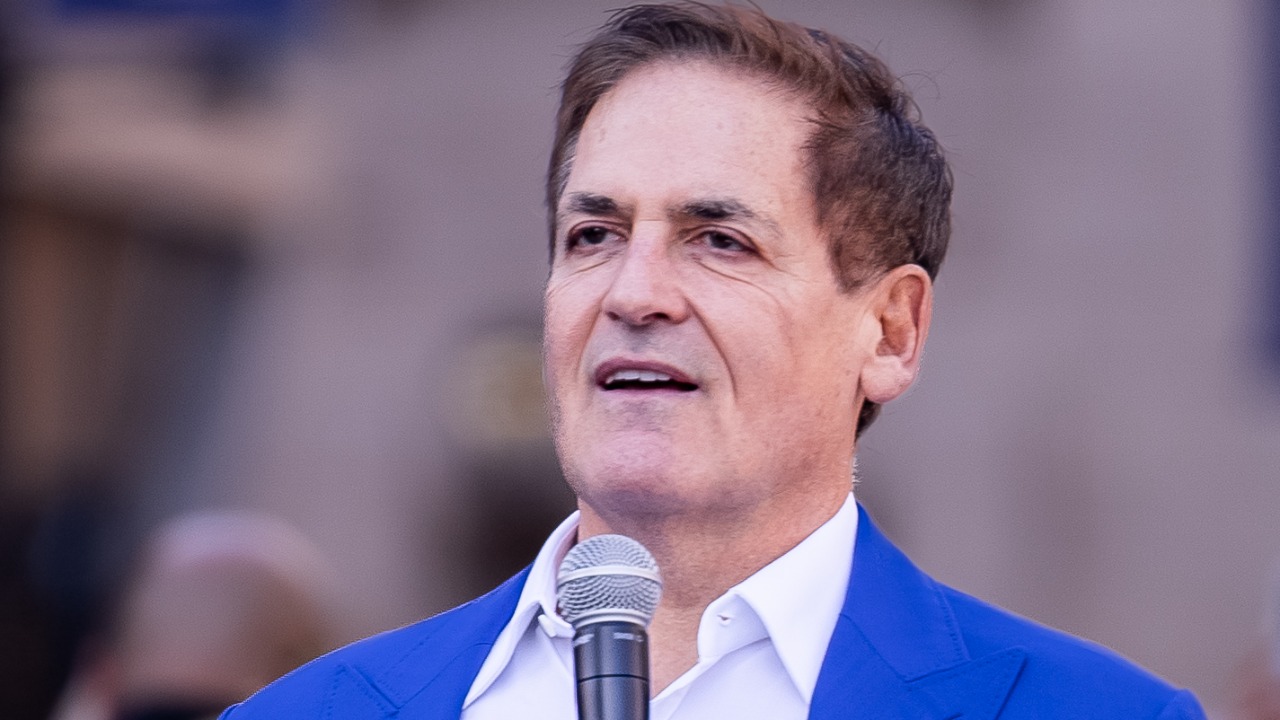
Podcaster Bobbi Althoff turned a deadpan joke into a sharp economic parable when she asked billionaire investor Mark Cuban for $5 million in cash to buy a house. His refusal was not about stinginess, it was about the math and risk that now define homeownership for an entire generation. Their exchange captured why even eye‑popping sums can feel strangely inadequate in a housing market where prices, rates and costs keep sprinting ahead of paychecks.
By the time Cuban finished explaining why he would not simply wire over the money, the conversation had shifted from a viral bit to a lesson in why buying a home is no longer a straightforward path to security. I see their back‑and‑forth as a window into the way high prices in places like Southern California collide with rising interest costs and the ongoing bills that follow you long after closing day.
The $5 million question that hit a nerve
The setup was simple: Podcaster Bobbi Althoff asked Mark Cuban for $5 million so she could buy a house, framing the request as pocket change for a billionaire and a life‑changing windfall for her. According to reporting on the exchange, she pushed the point by saying he could hand over that amount and barely notice it, while it would completely transform her finances. That tension between how trivial the sum might look to a billionaire and how unreachable it feels to a typical buyer is exactly what made the clip resonate, especially with younger listeners who see home prices sprinting away from them in real time.
In the conversation, Althoff leaned into the imbalance, joking that he could give her a billion dollars and it probably would not even affect him, a line that underscored how extreme the wealth gap looks from the vantage point of a renter trying to break into the market. Cuban did not bite. Instead, he used the moment to pivot into a broader point about why simply dropping a huge check on a house does not solve the underlying affordability problem. Coverage of the exchange notes that Althoff framed the ask as a negotiation, while Cuban treated it as a teachable moment about what buying a home really entails.
Cuban’s real point: you are not buying a house, you are buying a cash flow problem
Cuban’s answer cut through the fantasy of a one‑time bailout. He stressed that even if someone like him handed over the purchase price, the buyer would still be on the hook for everything that comes after: property taxes, insurance, repairs, utilities and the constant drip of upgrades that come with any home. In his view, the real hurdle is not just the sticker price, it is the ongoing obligation to feed the property with cash year after year. Reporting on the exchange highlights that Cuban emphasized the need to look at the complete financial picture, not just the down payment or the closing check, when deciding whether homeownership makes sense.
That perspective is especially stark in high‑cost markets where a house that might look like a dream on Zillow can quickly turn into a monthly liability that dwarfs a buyer’s income. Cuban’s warning lines up with analysis that points to significant ongoing expenses to maintain a property, from rising insurance premiums in climate‑exposed areas to local tax hikes that can add hundreds of dollars a month. One account of the conversation notes that Cuban framed these costs as central to any decision about buying, not an afterthought to be figured out later.
Southern California prices and the illusion of “enough” money
Althoff’s ask was not random. She is a California podcaster, and the $5 million figure she floated reflects what it can actually cost to buy a house in parts of Southern California. In that market, a price tag that would buy a mansion in many states can translate into a fairly standard family home, especially in desirable school districts or coastal neighborhoods. Reporting on the exchange notes that Cuban was asked for $5 million by California podcaster Bobbi Altoff specifically in the context of buying a house in Southern California, a detail that underlines how regional price dynamics shape what “affordable” even means.
That context matters because it shows why even large numbers can feel strangely small once they are set against local listings. When a starter home can run into the millions, the idea of saving up a traditional down payment begins to look impossible for anyone who is not already wealthy or sitting on significant equity. Coverage of the conversation points out that the back‑and‑forth between Mark Cuban and California creator Bobbi Altoff sparked a broader discussion about housing in the region, with Southern California singled out as the backdrop for her request.
Why even billionaires say “no” to easy money fantasies
For many viewers, the most striking part of the exchange was not that Althoff asked for $5 million, it was that Cuban refused even though he could clearly afford it. His response underscored a principle that applies far beyond this one conversation: wealth does not automatically translate into a willingness to underwrite someone else’s long‑term risk. Cuban’s stance suggested that writing a check without a plan for how the recipient will handle the ongoing obligations is not generosity, it is setting them up for a potential crisis once the initial money is gone.
That is why his answer has been framed as a lesson in personal finance rather than a simple rejection. He effectively argued that if the numbers do not work on their own, outside help will not fix the underlying imbalance between income and costs. One detailed account of the conversation notes that podcaster Bobbi Althoff asked Mark Cuban for $5 million to buy a house and that his response highlighted why homeownership feels so out of reach for many people, with Cuban using the moment to stress that a one‑time gift does not erase structural affordability problems.
What their exchange reveals about a generation locked out of ownership
Strip away the celebrity names and the viral framing, and the conversation between Althoff and Cuban reads like a generational argument about who gets to own a home and on what terms. Younger buyers are staring at prices that have climbed far faster than wages, while mortgage rates and other borrowing costs have made monthly payments far steeper than they were for previous cohorts. In that environment, asking a billionaire for help can feel less like a joke and more like a shorthand for the sense that the system is rigged toward those who already have assets.
Cuban’s insistence on looking at the full cost structure, from taxes to maintenance, is a reminder that even if someone handed over the keys, the financial strain would not disappear. One report on the exchange notes that podcaster Bobbi Althoff asked Mark Cuban for $5 million to buy a house and that he responded by pointing to the many expenses associated with maintaining a property, a list that goes well beyond the mortgage itself. That account quotes him stressing that you could give someone a huge sum and it still would not guarantee long‑term security, because the real challenge is the ongoing burden that comes with ownership, a point echoed in coverage that highlights how homeownership now feels out of reach even to those who are doing many of the “right” things financially.
That is the quiet power of the clip. It captures a moment when a member of the ultra‑wealthy class is confronted with the lived reality of a younger Californian who sees a house as something that requires a $5 million favor just to get in the door. Cuban’s refusal, grounded in a sober look at the numbers, shows why you cannot simply buy your way out of a broken housing equation. The deeper message is that until incomes, prices and ongoing costs move back into some kind of balance, even the fantasy of a billionaire bailout will not be enough to make ownership feel truly attainable.
More From TheDailyOverview
*This article was researched with the help of AI, with human editors creating the final content.

Cole Whitaker focuses on the fundamentals of money management, helping readers make smarter decisions around income, spending, saving, and long-term financial stability. His writing emphasizes clarity, discipline, and practical systems that work in real life. At The Daily Overview, Cole breaks down personal finance topics into straightforward guidance readers can apply immediately.

