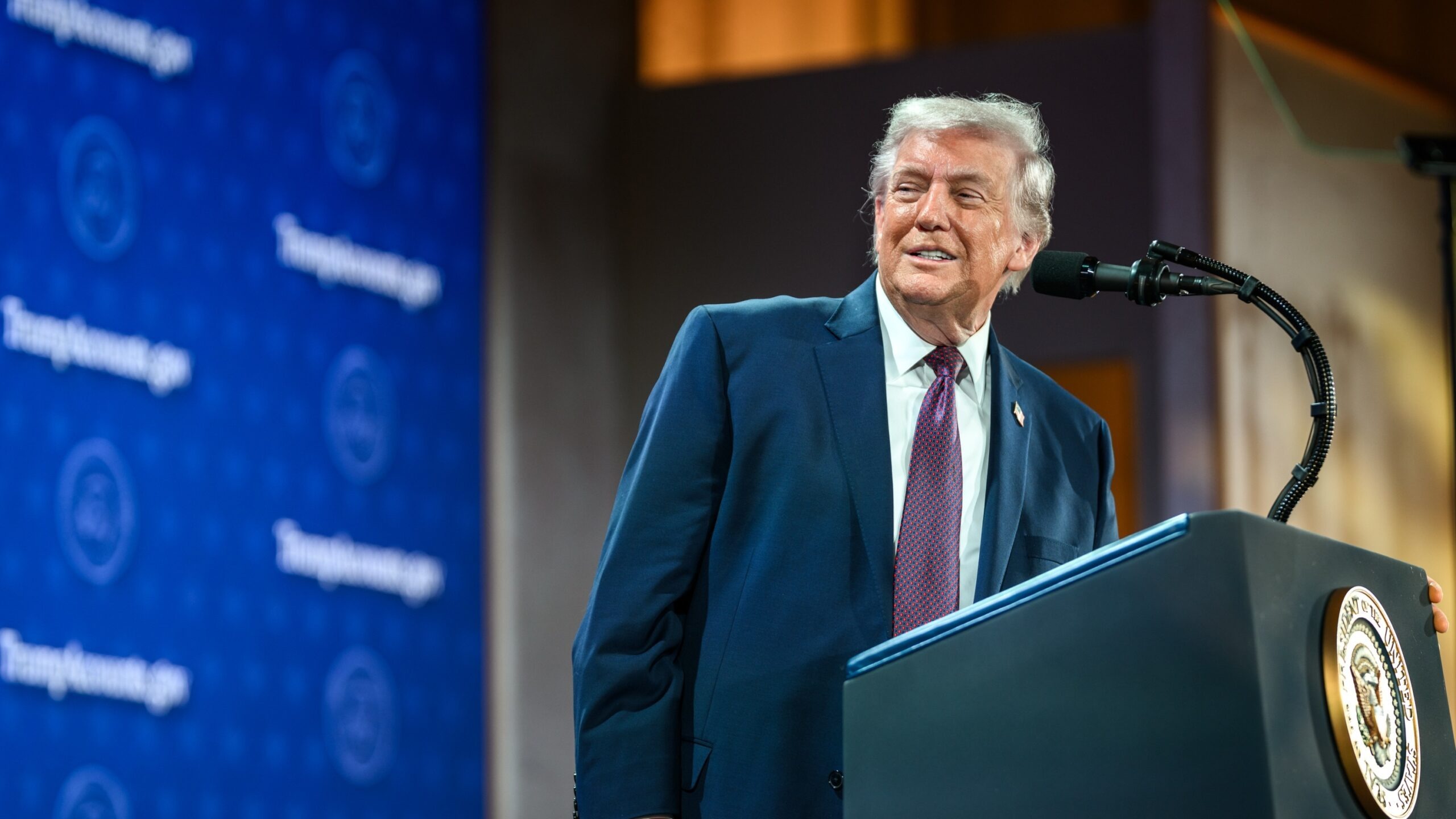
President Donald Trump told his Cabinet on January 29, 2026, that he wants home prices to keep climbing, siding openly with existing homeowners over aspiring buyers he characterized as people who had not worked hard enough. The remarks set up a sharp tension at the center of his housing agenda: an administration that promises affordability while pledging to protect the asset values of those who already own property.
Prices Up, New Buyers Out
During the January Cabinet meeting, Trump stated plainly: “I don’t want to drive housing prices down. I want to drive housing prices up for people that own their homes.” He followed that with a line that drew immediate attention: “We’re going to keep those prices up… so that somebody that didn’t work very hard can buy a home.” The phrasing framed would-be buyers not as families priced out of a historically tight market but as undeserving participants looking for a discount. That framing matters because it signals where the administration’s policy weight will fall when affordability and asset protection collide, and it undercuts the idea that lowering entry costs for renters is an equal priority.
The White House has tried to square this circle by targeting mortgage rates rather than sale prices. Trump directed Fannie Mae and Freddie Mac to purchase $200 billion in mortgages earlier this year, a move designed to push borrowing costs lower without cutting into home values. The theory is straightforward: cheaper monthly payments make expensive homes feel more accessible even if sticker prices keep rising. But cheaper financing also tends to increase demand, which in a supply-constrained market pushes prices higher still. For a first-time buyer saving for a down payment on a home already above $400,000, lower rates alone do not close the gap and can even widen it if prices accelerate faster than wages.
Wall Street Ban Meets Boomer Shield
Running alongside the price-protection pledge is a separate initiative aimed at institutional investors. A White House fact sheet released in January outlined an executive order restricting large institutional investors from purchasing or holding single-family homes. Trump reinforced the point during his address at the World Economic Forum in Davos on January 21, where he discussed the effects of institutional investors on housing prices and asserted that major firms are buying large numbers of single-family properties. By February 19, the administration delivered a memorandum to congressional committee leadership proposing a formal ban on some investor purchases, building on the January executive order and signaling that the White House wants a statutory backstop to its executive actions.
The investor crackdown sounds like a populist affordability play, and in isolation it could free up some inventory for individual buyers. But paired with the explicit goal of keeping prices elevated, the net effect narrows. Removing one source of upward price pressure while simultaneously directing government-backed entities to flood the market with cheap mortgage capital does not produce lower prices; it shifts who benefits from high valuations. Existing owners, many of them older and already on the winning side of the housing divide, see their equity protected, while younger households are told that relief will come primarily from marginally lower monthly payments rather than from any reset in overall costs.
Affordability Promises and Political Trade-Offs
Administration officials have nevertheless framed the broader housing push as a win for stretched households. A January White House article argued that as Trump tackles affordability, progress is emerging and more relief is on the horizon, citing falling mortgage rates and incremental gains in new construction. A subsequent February piece claimed that Trump is bringing back homeownership, highlighting a modest uptick in first-time buyers and a decline in mortgage delinquencies to their lowest level in four years. Together, these narratives present a picture of an improving market in which targeted interventions and a strong economy are gradually easing the strain on families shut out during the last decade’s run-up.
Those claims, however, sit uneasily beside the president’s own insistence that prices should continue climbing and that some aspiring buyers have simply not “worked very hard.” If the policy objective is to preserve and grow the wealth of current owners while only marginally expanding access for newcomers, the housing agenda becomes less about solving an affordability crisis and more about choosing sides in it. The ban on institutional investors, the push for cheaper credit, and the rhetoric of restored dreams all operate within a framework that treats high prices as a feature rather than a problem. For households still renting or living with relatives, the message is clear: the federal government may help them borrow more cheaply, but it is not prepared to risk the political backlash that could come with making homes meaningfully cheaper.
More From The Daily Overview
*This article was researched with the help of AI, with human editors creating the final content.

Elias Broderick specializes in residential and commercial real estate, with a focus on market cycles, property fundamentals, and investment strategy. His writing translates complex housing and development trends into clear insights for both new and experienced investors. At The Daily Overview, Elias explores how real estate fits into long-term wealth planning.

