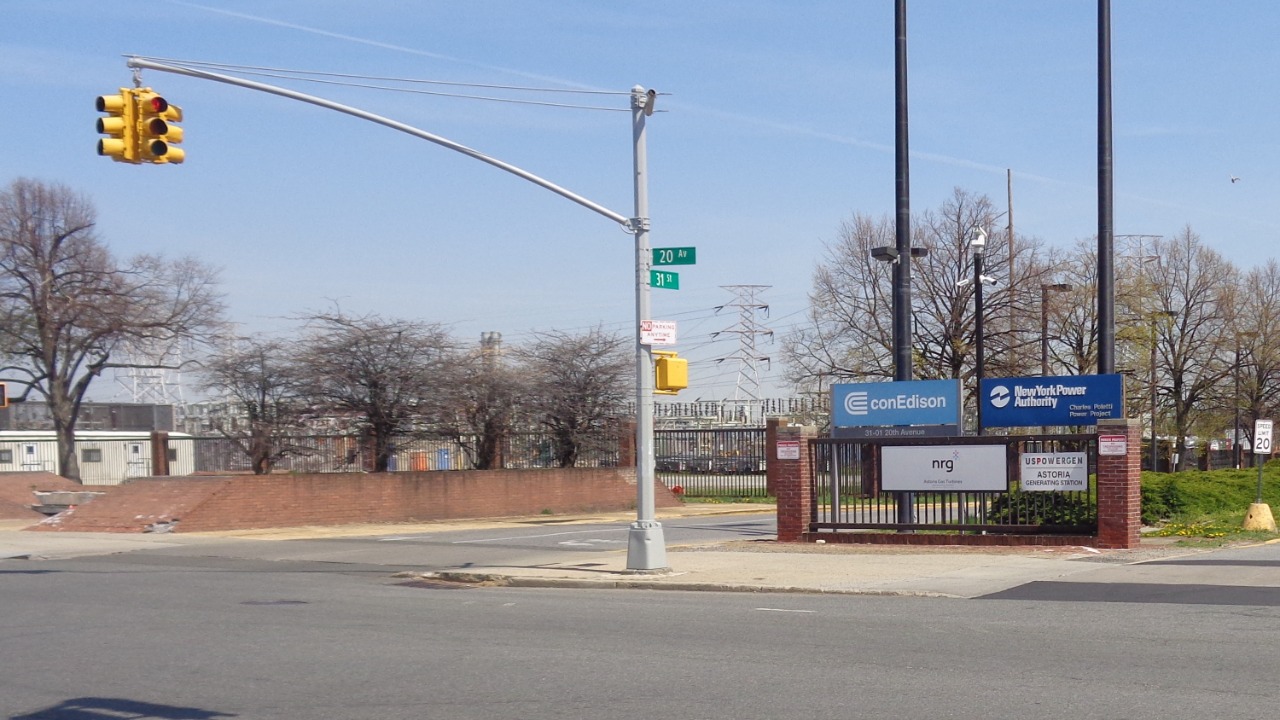
The New York Power Authority’s decision to buy a $7.5 million private plane has detonated into a rare moment of bipartisan outrage in Albany, with lawmakers in both parties questioning how a climate-focused agency justifies luxury air travel for its executives. The uproar is not just about optics, it cuts to whether a public authority that markets itself as a clean energy leader can square that image with a fuel-hungry jet and a history of internal decisions that kept it flying.
At the center of the fight is a $3.4 billion public power provider that Governor Kathy Hochul has tasked with cutting emissions in state buildings, even as its own leaders log trips on a plane that burns thousands of gallons of jet fuel each year. I see the clash over this aircraft as a revealing test of how seriously New York’s political class takes its own climate rhetoric when convenience and status are on the line.
How a climate agency ended up with a $7.5 million jet
The controversy starts with the basic facts: the New York Power Authority, or NYPA, acquired a $7.5 million aircraft to move its executives and engineers around a state it is supposed to help decarbonize. That purchase has now become a political lightning rod because NYPA is a $3.4 billion public authority charged by Hochul with reducing carbon emissions in state buildings, yet its leadership chose to invest in a fuel-burning jet rather than rely on commercial flights, trains, or video calls. Critics have seized on the disconnect between NYPA’s clean energy branding and the reality of a plane that, according to reporting, consumes large quantities of jet fuel every year for trips that often begin and end in the same small circle of New York airports, a pattern that has helped trigger the current bipartisan backlash detailed in one account of critics.
Lawmakers’ anger did not materialize in a vacuum. Earlier reporting laid out how NYPA executives and guests were using a fuel-burning $7.5M private jet even as the authority trumpeted its role in New York’s clean energy transition, with flight logs showing patterns of VIP travel that raised questions about whether the agency could have saved itself significant money by flying commercial. One detailed look at the plane’s operations asked bluntly, “Could NYPA have saved itself $2M on flights?” and pointed to past audit findings that flagged the cost of maintaining an in-house aircraft. Another investigation into how the New York Power Authority trumpets clean energy while operating a jet that is “spewing jet fuel every year” helped set the stage for the current storm, documenting how the authority’s own sustainability messaging sits uneasily beside its travel habits.
Bipartisan outrage and a widening credibility gap
Once those details were public, the political reaction was swift and unusually unified. NY Democrats and Republicans, who rarely agree on much in Albany, have lined up to condemn NYPA’s use of the $7.5 million plane, arguing that the authority is sending the wrong message to ratepayers and taxpayers who are being asked to shoulder the costs of New York’s climate agenda. In one account of the backlash, Democrats and Republicans are described as united in blasting NYPA for flying executives on the $7.5 aircraft while burning thousands of gallons of jet fuel every year, a rare bipartisan alignment that underscores how politically toxic the optics have become. I read that unity as a sign that the plane has crossed from a technocratic budgeting issue into a symbol of elite privilege at odds with the sacrifices climate policy often demands of ordinary residents.
That credibility gap is widened by NYPA’s own internal choices. During the pandemic, NYPA suspended its internal cost-based analysis that had governed when the plane should be used, a move that effectively made it easier to justify private flights even as remote work and video conferencing exploded across the rest of government and the private sector. One analysis of flight logs notes that “During the” pandemic, NYPA suspended that cost-based review, and it details how the plane was used for trips that could have been driven in less than six hours by car. When an agency that tells everyone else to electrify their vehicles and tighten their belts quietly relaxes its own guardrails on private jet use, it is not surprising that lawmakers in both parties see a double standard.
From Hochul’s travel politics to engineers in the air
The fight over NYPA’s jet is also tangled up with Governor Hochul’s own travel politics. In the summer of 2022, Hochul’s administration backed a separate plane acquisition that left the Power Authority itself flying commercial while State Police and the governor’s team defended their own aircraft, prompting critics to label Hochul “oblivious” to the pain at the pump. That earlier episode, described in a report on Hochul, set a political backdrop in which any new revelation about state-related planes was bound to be explosive. When the same governor later tasked NYPA with aggressive climate work while the authority’s own leaders flew on a $7.5 million jet, it created an easy line of attack for opponents who see a pattern of climate messaging paired with old-school perks.
NYPA has tried to blunt that criticism by stressing that the plane is not just a perk for executives but a tool for moving engineers and technical staff quickly to far-flung dams, transmission lines, and substations. Local television coverage has highlighted how New York State residents are effectively the “proud owners” of a $7.5 million airplane, with one segment titled “You Paid For It” asking why engineers cannot simply drive or fly commercial instead. A video report on New York Power Authority engineers taking to the skies, and a companion story noting that MORE New York State employees are being flown on a project basis, capture the tension between operational arguments for the jet and public skepticism that there were no cheaper, greener options. I see that tension as the core of the current uproar: a climate-era public that is increasingly unwilling to accept “because it is convenient” as a sufficient answer when public money and fossil fuel use are on the line.
More From TheDailyOverview
- Dave Ramsey says these two simple questions show whether you’re rich or poor
- Retired But Want To Work? Try These 18 Jobs for Seniors That Pay Weekly
- IRS raises capital gains thresholds for 2026 and what’s new
- 12 ways to make $5,000 fast that actually work

Grant Mercer covers market dynamics, business trends, and the economic forces driving growth across industries. His analysis connects macro movements with real-world implications for investors, entrepreneurs, and professionals. Through his work at The Daily Overview, Grant helps readers understand how markets function and where opportunities may emerge.

