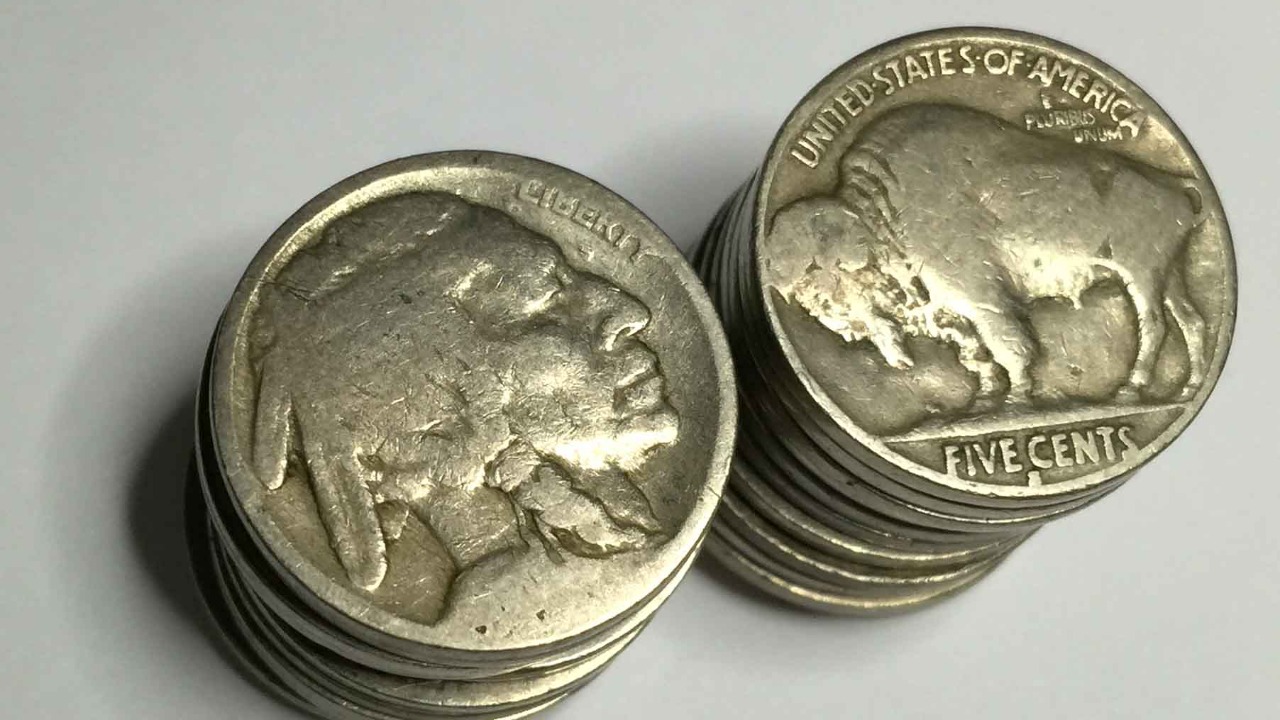
Buffalo nickels sit in countless jars and dresser drawers, yet some of these 5 cent pieces can trade for four or even five figures when the right date, mint mark and condition line up. The key is knowing how to separate a heavily worn pocket change relic from a rare variety that serious collectors will pay thousands of dollars to own. With a few targeted checks, I can quickly tell whether a Buffalo nickel is a common keepsake or a coin that deserves professional grading.
The most valuable Buffalo nickels combine scarcity, strong eye appeal and specific design quirks that specialists hunt for. By focusing on the date, the United States mint that struck the coin, its grade and any unusual errors, it becomes much easier to spot the handful of pieces that routinely headline auction lists and price guides.
Start with the basics: design, date and mint mark
Every Buffalo nickel shares the same core design, a Native American profile on the front and a bison on the back, but the details around the edges are where big money hides. I begin by locating the date on the obverse, which sits on the shoulder of the Native American and is notoriously prone to wear, a placement that specialists note in guides that explain where the date appears. If the numerals are sharp and fully readable, the coin immediately has more potential than a piece where the date is faint or gone.
Once I can read the year, I look just below the words FIVE CENTS on the reverse for a small mint mark that tells me whether the coin came from Philadelphia, Denver or San Francisco. Collectors rely on this combination of date and mint mark to separate ordinary pieces from the key issues that dominate lists of the most valuable Buffalo Nickels. If either the date or mint mark is missing because of wear, I know the coin is far less likely to reach the thousand dollar tier unless a dramatic error is present.
Condition can turn a $5 coin into a $5,000 one
After confirming the basic identity of the coin, I focus on condition, because grade is often what separates a modestly priced collectible from a showpiece. Professional grading scales run from Good, where most details are worn and the date may be faint, up through Mint State, where every line of the design is crisp, a framework that detailed guides on What Determines the Value of a Buffalo Nickel describe in depth. Even within a single year, a Good coin might sell for only a few dollars while a sharply struck Mint State example can command hundreds or more.
Real world price sheets for specific dates drive home how powerful grade can be. For example, commentary on Buffalo Nickels from 1918 stresses that no matter what type of coin is under review, well preserved pieces bring a premium because collectors are willing to pay more for sharp detail. Even coins graded simply “Good” can be desirable when they retain major design elements, a point underscored in descriptions of a 1926 Buffalo Nicke where Condition is called a critical factor in determining value.
Key dates, rare types and famous errors
Once I know the coin is reasonably well preserved, I start checking whether the date and mint mark line up with the key issues that dominate collector wish lists. Price guides that rank the top 25 most valuable Collecting Buffalo Nickels emphasize that key dates and low mintage issues are the backbone of serious sets. Early pieces from 1913, including the original Type I design with the Bison standing on a raised mound, are especially important, and specialists note that this Type I was quickly replaced by Type II, where the Bison stands on a flatter base that protects the denomination from wear, a design change explained in detail in guides to Type I and Type II.
Beyond regular issues, some of the biggest paydays come from dramatic mint errors that transformed ordinary coins into legendary rarities. The 1937-D “3-Legged” nickel is the best known example, where overpolishing of the die erased one of the Bison’s legs and left a distinctive “mushy” appearance on the Reverse, a diagnostic that appears in detailed Key Authentication Tips that tell collectors to Check the Missing Leg and Look for that soft detail. Price commentary on this coin notes that depending on grade, the 1937-D error can be worth five or six figures, which is why I always examine the Bison’s legs closely on any Denver nickel from that year.
How to judge wear, from LIBERTY to the bison’s shoulder
To sort a lightly circulated coin from one that has been through decades of pockets, I look at the highest points of the design, because those are the first to show wear. On the obverse, the word LIBERTY and the date are especially vulnerable, and specialists note that Generally the date and LIBERTY will be faint on weakly struck pieces, with the high points of the Native American’s cheek and hair braid also among the first areas to lose detail, a pattern described in depth in a reference on a 1914 BUFFALO 5C. If those features are sharp and the fields are free of major scratches, I know I am looking at a higher grade coin.
On the reverse, the bison’s shoulder, hip and horn are the key checkpoints. Descriptions of an Extra Fine 1937-D Buffalo Nickels specimen highlight that Condition is a critical consideration for collectors and that in this grade, the hair detail on the chief and the shoulder of the bison remain clear. When I see flat, merged lines in those areas, I know the coin is likely in a lower circulated grade, which sharply limits its upside even if the date is desirable.
No-date nickels, error hunting and when to call in the pros
One of the most common questions I hear is whether a Buffalo nickel with no visible date can still be valuable. The short answer is that heavy wear usually erases the date on the shoulder, and guides that explain the Background of the Buffalo design recommend first assessing the condition, looking for deep wear, scratches or other imperfections. Separate analysis of what a no date Buffalo is worth notes that Buffalo nickels with no date are usually not worth very much money and generally sell for anywhere from $0.06 to $0.20, unless they feature any rare errors.
That caveat is important, because unusual varieties and mistakes can still turn up even on worn coins. Error specialists stress that Knowing what to look for is crucial and that Noting an unusual looking coin is a good start, but being familiar with famous errors may require a magnifying glass to see, advice laid out in a broader guide to error coins. For Buffalo nickels specifically, that means scanning for doubled dies, repunched mint marks and the distinctive 3-Legged reverse, patterns that detailed lists of Type rarities recommend confirming with a third party grading company.
Why rarity and third party grading matter so much
Even within the same date and mint, not every coin has the same market appeal, which is where rarity and certification come in. Collectors and dealers emphasize that Rarity is a significant factor in choosing Buffalo Nickels, noting that Coins from years with lower mintages or those with historical significance are more appealing. Broader collecting advice echoes this, explaining that Rarity, Coins with low mintage numbers, unique errors or limited circulation are often the most sought after, a principle laid out in a general guide to Rarity in numismatics.
Because the stakes can be high, I lean on professional graders when a coin looks especially promising. Practical checklists that answer How can I tell if my Buffalo Nickel is valuable advise collectors to Check the date, mintmark and condition, and to have coins with clear details and potential rarity evaluated by PCGS or NGC. Market coverage that tracks how Buffalo Nickels Could Be Worth Thousands notes that in the past, finding an especially rare example in circulation has led to estimated values such as $104,650, a reminder that a small fee for certification can unlock full market value.
Putting it all together before you cash in
When I evaluate a Buffalo nickel from a change jar or inherited collection, I run through the same checklist every time. I start by confirming that the coin is indeed a Buffalo Nickel, then I look at the date and mint mark, using simple visual guides that explain how to Look at the date and read the mint mark. I then judge the grade, comparing the coin’s wear to descriptions of Good, where Most details are worn, and higher levels where more of the design survives, a structure laid out in detail in grading discussions that start with the word Good and emphasize that Most of the design can still be visible even on lower grade pieces.
Finally, I cross check the date and mint against key lists, remembering that Collectors use the date, United States mint and condition to determine the value of Buffalo nickels and that According to expert guidance, the bison on the tails side can hide valuable errors. I keep in mind that rolls of older Coins can still yield surprises, and that even a single standout piece from a group of Coins can justify the time spent searching. With that structured approach, anyone can move beyond guesswork and give each Buffalo nickel a fair shot at revealing whether it is a common keepsake or a coin that truly belongs in the thousand dollar club.
More From TheDailyOverview

Cole Whitaker focuses on the fundamentals of money management, helping readers make smarter decisions around income, spending, saving, and long-term financial stability. His writing emphasizes clarity, discipline, and practical systems that work in real life. At The Daily Overview, Cole breaks down personal finance topics into straightforward guidance readers can apply immediately.

