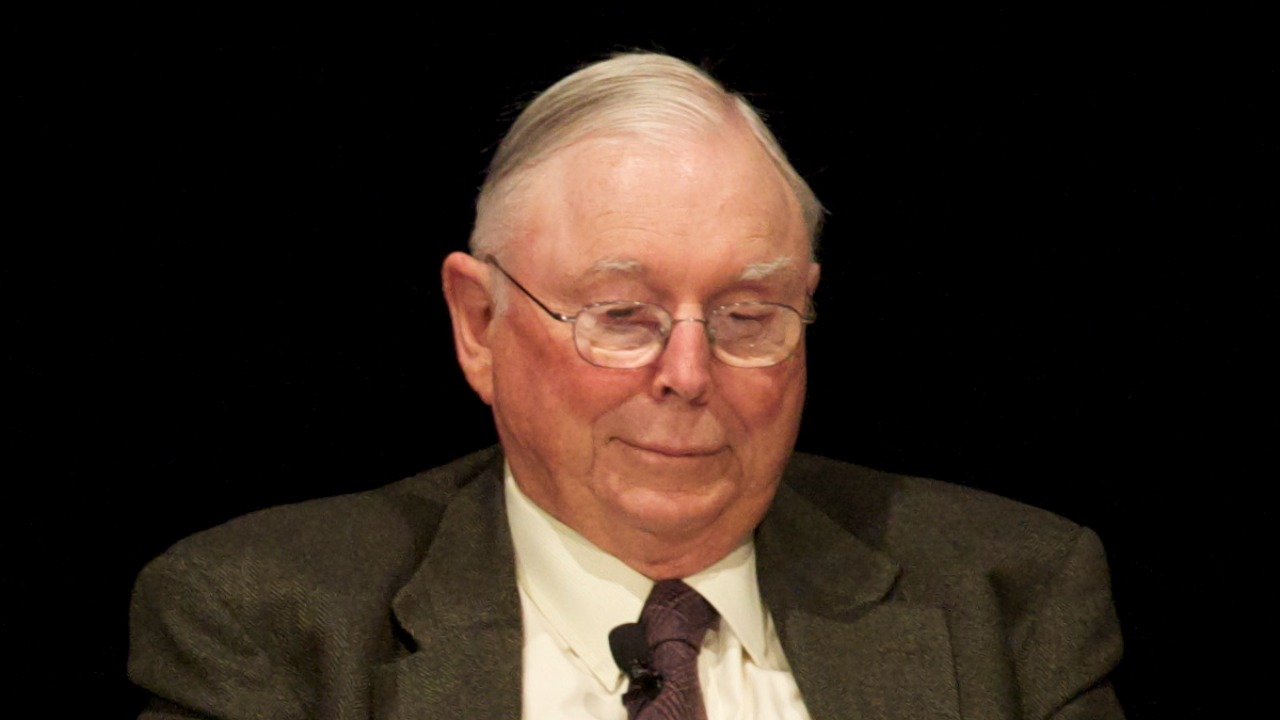
Market crashes are not hypothetical for long-term investors, they are recurring stress tests that decide who actually keeps their wealth. Warren Buffett and Charlie Munger treated the possibility of a brutal 50% drop not as a rare disaster but as a cost of admission to serious returns. I want to unpack how their shared playbook can function as a crash shield, so you can face the next big drawdown with a plan instead of panic.
Why Buffett and Munger planned for a 50% hit
Charlie Munger was blunt that serious equity investing means accepting deep temporary losses as the price of long-term gains. He argued that enduring an occasional 50% drop is crucial for any investor who wants more than a “mediocre result,” a standard that sounds harsh but reflects how violently markets can reprice even great businesses. In his view, most people fail not because they pick terrible companies, but because they abandon sound positions when volatility spikes and short-term fear overwhelms long-term logic.
That philosophy is echoed in reporting that notes how Charlie Munger, who died in 2023 at the age of 99, consistently framed a 50% drawdown as something to be expected, not avoided at all costs. When I look at that stance, I see a deliberate attempt to inoculate investors against the shock of a crash, so that when screens turn red they remember the original thesis and the business fundamentals instead of treating volatility as a verdict on their intelligence.
Munger’s “brutal truth” and the emotional side of a crash
Munger’s crash shield starts with psychology, not spreadsheets. His Brutal Truth For Investors was simple: “If You Can’t Handle a 50% Drop, you deserve a mediocre result.” That line is not about mocking small investors, it is about forcing them to decide whether they truly want equity-like returns with equity-like swings. If you build a portfolio that only works when markets are calm, you have already failed the test that matters most.
In a separate reflection on crashes, Munger described how most people panic when a stock or the overall market has fallen by 50%, even if the underlying business is intact. He called this kind of volatility a normal “vicissitude,” using the phrase Volatility Is the Price of Admission and even referring to “Vicissitude” as a fancy word for the unpleasant changes investors must live with. When I apply that lens, a crash stops being an emergency and becomes a scheduled turbulence, something I know is coming and have already agreed to tolerate in exchange for the chance at long-term compounding.
“Volatility is the price of admission,” explained
To Munger, the phrase “Volatility Is the Price of Admission” was not a slogan, it was a risk budget. He believed that many investors fail not because they pick bad stocks, but because they cannot sit still long enough for compounding to work. In his view, even if you do not buy anything during a downturn, simply staying put allows you to reap the full benefit of long-term compounding as markets eventually recover and quality businesses grow their earnings.
That idea is spelled out in detail in a reflection that notes how Many investors fail not because they pick bad stocks, but because they interrupt compounding by selling at the worst possible time. The same piece stresses that disciplined investors focus on business fundamentals instead of price quotes, which is exactly how Munger could watch a holding drop by 50% and still feel comfortable if the competitive position and earnings power were intact. When I internalize that, volatility stops being a verdict and becomes a fee I knowingly pay to access long-term growth.
Buffett’s warning as 2026 approaches: prepare, do not predict
Warren Buffett has been sending a clear message as markets head into another uncertain year: expect turbulence, but do not let fear dictate your moves. He has built a big cash position at Berkshire Hathaway, not because he is trying to time the exact top, but because he wants the flexibility to act when prices finally become attractive again. That stance treats a future selloff as an opportunity that requires preparation, not a catastrophe that calls for clairvoyance.
In a recent analysis, Investors were reminded that Buffett is not urging anyone to panic even if the stock market could fall sharply. Instead, he is effectively telling people to hold their pitch and buy selectively, a baseball metaphor he has used for decades to describe waiting for fat pitches rather than swinging at every offering. When I connect that to crash preparation, it means building a watchlist, holding some dry powder, and accepting that I will never nail the exact bottom, only a rational price.
Staying calm when screens go red
Buffett’s crash shield starts with behavior in the heat of the moment. When stocks fall hard, his first instruction is simple: Stay Calm and Avoid Panic Selling. He has repeated for years that investors should be “fearful when others are greedy” and “greedy when others are fearful,” a mindset that flips the usual emotional script of a crash. Instead of seeing falling prices as a reason to flee, he sees them as a potential sale on future earnings.
The same guidance emphasizes that investors should Focus on Business Fundamentals instead of trying to Don’t time the market, because most people who attempt to jump in and out end up selling low and buying high. When I apply that to a 50% drawdown, the key question becomes whether the company’s competitive position, balance sheet, and earnings power are intact, not whether the chart looks ugly. If the business is fine and the price is lower, the logic of value investing says my expected return has improved, not deteriorated.
Safety nets, cash piles, and the Buffett Indicator
Buffett’s caution is not just philosophical, it is backed by how he reads market-wide risk. The so-called The Buffett Indicator, which compares total stock market value to the size of the economy, has been flashing that investors could be “playing with fire” in the late stages of a long bull run. When valuations stretch far above historical norms, the odds of a sharp correction or a grinding period of low returns rise, even if no one can say exactly when the adjustment will arrive.
In that context, Buffett’s emphasis on building up your safety net becomes a practical crash shield. A safety net can mean more cash, shorter-term bonds, or simply a lower allocation to the frothiest parts of the market, so that a 50% drop in risk assets does not force you to sell at the bottom to cover living expenses. When I think about this, I see it as pre-committing to survive a severe drawdown without being a forced seller, which is the real difference between a temporary paper loss and a permanent capital loss.
Time horizon: owning for ten years, not ten minutes
Both Buffett and Munger anchor their crash strategy in time horizon. Buffett has said that if you are not willing to own a stock for ten years, you should not even Make yourself think about owning it for ten minutes. That line captures his disdain for short-term speculation and his belief that real investing is about owning pieces of businesses, not trading pieces of paper. A 50% crash looks very different if you are judging your success over a decade instead of a quarter.
His broader advice is to Warren Buffett focus on long-term investments and avoid short-term trading, because compounding needs time and stability to work. When I align my expectations with that horizon, a crash becomes one chapter in a long story rather than the final page. It also nudges me toward businesses whose economics I can understand and trust over many years, which is exactly the kind of portfolio that can recover from a deep drawdown.
Moats, patience, and why quality survives crashes
Another core element of the Buffett and Munger crash shield is the insistence on durable competitive advantages, or “moats.” Buffett has often highlighted how Berkshire Hathaway’s investment in the Coca Cola Example involved buying roughly 400 m shares of Coca-Cola, a company whose brand, distribution, and pricing power gave it a moat that could withstand recessions and market panics. When the market slumps, such businesses may see their share prices fall, but their underlying cash flows and competitive positions often remain resilient.
Munger captured the other half of this equation with his line that “the big money is not in the buying and the selling, but in the waiting.” A detailed look at his approach notes that This strategy of patience proved particularly effective during American downturns such as the 2008 financial crisis, when those who avoided “No panic sells” and held quality names were rewarded in the recovery. When I combine moats with patience, I get a portfolio that is built to suffer less permanent damage in a crash and to rebound more strongly afterward.
Behavior at the helm: what Buffett is doing with Berkshire now
Buffett’s own behavior at Berkshire Hathaway offers a real-time case study in crash preparation. As Warren Buffett steps down as As Warren Buffett from the role of CEO of Berkshire Hathaway, his recent trading behavior has drawn attention because it shows a preference for caution over exuberance. Over the past several quarters he has allowed cash to build and has been selective about new equity commitments, a pattern that lines up with his verbal warnings about elevated valuations and the likelihood of sharper swings as we enter 2026.
For individual investors, mirroring every Berkshire move is impossible, but the principles are transferable. Holding more cash when the Buffett Indicator is stretched, refusing to chase speculative manias, and being ready to buy when fear is highest are all consistent with the way Buffett has navigated past cycles. When I look at his current posture, I see a living example of the crash shield he and Munger spent decades describing: accept that a 50% drop can happen, structure your finances so you can survive it, and be prepared to act rationally when others cannot.
More From TheDailyOverview

Cole Whitaker focuses on the fundamentals of money management, helping readers make smarter decisions around income, spending, saving, and long-term financial stability. His writing emphasizes clarity, discipline, and practical systems that work in real life. At The Daily Overview, Cole breaks down personal finance topics into straightforward guidance readers can apply immediately.

