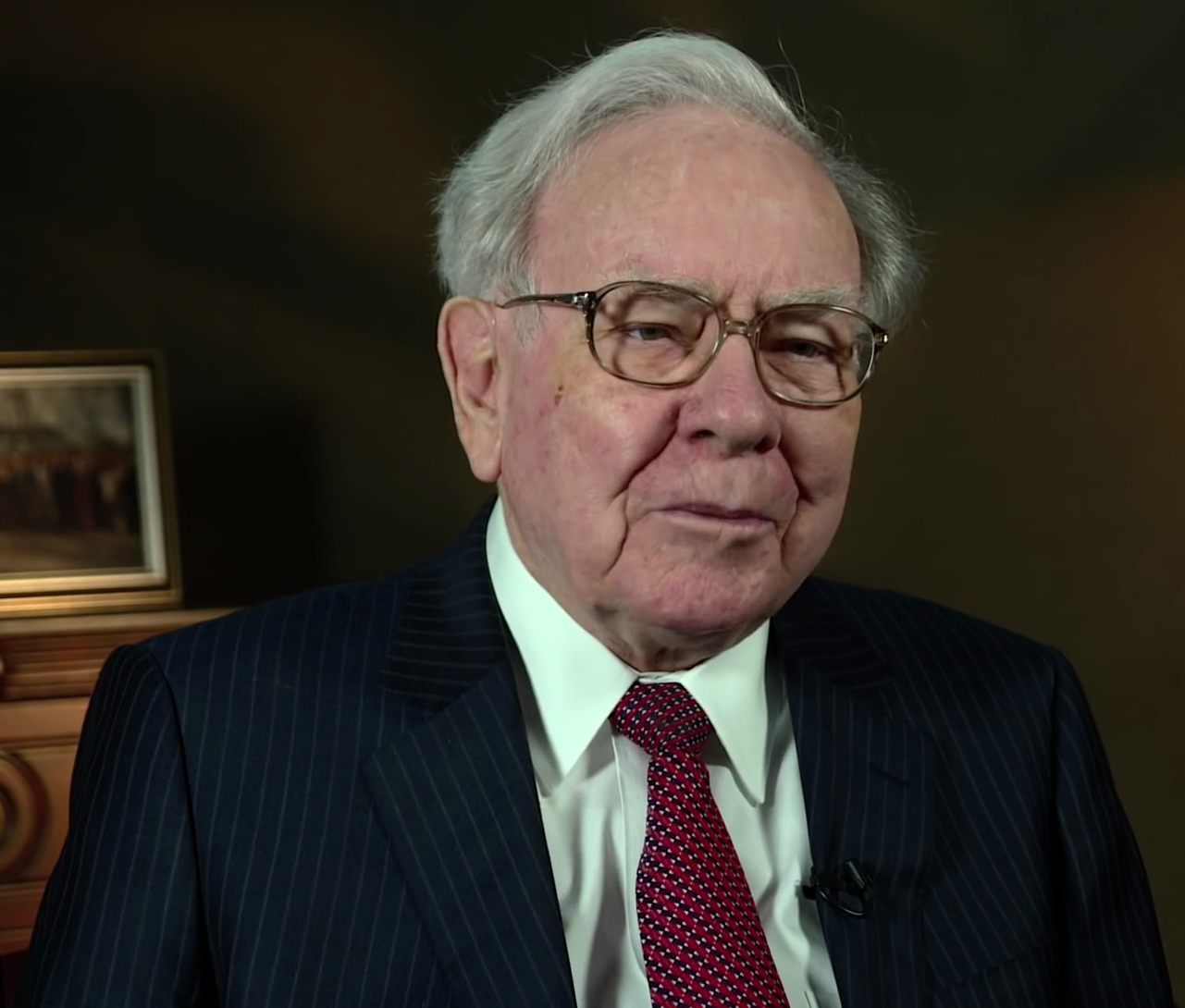
Warren Buffett used his 2025 shareholder letter to make a striking claim: if roughly 800 of the largest U.S. corporations matched Berkshire Hathaway’s federal tax contributions, individual Americans would owe nothing to the IRS, and Social Security could be fully funded without raising personal rates. The assertion, delivered alongside Berkshire’s 2024 annual report, doubles as pointed advice for policymakers and a challenge to corporate America’s tax practices at a time when deficit spending and entitlement solvency dominate Washington’s agenda.
Berkshire’s $26.8 Billion Tax Bill and the 800-Company Math
The core of Buffett’s argument rests on a single, auditable number. Berkshire Hathaway reported paying about $26.8 billion in corporate federal income tax for the fiscal year, a figure disclosed in the company’s annual letter released in February 2025. Buffett contrasted that sum with Berkshire’s tax bill in 1965, when the company paid zero income tax. The gap between those two data points, spanning six decades, frames his broader point: a company that started small and grew into one of the world’s largest conglomerates chose to pay taxes at scale rather than engineer its obligations down to near zero.
Buffett’s hypothetical extrapolation is straightforward. If 800 companies of comparable size each contributed at a rate similar to Berkshire’s, the combined revenue would, in his telling, be large enough to eliminate the need for individual federal income taxes entirely, with enough left over to shore up Social Security. The letter does not name specific companies or publish a detailed methodology, and no independent IRS dataset confirming the effective rates of those 800 firms has been released alongside the claim. That absence matters. Without comparative filings, the argument functions more as a provocation than a policy blueprint, though the underlying tax disclosure in Berkshire’s 10‑K filings with the SEC provides an audited foundation for the conglomerate’s own numbers and gives investors a way to verify the scale of its tax contributions.
Advice for Trump, Policy Makers, and the Deficit Debate
Buffett directed his remarks partly at Donald Trump, framing the tax discussion as practical counsel rather than partisan criticism. According to contemporaneous reporting, the letter offered this advice while simultaneously celebrating Berkshire’s record performance and reassuring shareholders about the company’s long‑term prospects. The timing is deliberate. Federal deficits have ballooned in recent years, and Social Security’s trust funds face projected shortfalls that could force benefit reductions within the next decade. By highlighting Berkshire’s tax bill, Buffett argues that closing the gap does not require higher taxes on workers or retirees if large corporations simply paid what his company already pays, implicitly urging the next administration to focus on corporate receipts rather than individual rates.
That framing, however, sidesteps a structural reality. Berkshire Hathaway’s tax bill is unusually large in part because its business model generates substantial realized capital gains and insurance underwriting profits, revenue streams that many technology, pharmaceutical, and multinational firms defer or shift offshore through legal but aggressive planning. Matching Berkshire’s effective rate would require not just political will but a rewrite of the corporate tax code’s treatment of intellectual property, transfer pricing, and accelerated depreciation. Buffett has acknowledged versions of this complexity in past letters, but the 2025 edition leans harder on the moral case than the mechanical one, leaving open questions about how quickly any administration could translate his thought experiment into enforceable tax rules without disrupting investment or global competitiveness.
Record Profits, Shareholder Reassurance, and a Leadership Transition
The tax claim lands against a backdrop of exceptional financial results. Berkshire Hathaway’s profits rose about 17% for the year, driven by gains across its insurance, energy, and railroad operations as well as a rebound in some equity holdings. Strong operating earnings gave Buffett added credibility in arguing that healthy, diversified corporations can shoulder a larger share of the federal tax burden without sacrificing competitiveness. For shareholders, the combination of rising profits and a hefty tax bill served as evidence that Berkshire can both reward owners and remain a substantial contributor to public finances, reinforcing Buffett’s long‑standing view that capitalism and a robust tax base are not mutually exclusive.
The company underscored that message in an official news release to investors, which highlighted record operating earnings, a strong balance sheet, and ongoing share repurchases while acknowledging the scale of its federal tax payments. Those disclosures arrive as Berkshire navigates a leadership transition, with Buffett in his mid‑90s and vice chairs and operating managers taking on more visible roles. By tying the firm’s future to a philosophy of paying “full freight” on taxes, Buffett is effectively passing along not just a portfolio but a public stance: that large, profitable corporations should expect to fund a meaningful share of the federal government. Whether his successors maintain that posture, and whether lawmakers take up his challenge to the other 799 companies in his thought experiment, will help determine if his 2025 letter is remembered as a clever rhetorical flourish or an early marker in a broader shift in U.S. corporate tax policy.
More From The Daily Overview
*This article was researched with the help of AI, with human editors creating the final content.

Grant Mercer covers market dynamics, business trends, and the economic forces driving growth across industries. His analysis connects macro movements with real-world implications for investors, entrepreneurs, and professionals. Through his work at The Daily Overview, Grant helps readers understand how markets function and where opportunities may emerge.


