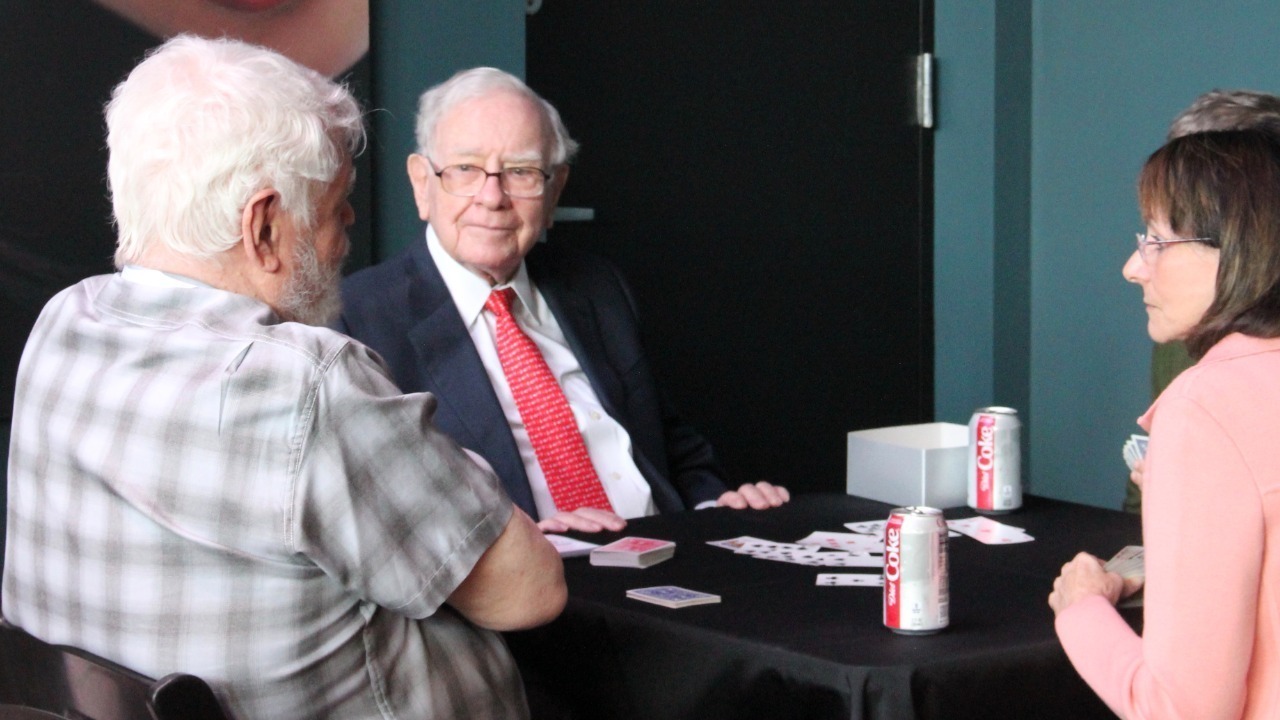
Warren Buffett is handing Berkshire Hathaway to a new leader after roughly 60 years of compounding capital, and he is using the transition to crystallize a handful of core investing secrets. As the Warren Buffett era is ending and a new CEO steps in, I see a rare moment when decades of practice are being distilled into a practical playbook for individual investors.
1) Embrace Long-Term Value Investing
Embrace Long-Term Value Investing is the first secret Warren Buffett is emphasizing as the Warren Buffett era is ending after roughly 60 years of running Berkshire Hathaway. Reporting on how Buffett built Berkshire highlights that he consistently bought businesses for less than their intrinsic value and then held them as earnings and cash flows compounded over time, rather than trading around short term market moves, a pattern detailed in a guide on how to invest like Warren Buffett. That approach turned early stakes in insurers, railroads, and consumer brands into engines of cash that could be redeployed into new opportunities, creating a self-funding cycle that did not depend on market timing. By focusing on what a business will earn over decades instead of quarters, Buffett effectively treated stocks as partial ownership of real companies, not lottery tickets.
The stakes for investors are clear, because this philosophy is what allowed Berkshire Hathaway to keep growing even as its size made quick wins harder. As Buffett prepares to hand the Berkshire Hathaway CEO role to Greg Abel, the long-term value mindset becomes a cultural asset that outlives any single stock pick. For individual investors, the lesson is to build a watchlist of understandable companies, estimate conservative long-run cash flows, and buy only when the price offers a margin of safety. In practice, that can mean holding a high-quality bank or consumer staple through multiple cycles, reinvesting dividends, and resisting the urge to sell just because headlines turn negative for a few months.
2) Prioritize Companies with Economic Moats
Prioritize Companies with Economic Moats captures Buffett’s second secret as he serves his last day as Berkshire Hathaway’s CEO and passes the reins to Greg Abel. Coverage of the transition notes that Warren Buffett retires as Berkshire Hathaway CEO after building a conglomerate around businesses with durable competitive advantages, from regulated utilities to brand-heavy consumer franchises. These economic moats, whether they come from network effects, cost advantages, or strong brands, help companies defend pricing power and profitability even when competitors crowd in. Buffett’s long-standing preference for such businesses explains why Berkshire’s core holdings often include insurers with underwriting discipline, railroads with irreplaceable networks, and industrials that dominate niche markets.
For investors watching the leadership change, the emphasis on moats signals continuity in how capital will be allocated under Greg Abel. A company with a wide moat can support steady reinvestment, reliable dividends, and opportunistic buybacks, all of which matter more over 10 or 20 years than short bursts of growth. I see this as a reminder to screen portfolios not just for earnings growth but for the structural forces that protect those earnings, such as switching costs or regulatory barriers. In practical terms, that might mean favoring a payments network with entrenched merchant relationships over a flashy but unprofitable fintech, or choosing a dominant railroad with irreplaceable rights-of-way instead of a cyclical shipping stock that lacks pricing power.
3) Explore Hidden Opportunities in Secret Holdings
Explore Hidden Opportunities in Secret Holdings reflects a lesser-known Buffett secret that surfaced as attention turned to Warren Buffett’s “Secret Portfolio” during the Berkshire transition. Regulatory rules allow Berkshire to request confidential treatment for some stock positions while they are being built, and reporting on Warren Buffett’s secret portfolio describes how undisclosed holdings have sometimes outperformed the widely watched public stakes. By quietly accumulating shares in underappreciated companies, Buffett avoids bidding against himself and reduces the risk that copycat investors will drive up prices before Berkshire is finished buying. Once the positions are revealed, they often fit the same pattern as his better-known bets, combining strong cash generation with reasonable valuations and, frequently, dividends.
The implication for investors is not that they can access Berkshire’s confidential filings, but that genuine opportunity often lies where attention is scarce. Buffett’s use of a secret portfolio underscores his belief that the best ideas are rarely the ones dominating financial television or social media feeds. I interpret this as encouragement to look beyond the obvious mega-cap names and study mid-cap or even smaller firms with solid balance sheets and clear business models that have not yet attracted broad coverage. It also highlights the value of patience, because building a meaningful position in a thinly traded stock can take time, and the payoff may not be visible until years after the initial purchase.
4) Target Reliable Dividend Payers for Steady Income
Target Reliable Dividend Payers for Steady Income is another explicit secret emerging from the focus on 5 Perfect Dividend Stocks for Berkshire Hathaway that sit inside Buffett’s less publicized holdings. Analysis of 5 perfect dividend stocks in that context shows that Buffett has quietly accumulated companies that combine dependable cash payouts with the potential for moderate growth. These are not speculative high-yield plays, but businesses whose dividends are backed by recurring revenue, strong free cash flow, and conservative payout ratios. The steady income stream helps Berkshire fund new investments and share repurchases without relying solely on selling assets, reinforcing the compounding engine that has defined Buffett’s tenure.
For individual investors, the emphasis on reliable dividends offers a practical blueprint for building resilience into a portfolio, especially as leadership at Berkshire shifts. A basket of high-quality dividend payers can cushion volatility, provide cash to reinvest during downturns, and support long-term goals like retirement without forcing sales at unfavorable prices. I see Buffett’s preference for such stocks as a counterweight to the current fascination with non-profitable growth names, reminding investors that boring can be beautiful when it comes with rising payouts and disciplined capital allocation. Screening for companies with a decade or more of uninterrupted dividends, manageable debt, and clear competitive advantages can help replicate this aspect of the Berkshire playbook on a smaller scale.
5) Learn Timeless Principles from the Master
Learn Timeless Principles from the Master brings together the five investing lessons that are being highlighted as the Warren Buffett era is ending and he hands Berkshire Hathaway to a new leader. Coverage of the transition notes that on Dec, Warren Buffett will hand over the Berkshire Hathaway CEO job to Greg Abel, and that now, as Buffett’s 60 years of running the conglomerate draw to a close, commentators are distilling five investing lessons from the GOAT. A separate breakdown of how to invest like him emphasizes patience, discipline, and a refusal to speculate, framing these as enduring rules rather than era-specific tactics, which is echoed in a piece titled Warren Buffett Gifts Us that describes how he hands Berkshire Hathaway’s reins while sharing Secrets for Investing Success as He Hands them over. Together, these accounts stress living below one’s means, avoiding leverage, staying within a circle of competence, and treating market volatility as a friend rather than a threat.
The stakes for investors extend beyond Berkshire’s stock price, because these principles shape how people think about risk and reward in an era of rapid trading and constant information. I read Buffett’s final public reflections as a challenge to slow down, build checklists, and judge decisions by process quality instead of short-term outcomes. That might mean committing to a written investment policy, limiting portfolio turnover, and revisiting core holdings only when the underlying business changes, not when the share price swings. As Berkshire moves into the Greg Abel chapter, the real test of Buffett’s legacy will be whether these habits, more than any individual stock pick, continue to guide both professional and everyday investors who look to him as the GOAT of long-term compounding.
More From TheDailyOverview

Cole Whitaker focuses on the fundamentals of money management, helping readers make smarter decisions around income, spending, saving, and long-term financial stability. His writing emphasizes clarity, discipline, and practical systems that work in real life. At The Daily Overview, Cole breaks down personal finance topics into straightforward guidance readers can apply immediately.

