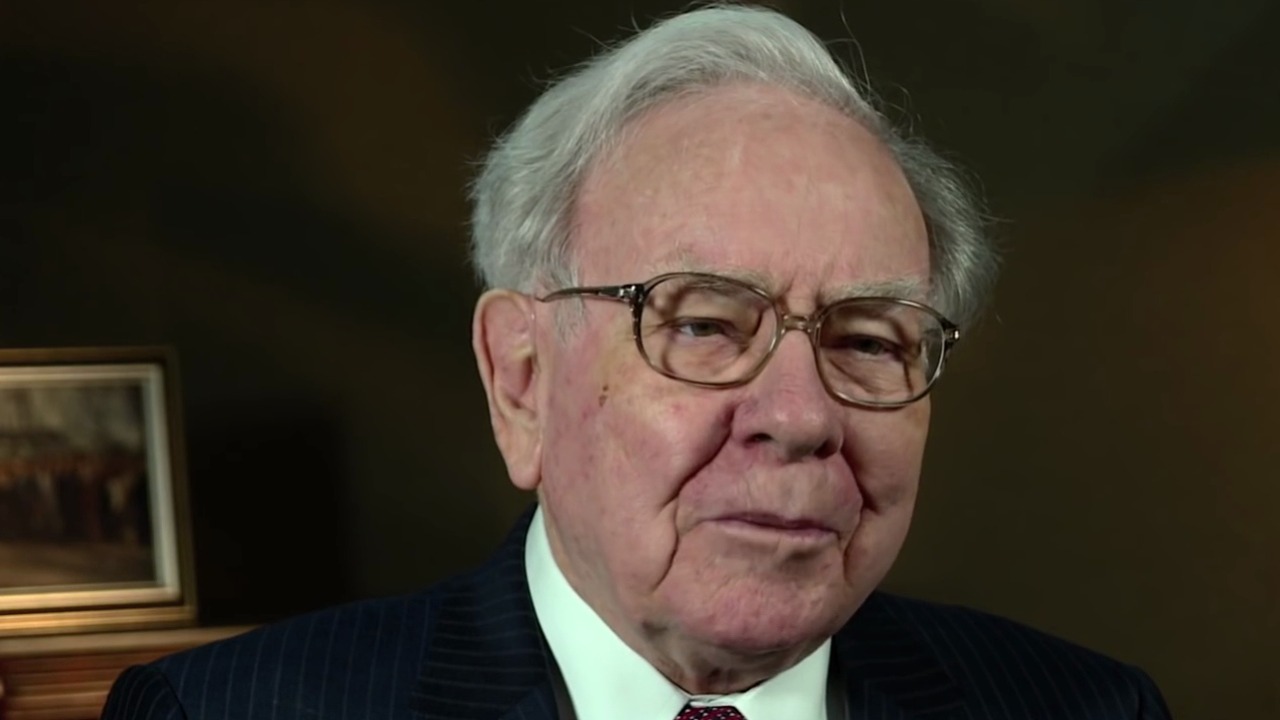
Warren Buffett’s investing playbook has outlasted market fads, technology shifts, and multiple crises because it rests on a few clear principles rather than complicated formulas. I see those principles as a practical checklist for anyone trying to build wealth in markets that feel faster and noisier every year, from long-term retirement savers to younger investors trading on their phones.
Think like a business owner, not a stock picker
Buffett’s core idea is deceptively simple: when I buy a stock, I am buying a slice of a real business, not a lottery ticket. That mindset pushes me to ask what the company actually does, how it makes money, and whether I would be comfortable owning it if the market shut down for years. Buffett has repeatedly stressed that he looks for understandable businesses with durable economics and strong managers, a philosophy he has applied at Berkshire Hathaway as it built large stakes in companies such as Apple and long-held subsidiaries like GEICO and BNSF Railway. Treating shares as ownership in a living enterprise, not just a ticker symbol, is what lets him ignore short-term price swings and focus on long-term cash generation.
Thinking like an owner also changes how I judge risk. Instead of worrying first about whether a stock will be volatile next quarter, I look at whether the underlying business can survive recessions, handle competition, and keep reinvesting at good returns. Buffett has described his ideal holding period as “forever” and has backed that up by keeping core positions for decades, even when they fall out of favor. His long relationship with Coca‑Cola, for example, reflects a belief that the company’s brand, distribution network, and pricing power matter more than any single year’s sales wobble. That owner’s lens is a guardrail against chasing stories I do not truly understand.
Insist on a margin of safety
Another Buffett staple is the idea of paying less than a business is worth, leaving room for error if my analysis is imperfect. He has often framed this as buying a dollar for 70 cents, a concept that traces back to his mentor Benjamin Graham and still shapes how Berkshire evaluates deals. When Berkshire committed tens of billions of dollars to energy and infrastructure assets, for instance, Buffett emphasized predictable cash flows and conservative assumptions about future demand, effectively building in a cushion if growth came in below expectations. That discipline is why he has been willing to sit on large piles of cash when valuations look stretched instead of stretching for returns at any price.
For individual investors, a margin of safety can be as simple as refusing to buy into hype when earnings, cash flow, or assets do not justify the market price. Buffett has warned repeatedly about paying too much for “wonderful” businesses, noting in his recent shareholder letters that even great companies can be poor investments if purchased at extreme valuations. He has also highlighted how leverage can erase that safety buffer, pointing to financial firms that collapsed during the 2008 crisis after relying on short-term funding and thin capital. By insisting on a discount to intrinsic value and avoiding fragile balance sheets, I give myself room to be wrong without being wiped out.
Stay within your circle of competence
Buffett’s “circle of competence” mantra is one of his most practical filters: I do not need to know everything, only enough about a limited set of businesses to judge them sensibly. He has been candid about skipping entire sectors when he cannot confidently estimate their economics, which is why Berkshire was slow to invest in technology and has still avoided many high-growth software names. When he finally did build a massive position in Apple, he framed it less as a bet on cutting-edge tech and more as a consumer brand with loyal customers, sticky products like the iPhone, and a powerful ecosystem that drives recurring revenue.
Staying inside that circle does not mean never learning anything new, but it does mean recognizing when I am guessing. Buffett has contrasted his comfort with regulated utilities and insurance, where he can model cash flows and risks, with his reluctance to speculate on cryptocurrencies or early-stage biotech. In his 2018 letter, he underscored that investors hurt themselves most when they stray into areas they do not understand simply because others seem to be getting rich there. For everyday investors, that might mean focusing on sectors tied to their own professional experience or products they use regularly, and using broad index funds for the rest instead of pretending to have an edge in every corner of the market.
Be patient and let compounding work
Buffett’s fortune is as much a story of time as it is of skill. He has pointed out that the bulk of his net worth accumulated after he turned 50, a testament to what happens when returns compound over decades. Berkshire’s long-term record, detailed in its annual reports, shows how reinvesting profits from businesses like insurance, railroads, and consumer brands has steadily increased the company’s earning power. That compounding engine depends on patience: holding on to strong businesses, resisting the urge to trade constantly, and allowing dividends and retained earnings to snowball.
Patience also shows up in how Buffett responds to market turbulence. During periods of sharp volatility, he has urged shareholders to treat stocks as pieces of businesses and to focus on long-term prospects rather than daily price moves, a stance he reiterated in letters written after the 2008 crisis and during the early stages of the COVID‑19 shock. He has described cash as a call option on future opportunities, which is why Berkshire has sometimes allowed its cash hoard to swell while waiting for more attractive valuations. For individual investors, that translates into building a plan that can survive downturns, keeping enough liquidity for emergencies, and resisting the temptation to abandon a sound strategy just because markets are rough for a year or two.
Keep costs low and avoid unnecessary complexity
Despite running one of the world’s most closely watched investment conglomerates, Buffett has consistently argued that most people are better off with simple, low-cost strategies. He has recommended that nonprofessional investors put the bulk of their money into a low-fee S&P 500 index fund, a view he formalized in instructions for how his own estate should be managed, as described in his 2013 shareholder letter. He has also highlighted how high fees and frequent trading can quietly erode returns, pointing to the long-term drag of costs in actively managed funds that fail to beat the market after expenses.
That preference for simplicity extends to the way Berkshire structures many of its deals. When it partnered on large acquisitions like Kraft Heinz, Buffett favored straightforward equity stakes and clear governance arrangements over exotic derivatives or opaque financing. He has criticized complex financial products that even their creators struggle to value, arguing that opacity often hides risk rather than diversifying it. For individual investors, following that lead can mean favoring broad index funds, avoiding leveraged or inverse exchange-traded products, and steering clear of strategies they cannot explain in plain language.
Protect yourself from emotion and herd behavior
Buffett’s most quoted line, about being “fearful when others are greedy and greedy when others are fearful,” captures his view that crowd psychology is one of the biggest threats to rational investing. He has documented in multiple shareholder letters how market panics and manias create mispricings that disciplined investors can exploit, provided they keep their own emotions in check. During the financial crisis, for example, Berkshire deployed capital into firms like Goldman Sachs and Bank of America on terms that reflected both the risks and the opportunity created by widespread fear.
For most investors, the challenge is not spotting that markets swing between optimism and pessimism, but avoiding the urge to follow the crowd at exactly the wrong time. Buffett has warned that leverage, margin trading, and short-term performance pressure can amplify those emotional swings, forcing people to sell at lows or chase rallies they do not truly believe in. He has encouraged shareholders to judge Berkshire’s performance over rolling five-year periods rather than quarter by quarter, a time horizon that helps mute noise and focus attention on fundamentals. Adopting a similar mindset, whether through automatic contributions, pre-set asset allocations, or written investment rules, can make it easier to apply Buffett’s timeless guidance when markets are at their most distracting.
More From TheDailyOverview
- Dave Ramsey says these two simple questions show whether you’re rich or poor
- Retired But Want To Work? Try These 18 Jobs for Seniors That Pay Weekly
- IRS raises capital gains thresholds for 2026 and what’s new
- 12 ways to make $5,000 fast that actually work

Cole Whitaker focuses on the fundamentals of money management, helping readers make smarter decisions around income, spending, saving, and long-term financial stability. His writing emphasizes clarity, discipline, and practical systems that work in real life. At The Daily Overview, Cole breaks down personal finance topics into straightforward guidance readers can apply immediately.

