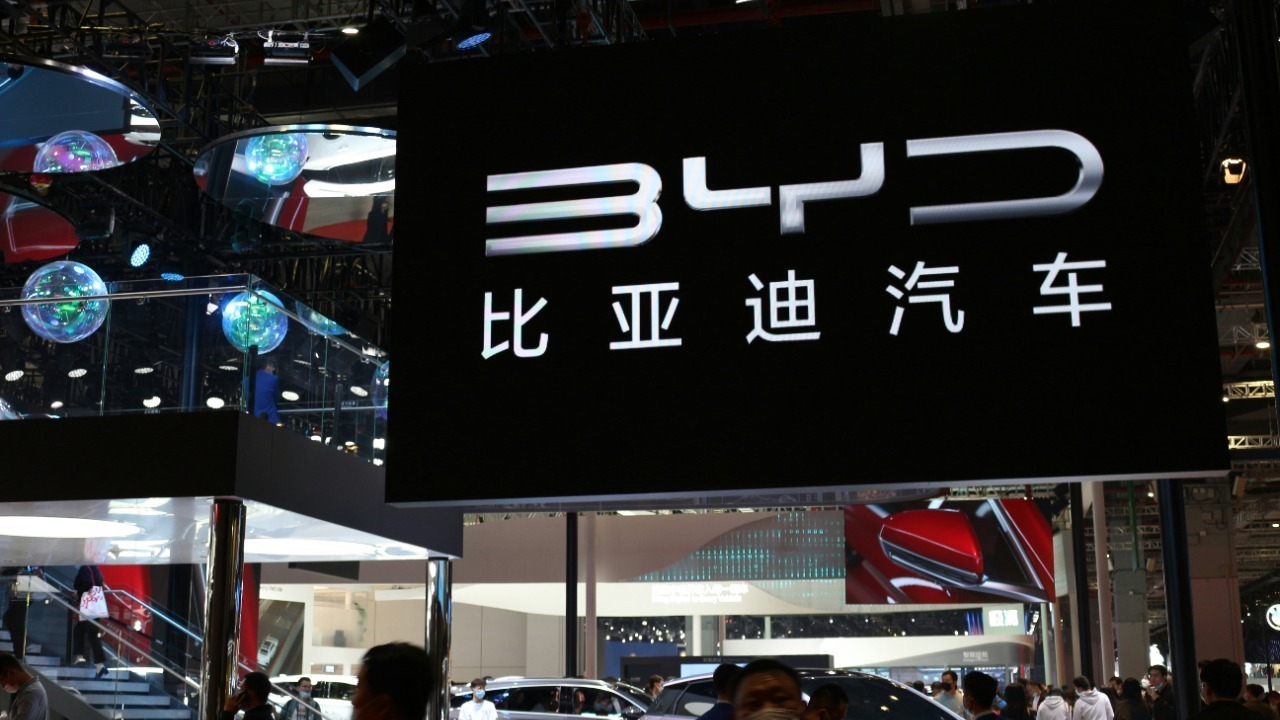
Chinese automaker BYD has opened a new front in the global trade fight by suing the United States government and demanding refunds of tariffs imposed under President Donald Trump’s aggressive auto and parts policy. The case challenges the legal foundation of those duties and tests how far Washington can go in using emergency economic powers to reshape the electric vehicle market.
At stake is not only BYD’s own bill for importing batteries, buses, and solar products into the American market, but also the broader rules that govern how presidents can wield national security tools in long‑running trade disputes. If BYD prevails, the decision could ripple across the auto supply chain and invite a wave of similar claims from other Chinese manufacturers.
BYD’s lawsuit and what it actually demands
BYD has taken its fight to the specialized Court of International Trade, where four of its American subsidiaries have filed a complaint seeking refunds of tariffs they say were unlawfully imposed on their imports. The case, lodged earlier this year, argues that the Trump administration’s use of emergency powers to levy extra duties on Chinese goods went beyond what Congress allowed and should now be unwound for companies like BYD America that paid the bill. In practical terms, the company is asking judges to order the government to return the money collected on a wide range of its products.
According to the filing, the independent complaint was brought by four U.S. units, including BYD America, which handles electric buses, batteries, and related technology in the United States. BYD frames the tariffs as a penalty that distorts competition in areas where it has invested heavily, from transit fleets to energy storage, and it wants the Court of International Trade to recognize that those duties were imposed under an overbroad reading of presidential authority. The company is not just contesting future payments, it is explicitly seeking refunds for what it has already paid.
How Trump’s tariffs and IEEPA ended up in court
At the core of BYD’s argument is the claim that the Trump administration misused the International Emergency Economic Powers Act, or IEEPA, to justify sweeping tariffs on Chinese autos and parts. IEEPA was designed to let presidents respond quickly to national security emergencies, not to run long‑term industrial policy, and BYD says the White House stretched that mandate when it used the law to ratchet up duties on electric vehicles and components from China. By tying its case to IEEPA, the company is effectively asking judges to draw a sharper line around what counts as a legitimate emergency in trade.
In its court papers, the company describes itself as a Chinese EV Giant the U.S. Government Over Trump Tariffs, and it argues that the administration’s reliance on IEEPA to target Chinese manufacturers like BYDDF was inconsistent with the statute’s limits. The dispute now intersects with a broader legal battle over whether presidents can invoke emergency economic powers to reshape trade with China indefinitely, or whether Congress must sign off on such far‑reaching measures.
The Supreme Court’s looming role and the broader tariff fight
BYD’s case does not exist in isolation, it is part of a much larger wave of challenges that hinge on how the Supreme Court interprets IEEPA. A pending ruling from the justices on the scope of that law will determine whether thousands of similar tariff lawsuits can move forward or are effectively shut down before they reach trial. For companies across the auto sector, the decision will clarify whether emergency powers can be used as a standing tool of trade policy or must remain a narrow response to clearly defined crises.
Legal analysts note that the Supreme Court’s review of IEEPA authority will shape not only BYD’s prospects but also the fate of thousands of other importers that have quietly filed their own claims. The outcome will signal how much deference the judiciary is willing to give presidents who cite national security to justify tariffs that last for years and cover entire industries. Until that ruling arrives, BYD and its peers are effectively in a holding pattern, waiting to see whether their cases can proceed to full arguments on the merits.
Why BYD is a uniquely important test case
BYD is not just another plaintiff, it is one of the world’s most influential electric vehicle manufacturers and a symbol of China’s industrial rise. The company has grown into what one report describes as BYD, the world’s vehicle producer, and it now sells not only passenger cars but also buses, batteries, and energy systems around the globe. That scale means any legal victory it secures over U.S. tariffs could quickly become a template for other Chinese automakers that feel similarly targeted by Washington’s trade policy.
In the United States, BYD’s footprint runs from transit agencies that buy its electric buses to utilities that deploy its battery storage systems and solar panels. The company’s shares trade under tickers such as BYDDF and BYDDY, and investors have been watching closely as it challenges the duties that have raised its costs in the American market. One analysis by Vlad Schepkov notes that the Chinese automaker BYD, identified by codes including BYDDF and BYDDY, has seen tariffs affect its electric vehicles, battery storage systems, and solar panels, underscoring how broad the impact of Trump’s measures has been on its diversified business.
Impact on U.S. auto prices, repair shops, and consumers
While the courtroom arguments revolve around statutes and presidential powers, the practical effects of the tariffs have been felt in repair bays and showrooms across the country. Higher duties on imported parts and components have pushed up costs for collision repair shops, which have often had to absorb the increases rather than pass them fully on to customers. That squeeze has contributed to higher insurance premiums and longer waits for repairs, particularly for vehicles that rely heavily on imported electronics and battery systems.
Industry observers point out that collision repair shops have already absorbed significant tariff‑driven cost increases, and that even if BYD and others ultimately win in court, there will be no immediate relief for parts prices. The legal process is slow, and any refunds would flow first to importers rather than directly to consumers. For now, the tariffs remain in place, and the uncertainty around their future is complicating planning for automakers, suppliers, and the independent shops that keep vehicles on the road.
Inside the Court of International Trade case
The venue BYD chose, the Court of International Trade in New York, is a specialized federal court that handles disputes over customs duties and trade measures. BYD Auto Co has filed its complaint there as Case No. 26‑00847, arguing that the tariffs imposed under IEEPA on its imports from China should be struck down and refunded. By going to this court, the company is tapping into a forum that regularly reviews the legality of trade actions and has the authority to order the government to change course if it finds that officials overstepped.
Filings show that On January 26, BYD Auto Co brought its case at the Court of International Trade in New York, laying out detailed arguments about how the tariffs were calculated and why they conflict with the limits Congress placed on IEEPA. The complaint is part legal brief and part economic narrative, describing how the duties have affected BYD’s ability to compete in the U.S. market for electric buses, batteries, and other clean‑energy products. The company is effectively asking the judges to declare that the Trump administration’s approach to Chinese auto tariffs was unlawful from the start.
What this means for Trump’s trade legacy and future Chinese entrants
President Trump’s tariff strategy was always about more than immediate price effects, it was a bid to reshape the global auto industry and slow the advance of Chinese manufacturers in the U.S. market. BYD’s lawsuit now tests whether that strategy can withstand close judicial scrutiny, particularly when it relies on emergency powers like IEEPA rather than traditional trade statutes. If the courts side with BYD, it would mark a significant legal setback for Trump’s approach and could force the administration to rethink how it uses national security arguments in economic policy.
The case also sends a signal to other Chinese companies that are weighing whether to expand in the United States or challenge existing barriers. One report notes that a Chinese electric vehicle has become the first of its peers to sue the U.S. government over President Trump’s tariffs, potentially opening the door for more than one Chinese automaker to follow. As I see it, the outcome will help determine whether Chinese EV brands view the American market as a battlefield shaped by politics or a rules‑based arena where legal challenges can meaningfully change the terms of competition.
More From The Daily Overview
*This article was researched with the help of AI, with human editors creating the final content.

Grant Mercer covers market dynamics, business trends, and the economic forces driving growth across industries. His analysis connects macro movements with real-world implications for investors, entrepreneurs, and professionals. Through his work at The Daily Overview, Grant helps readers understand how markets function and where opportunities may emerge.