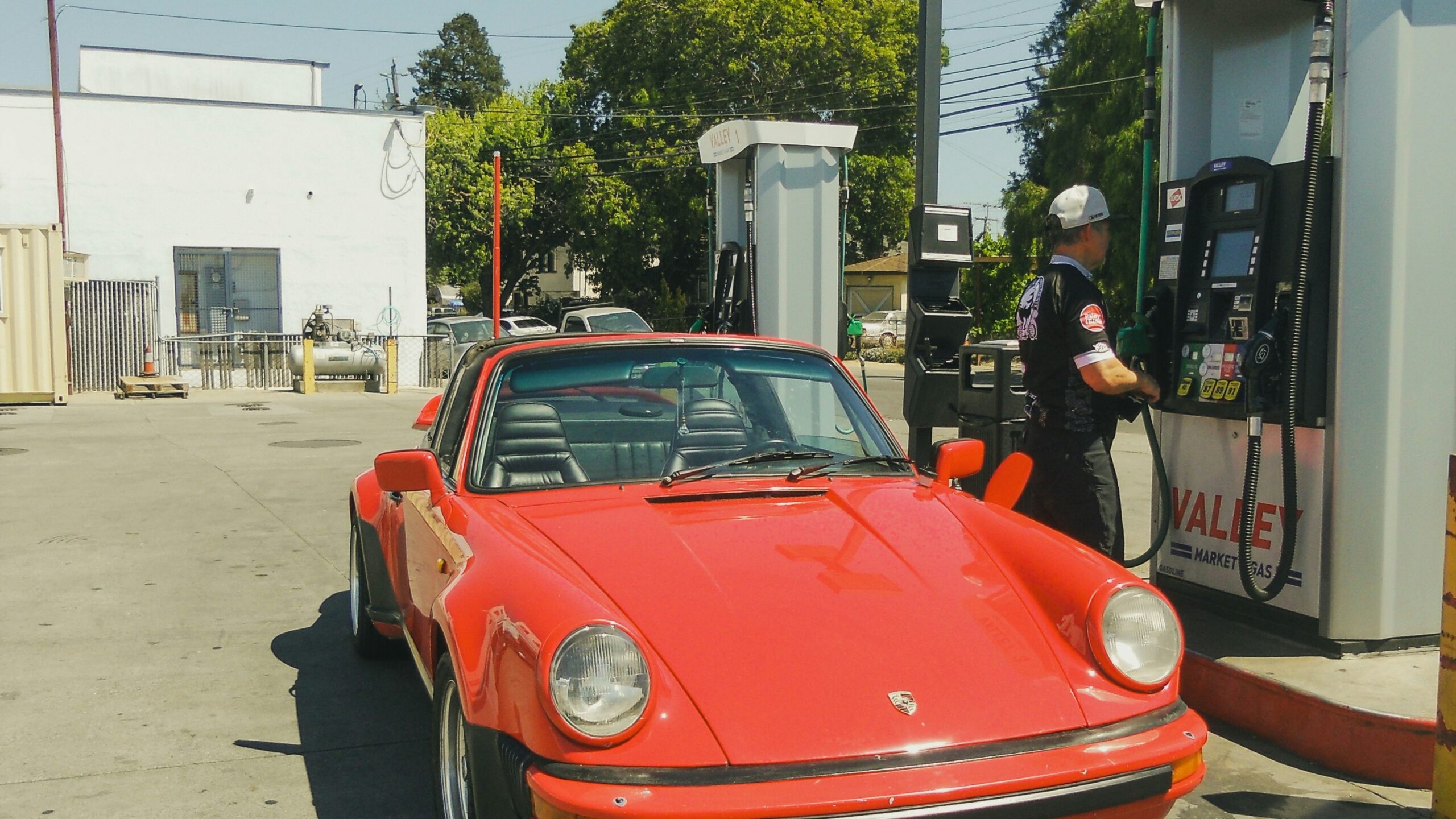
California drivers are absorbing a sharp hit at the pump after the state’s average price for regular gasoline climbed roughly 40 cents per gallon over a two-week stretch in February 2026. The spike lands amid broader concerns about refinery capacity and planned facility changes that could affect supply stability through the spring. For a state where most households depend on personal vehicles, the cost increase translates directly into squeezed monthly budgets.
A 40-Cent Surge in Two Weeks
The weekly fuel data published by the U.S. Energy Information Administration (EIA) shows an approximately 40-cent change in California’s average retail price of regular gasoline over a two-week span in February 2026, a rate of increase that stands out even by California standards. The state consistently ranks among the most expensive gasoline markets in the country, but a move of this size in such a compressed window signals more than seasonal drift and has drawn heightened attention from policymakers and consumer advocates.
What makes the jump notable is its speed. Gradual price increases tied to summer-blend fuel transitions or crude oil fluctuations typically unfold over weeks or months. A 40-cent leap in 14 days is consistent with acute supply-side pressure rather than routine market adjustment, though the data alone does not identify a single cause. Drivers who filled up at the start of the period and returned two weeks later faced a meaningfully higher bill, with no corresponding change in their commute distance or fuel efficiency to offset it. For low- and middle-income households that budget closely for transportation, that kind of rapid shift can mean cutting back on other essentials just to keep cars on the road.
Valero’s Benicia Refinery and the Supply Squeeze
A key factor behind the tightening supply picture is Valero Energy’s plan for its Benicia refinery in the San Francisco Bay Area. Governor Gavin Newsom issued a statement on January 6, 2026, outlining the company’s revised timeline, noting that Valero will continue gasoline production at Benicia through April 2026, after which it plans to idle the facility and rely on inventories and imports to serve Northern California. The governor’s refinery update framed this as a managed transition, emphasizing coordination with regulators to avoid abrupt shortages as the facility winds down.
That transition carries real consequences for the regional fuel market. Benicia is one of the few major refineries serving Northern California directly, and once it stops producing gasoline, the region becomes more dependent on fuel shipped from elsewhere, whether from Southern California refineries, out-of-state facilities, or international sources. Import-dependent supply chains are inherently more vulnerable to disruption, and the logistics of moving fuel by tanker or pipeline add cost at every step. The January communication from the state government presented continued production through April as a bridge, but the bridge has a defined end date, and recent price behavior may reflect expectations of a tighter market beyond that point.
What Makes Up the Price at the Pump
To understand why California gasoline costs what it does, it helps to break the retail price into its components. The state energy commission provides an official breakdown of factors that compose retail gasoline prices, including crude oil costs, refining costs and margins, distribution and marketing expenses, and layered taxes and fees. That analysis, which also references SB 1322’s refinery oversight provisions, offers downloadable data that allows analysts and the public to track how each component shifts over time and how much of every dollar at the pump flows to each segment of the supply chain.
California’s tax and fee burden on gasoline is among the highest in the nation, and those charges are structured in multiple layers. The tax authority publishes current sales tax rates for fuels, which stack on top of federal and state excise taxes. These fixed per-gallon and percentage-based costs mean that even when crude oil prices are stable, California drivers pay a premium relative to most other states. When wholesale prices spike on top of that tax base, the retail impact can be amplified because some taxes and fees are assessed as a percentage and may rise with the underlying price.
Northern California Faces Outsized Risk
The statewide average masks meaningful regional variation, and Northern California is particularly exposed as Benicia’s transition approaches. Once Valero idles the facility after April 2026, the region’s fuel supply will lean more heavily on stored inventories and imported cargoes, a shift explicitly acknowledged in the governor’s refinery statement. That change introduces new variables: shipping schedules, port congestion, and the availability of compatible California-grade fuel from out-of-state or international sources, each of which can tighten supply or add costs when disruptions occur.
Southern California, by contrast, is served by a denser network of refineries and pipeline connections that provide some buffer against single-facility disruptions. This structural gap in infrastructure means Northern California drivers could see price premiums above the statewide average once the Benicia transition takes full effect. The EIA’s monthly price series for California offers historical context on how refinery outages and seasonal shifts have influenced prices over time, though it does not provide a formal forecast for the post-Benicia period. In the absence of an official projection, one available signal is market pricing, and the February spike is consistent with heightened sensitivity to supply conditions.
How Gasoline Pricing Works in California
California’s gasoline market operates under conditions that differ from most of the country. The state requires a unique blend of reformulated gasoline designed to reduce air pollution, which limits the pool of refineries capable of producing compliant fuel and effectively turns California into a semi-isolated fuel island. When local supply falls short, the state cannot simply draw on generic national inventories; instead, it must secure shipments from a relatively small set of facilities that can meet its specifications, often located far from its primary demand centers.
The EIA’s pricing overview explains how crude oil costs, refining, distribution, and taxes combine to shape retail gasoline prices across the United States. In California, each of these layers tends to carry a premium: refining margins are elevated because fewer refineries compete in a highly regulated market, distribution costs reflect long supply lines and environmental rules, and taxes sit well above the national average. In such an environment, even modest supply disruptions or anticipated capacity reductions can trigger outsized price swings, which is the pattern visible in the February 2026 data as traders respond to both current conditions and the looming loss of Benicia’s output.
SB 1322 and the Regulatory Backdrop
State lawmakers have not been passive on fuel pricing, and the regulatory context is central to understanding how refinery decisions translate into consumer costs. The gasoline price breakdown work by the California Energy Commission explicitly references SB 1322, a law focused on oil refinery operations and transparency. By requiring more detailed reporting and oversight, the statute aims to shed light on refining margins and supply decisions that can move prices, particularly in a market where a handful of facilities wield outsized influence over regional fuel availability.
The tension between market forces and regulatory goals is real and increasingly visible in the Benicia case. California has adopted ambitious targets for cutting greenhouse gas emissions and promoting electric vehicles, but its current transportation system still depends overwhelmingly on gasoline and diesel. Policies that encourage refinery transitions or accelerate decarbonization can serve long-term climate objectives while creating short-term price pain for drivers who have no immediate alternative to internal combustion vehicles. Valero’s decision to idle gasoline production at Benicia sits squarely at that intersection: the company is reshaping its business, the state is using tools like SB 1322 to monitor and manage the impacts, and consumers are experiencing the financial consequences of a thinner supply margin in real time.
What Drivers Should Watch This Spring
The February price spike is a notable move, and California drivers will have several key markers to watch as spring approaches. If Valero follows through on its plan to idle Benicia after April 2026, Northern California’s supply picture will tighten further just as summer driving season begins, a period when demand typically rises and the switch to summer-blend formulations adds cost. Should any additional unplanned refinery outages occur during that window, or if import cargoes are delayed, the combination of seasonal pressures and reduced in-state production could produce another round of sharp increases at the pump.
For California households, the practical impact is straightforward. A 40-cent-per-gallon increase adds several dollars to the cost of every fill-up, and over a month of commuting, errands, and longer trips, that can translate into a meaningful hit to disposable income. While state officials emphasize oversight and transparency, and long-term policies are pushing toward cleaner transportation, the near-term reality is that millions of residents remain tethered to gasoline prices that can move quickly when refinery capacity shifts. As the Benicia transition unfolds and markets adjust, drivers, businesses, and policymakers alike will be watching closely to see whether February’s surge proves to be a temporary shock or the start of a more expensive new normal for California fuel.
More From The Daily Overview
*This article was researched with the help of AI, with human editors creating the final content.

Grant Mercer covers market dynamics, business trends, and the economic forces driving growth across industries. His analysis connects macro movements with real-world implications for investors, entrepreneurs, and professionals. Through his work at The Daily Overview, Grant helps readers understand how markets function and where opportunities may emerge.

