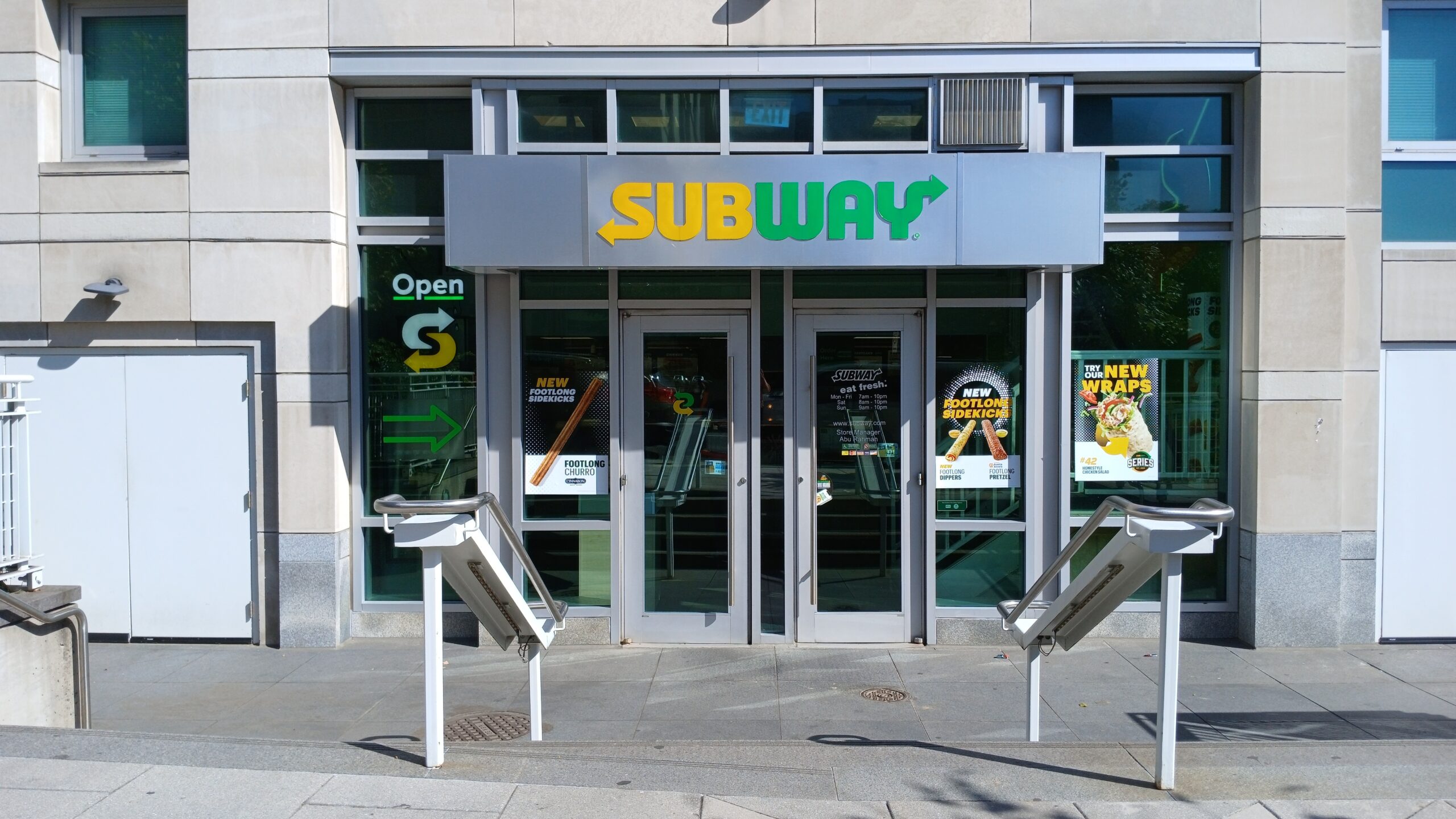
One of Subway’s largest regional operators has sought shelter in Chapter 11, putting 43 restaurants and hundreds of jobs in limbo across the Northeast and Mid-Atlantic. Pennsylvania based MTF Enterprises, which runs those 43 Subway outlets in Pennsylvania, Maine, New Hampshire and Virginia, is trying to keep doors open while it restructures heavy debts tied to high cost financing. The case turns a spotlight on a quiet but powerful force reshaping the fast food landscape: merchant cash advances that drain sales at the register before owners can pay workers, landlords or suppliers.
At first glance this looks like a single franchisee in trouble, but the numbers tell a broader story about how thin the margins have become in quick service dining. According to court filings, MTF Enterprises has reported assets as low as $500,000 against liabilities that stretch into the millions, a mismatch that leaves little cushion for any dip in traffic or spike in costs. When a system that depends on volume and consistency collides with aggressive lenders and rising operating expenses, even a familiar sandwich brand can find its local network suddenly fragile.
The 43-unit operator at the center of the storm
MTF Enterprises is not a mom and pop running a single storefront, it is a multi unit franchisee responsible for a 43-unit slice of Subway’s footprint across Pennsylvania, New Hampshire, Maine and Virginia. In bankruptcy documents, the company and its five affiliated entities are described as operating 43 Subway stores that collectively anchor strip malls, highway exits and small town main streets in that region. Those locations, which include 43 stores in Maine, New Hampshire and other nearby states, form a critical part of the chain’s coverage in the Northeast corridor and Mid Atlantic, especially in smaller communities that have already seen independent diners disappear.
Filings reviewed in the case show that MTF Enterprises sought Chapter 11 protection in the U.S. Bankruptcy Court, a move that allows the company to keep trading while it negotiates with creditors and evaluates which restaurants can be salvaged. One summary of the court record notes that the company, which operates 43 Subway outlets, has asked to administer the case jointly for its related entities so it can manage obligations that all flow from the same 43 Subway stores, a structure that underscores how intertwined the units have become over years of expansion. For customers, the legal jargon boils down to a simple question: will the lights still be on at their neighborhood shop next month?
A balance sheet built on sand
The financial picture behind those 43 restaurants is stark. According to the court filings, MTF Enterprises has declared between $500,000 and $1 million in assets and between $1 million and $10 million in liabilities, a gap that leaves the business highly exposed to any disruption in cash flow. That imbalance is especially striking for an operator of this size, since a 43-unit network would typically be expected to carry significant equipment, leasehold and inventory value, yet the reported asset base suggests much of that has already been pledged or eroded.
The company’s own narrative in the Chapter 11 paperwork points to a capital structure that became steadily more fragile as it layered on short term funding. In one detailed account, MTF Enterprises claims that the financing arrangements it entered into with various lenders, including obligations that were taken out last year, diverted so much revenue that the business could no longer cover basic operating costs. Another section of the record describes how the company filed for joint administration of its Chapter 11 case after what it called the most challenging operating environment it had faced in two decades, a period marked by higher wages, food inflation and intense discounting pressure across the quick service sector.
Merchant cash advances: lifeline or financial trap?
At the heart of the bankruptcy is a type of financing that has exploded in popularity among small businesses that cannot or do not want to access traditional bank loans. MTF Enterprises cites “unmanageable” daily withdrawals from merchant cash advances as the primary cause for its Chapter 11 filing, describing a system in which lenders pulled fixed percentages of card sales directly from processing accounts before the operator could allocate funds to payroll or rent. In practical terms, every sandwich sold sent a slice of revenue straight to creditors, shrinking the pool available to keep the restaurants running.
According to the Chapter 11 bankruptcy filing, one lender, Ocean Funding, is alleged to have improperly placed liens on sales revenue processed through Square and other payment channels, effectively locking up cash that would normally cycle back into the business. Separate summaries of the case note that MTF Enterprises claims that the structure of these merchant cash advances, including the way they were enforced by Ocean Funding and others, was a key factor driving the insolvency. A specialist analysis of the 43-unit Subway Bankruptcy and The Risks of MCA Loans argues that the MTF Enterprises experience is a textbook example of how Merchant Cash Advances (MCAs) can turn into a treadmill, with Last month’s funding decision constraining this month’s ability to pay suppliers and staff.
Jobs, communities and Subway’s brand at risk
Behind the legal and financial language are workers and towns that depend on these restaurants for paychecks and daily routines. Pennsylvania based MTF Enterprises, which runs 43 Subway outlets in Pennsylvania, Maine, New Hampshire and Virginia, employs staff across multiple shifts in each store, from sandwich artists to managers, and any closures would ripple through local labor markets that often have limited alternatives. Reporting on the case has warned that Subway locations across Pennsylvania, Maine, New Hampshire and Virginia could be shuttered as MTF, a major Subway operator in the Mid Atlantic, weighs which units can be restructured and which may have to be surrendered.
The stakes extend to Subway’s broader brand strategy. One overview of the situation notes that the company, which operates 43 stores in Maine, New Hampshire and neighboring states through MTF Enterprises, is already in the middle of a multi year effort to refresh its image and menu while trimming underperforming sites. Another account of the Subway franchise operator’s Chapter 11 case points out that these 43 stores sit in markets where the chain has been trying to show more consistent performance, and that losing a large block of units at once could undermine that progress. For a brand that relies on ubiquity and convenience, a cluster of darkened storefronts in the same region would be a visible setback.
What this bankruptcy signals for fast food finance
MTF’s collapse is not just a story about one operator’s missteps, it is a warning about how financing tools are reshaping risk in franchised restaurants. A detailed breakdown of the MTF Enterprises Chapter 11 bankruptcy lists key facts that echo concerns raised by other multi unit operators, including the claim that the merchant cash advance structure left the business with little flexibility to absorb normal volatility in sales. Another analysis of the same Chapter 11 case underscores that MTF Enterprises claims that the aggressive enforcement of these advances by lenders such as Ocean Funding was a key factor driving the insolvency, a pattern that aligns with broader criticism of MCA products in the small business world.
Industry focused commentary on the 43-unit Subway Bankruptcy and The Risks of MCA Loans goes further, arguing that the combination of thin margins, rising costs and high effective interest rates is unsustainable for many franchisees. Coverage of the case in a broader restaurant finance context notes that MTF Enterprises, a Subway operator with 43 stores in Maine, New Hampshire and surrounding states, is far from alone in turning to alternative lenders as traditional banks tighten standards. Taken together, these accounts suggest that merchant cash advances are functioning less as emergency bridges and more as structural features of the capital stack, a shift that could accelerate bankruptcies when economic conditions soften.
More From The Daily Overview
*This article was researched with the help of AI, with human editors creating the final content.

Grant Mercer covers market dynamics, business trends, and the economic forces driving growth across industries. His analysis connects macro movements with real-world implications for investors, entrepreneurs, and professionals. Through his work at The Daily Overview, Grant helps readers understand how markets function and where opportunities may emerge.