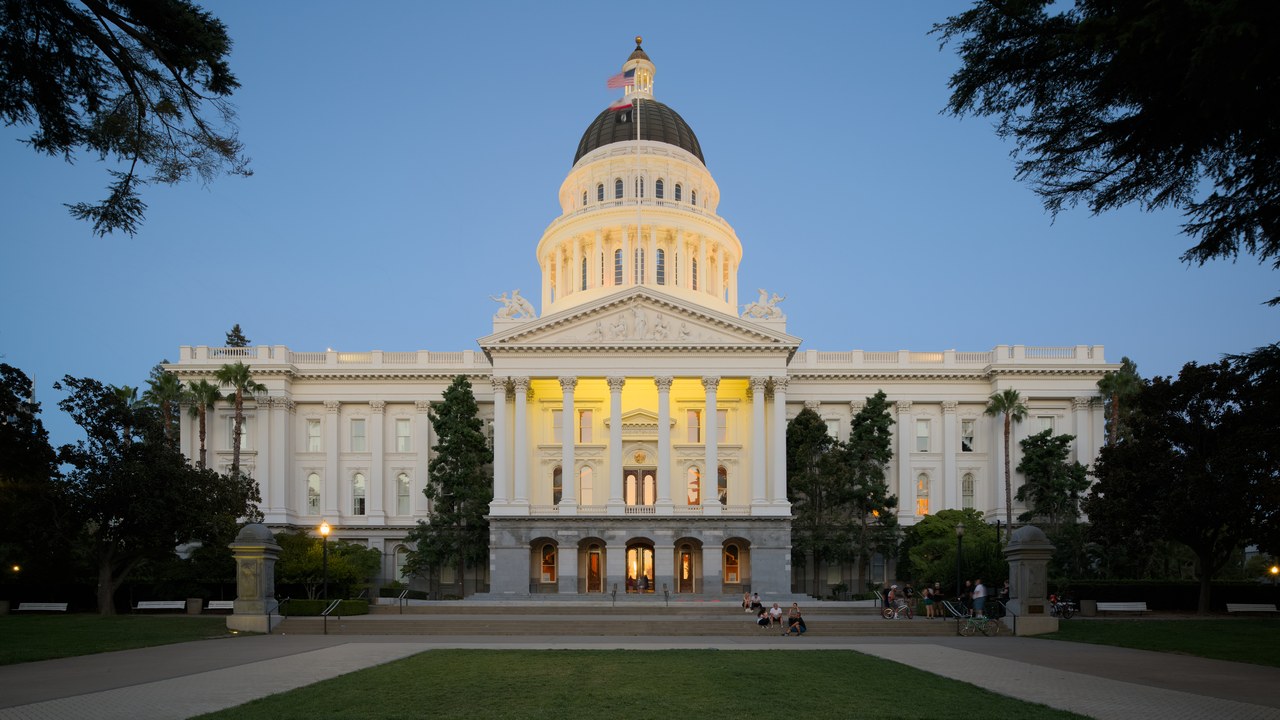
California’s latest immigration crackdown has not just inflamed politics, it has punched a billion‑dollar hole in the state’s economy. After a summer of federal raids and street clashes in Los Angeles, officials now tally more than $1 billion in lost productivity, sales, and wages, a shock that lands on top of existing fiscal stress and climate‑driven disasters. The pattern is becoming hard to ignore: when immigration enforcement is staged like a show of force rather than a managed policy, the collateral damage spreads from immigrant neighborhoods to the broader economic engine.
What is unfolding looks less like a discrete law‑and‑order campaign and more like a rolling disruption tax on the country’s largest state economy. The immediate losses are measurable, but the deeper costs are buried in broken labor networks, shaken investor confidence, and a widening gap between federal tactics and local realities. If that gap keeps growing, the price tag will not stay at $1 billion for long.
The $1 billion shock: raids, protests and a city on pause
California officials say last summer’s immigration raids in Los Angeles, followed by days of protests that sometimes turned violent, triggered more than $1 billion in lost productivity, sales, and wages. That figure captures shuttered storefronts, missed shifts, and deliveries that never left the warehouse as streets were blocked and workers stayed home. For small businesses that run on thin margins, a week of suppressed foot traffic can mean the difference between paying rent and falling behind, and the raids effectively imposed an unplanned economic shutdown on some of the city’s busiest corridors.
The scale of the disruption is striking even in a state as large as California. Officials tracing the fallout from the immigration clashes in Los Angeles describe a city where commerce gave way to confrontation, with employers unable to guarantee basic safety for staff and customers. That kind of uncertainty lingers long after the last protest sign is packed away, because business owners must now factor the risk of future sweeps into hiring, inventory, and investment decisions.
Echoes of 1992: when chaos replaces commerce
To understand why a billion‑dollar enforcement shock is so alarming, it helps to remember what happens when unrest becomes a recurring feature of urban life. During the 1992 Los Angeles riots, sparked by anger over police brutality, the city experienced a breakdown of order that left 63 people dead, 2,383 injured, and more than 12,000 arrested. Those numbers, recorded When the violence finally subsided, captured the human toll of a week in which normal economic life simply stopped.
The financial damage was just as stark. In the immediate aftermath, Riot damage claims in LOS ANGELES were expected to top $1 billion as insurers processed Claims for arson and vandalism while the city struggled to return to a semblance of normalcy. Later assessments put the broader economic hit at $1.2 billion, a figure that analysts used to illustrate how, as one account put it, “What happens when chaos replaces commerce in one of the most powerful economies in the world? You get a $1.2 billion meltdown,” sending shockwaves through the Economy of California. The comparison is not perfect, but it is instructive: when policy choices or policing failures turn streets into battlegrounds, the bill rivals that of natural disasters.
Immigration flashpoint: Los Angeles as ground zero
Los Angeles has again become the flashpoint, this time in America’s immigration war. After federal agents launched raids targeting undocumented migrants, neighborhoods that had long relied on informal labor networks saw those networks shattered overnight. Reporting from Washington described how Los Angeles erupted into fiery clashes between demonstrators and police, turning immigrant communities into contested territory rather than places of work and commerce.
That transformation carries a cost that is not fully captured in official loss estimates. When workers fear that a commute could end in detention, they are less likely to show up for shifts, seek medical care, or enroll their children in school, and employers lose the predictability that underpins any functioning labor market. Over time, this erodes the trust that allows a city as complex as Los Angeles to operate, and it pushes economic activity into the shadows where it is harder to tax, regulate, or support in a crisis.
Farm fields and empty shifts: the hidden labor crisis
The same enforcement logic that emptied streets in Los Angeles is rippling through California’s agricultural heartland. Intensified immigration raids and ongoing enforcement under President Donald Trump have contributed to what one analysis calls “Farm Labor Shortages and the California Farming Labor Crisis The result of intensified immigration raids and ongoing enforcement under President Donald Trump has been a sharp decline in available workers.” In practical terms, that means crops left unpicked, packing plants running below capacity, and growers forced to scale back planting because they cannot count on enough hands in the fields.
In a sector where timing is everything, even a modest reduction in labor availability can translate into outsized losses. When there has been a sharp decline in available workers, as described in the Farm Labor Shortages report, farmers face a choice between letting produce rot or paying unsustainably high wages to a shrinking pool of legal workers. Either option raises prices for consumers and squeezes margins for producers, and the damage compounds over multiple growing seasons as orchards are abandoned or investments in new equipment are delayed.
Budget stress and disaster math: why $1B hits harder now
The immigration‑related losses are landing at a moment when California’s public finances are already under strain. The State has seen a drastic fall in revenues after the post‑COVID economic recovery and Federal bail‑outs faded, leaving less cushion to absorb new shocks. The City of LA, facing its own slowdown, has had to close a whopping $1 billion shortfall, a gap that limits its ability to support affected neighborhoods or invest in long‑term resilience.
At the same time, the state is still paying for physical disasters that exposed how fragile its infrastructure has become. The toll from last winter’s storms, now topping $1 billion, showed how vulnerable California’s state highway network had become and how grim the future looked without sustained investment, according to a state overview. Layer on top of that the estimate from Accuweather that Los Angeles wildfires destroyed more than 10,000 structures, with insured losses up to about $20 billion and total economic costs of $150 billion once infrastructure damage, cleanup, lost wages, and displacement are counted, as detailed in an insurance analysis. In that context, another $1 billion tied to immigration clashes is not just a line item, it is part of a pattern of self‑inflicted vulnerability.
More From The Daily Overview
*This article was researched with the help of AI, with human editors creating the final content.

Grant Mercer covers market dynamics, business trends, and the economic forces driving growth across industries. His analysis connects macro movements with real-world implications for investors, entrepreneurs, and professionals. Through his work at The Daily Overview, Grant helps readers understand how markets function and where opportunities may emerge.