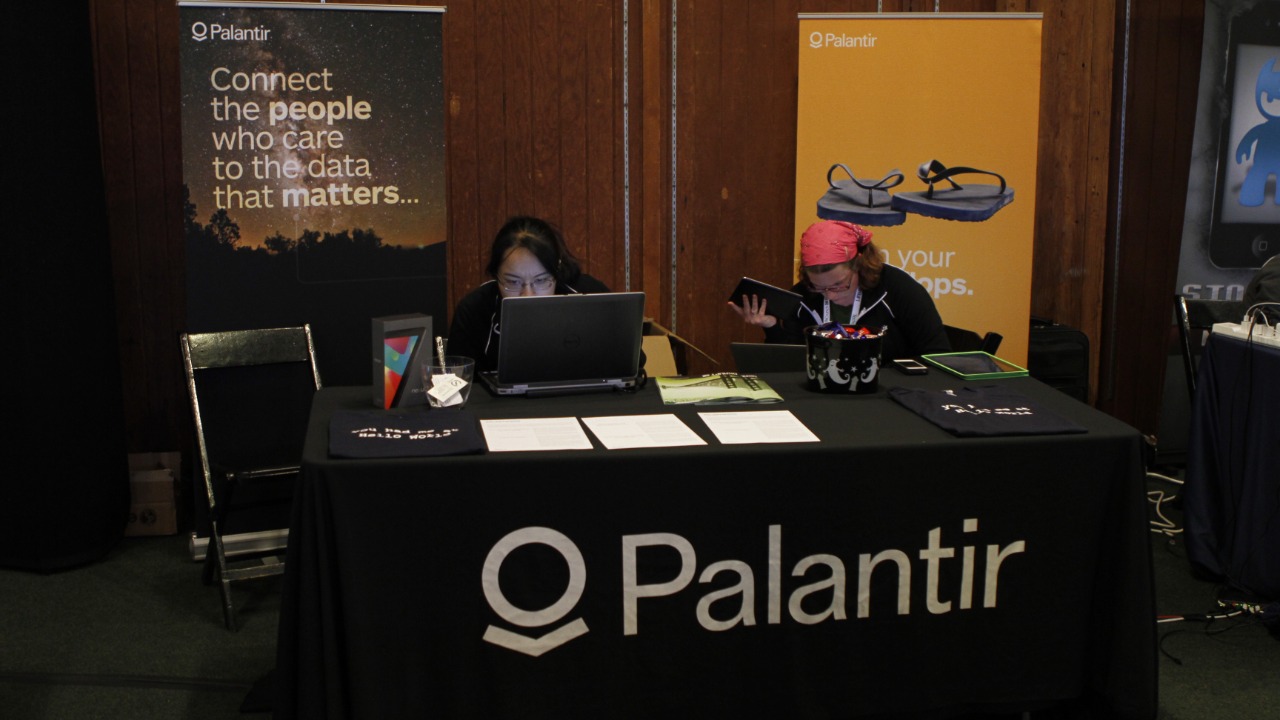
Palantir Technologies, a leader in AI-driven data analytics, has seen its stock surge amid the AI boom, prompting speculation on whether it can achieve a $1 trillion market capitalization before 2030. Analysts predict that artificial intelligence stocks like Palantir could reach this milestone through accelerated revenue growth in government and commercial sectors. This potential valuation leap would position Palantir among tech giants, driven by its proprietary platforms like Foundry and Gotham.
Palantir’s AI Foundations and Core Technologies

Palantir Technologies originated as a data integration company focused on serving intelligence agencies. Its Gotham platform was developed to provide secure data analysis capabilities, particularly in defense and counterterrorism applications. This platform has been instrumental in helping government agencies manage and interpret complex data sets, enhancing their operational efficiency and decision-making processes. The company’s roots in high-stakes data analysis have given it a competitive edge in the AI sector, particularly in areas requiring stringent security measures.
Over time, Palantir expanded its offerings with the Foundry platform, which caters to enterprise clients across various sectors, including healthcare and manufacturing. Foundry enables AI-powered decision-making by processing vast datasets to deliver real-time insights. This evolution reflects Palantir’s strategic shift towards commercial markets, where the demand for sophisticated data analytics tools continues to grow. Foundry’s ability to integrate seamlessly with existing enterprise systems has made it a valuable asset for companies looking to leverage AI for operational improvements.
Palantir’s Artificial Intelligence Platform (AIP) further enhances its capabilities by integrating large language models to boost predictive analytics. This integration has been particularly effective in supply chain optimization, where real-time data analysis can significantly improve efficiency and reduce costs. By deploying AIP in various industries, Palantir demonstrates its commitment to advancing AI technologies and expanding its market reach. The company’s focus on innovation positions it well to capitalize on the growing demand for AI solutions across different sectors.
Recent Financial Performance and Growth Metrics

Palantir’s financial performance has been robust, with Q3 2024 revenue figures showing a 30% year-over-year increase to $725 million. This growth was primarily driven by a 54% increase in U.S. commercial revenue, highlighting the company’s successful expansion into the commercial sector. The impressive revenue growth underscores Palantir’s ability to capture market share in a competitive landscape, leveraging its advanced AI technologies to meet the needs of diverse industries.
As of October 2025, Palantir’s market capitalization stands at approximately $100 billion, with its stock price climbing from $7 in 2020 to over $40 recently. This upward trajectory has been fueled by the widespread adoption of AI technologies, which has increased investor confidence in Palantir’s long-term prospects. The company’s ability to maintain a strong market presence amidst growing competition is a testament to its strategic vision and execution.
Palantir has also achieved significant profitability milestones, including a positive free cash flow of $300 million in the latest quarter. The expansion of its customer base to over 500 commercial clients further illustrates its growing influence in the market. These achievements reflect Palantir’s effective business model and its capacity to generate sustainable revenue streams, positioning it well for future growth.
Pathways to $1 Trillion Valuation by 2030

Analysts project that Palantir could achieve a $1 trillion valuation by 2030 if it maintains a compound annual growth rate (CAGR) of 40%. This growth trajectory could see the company reaching approximately $13.4 billion in annual revenue from its current $2.5 billion, supported by significant AI contract wins. Such growth would require Palantir to continue expanding its market presence and securing high-value contracts across various sectors.
International expansion is another critical pathway for Palantir’s growth, with new deals in Europe and Asia for AI-driven public health initiatives potentially adding $5 billion in incremental revenue. By tapping into these emerging markets, Palantir can diversify its revenue streams and mitigate risks associated with over-reliance on the U.S. market. The company’s ability to adapt its solutions to meet the needs of different regions will be crucial in achieving its ambitious growth targets.
Multiple expansion scenarios also play a role in Palantir’s valuation prospects. If the company can achieve a forward price-to-sales (P/S) ratio of 50x, comparable to high-growth AI peers, and earnings per share of $1.50 by 2030, it could reach the $1 trillion market cap. This scenario underscores the importance of Palantir’s strategic initiatives in driving both revenue growth and profitability, ensuring its competitiveness in the rapidly evolving AI landscape.
Competitive Landscape and Market Challenges

In the competitive AI data analytics space, Palantir faces rivals like Snowflake and Databricks. While Palantir holds an edge with government contracts worth $1.5 billion annually, it remains vulnerable to open-source alternatives that could undercut its market share. The company’s ability to maintain its competitive advantage will depend on its capacity to innovate and deliver superior value to its clients.
Regulatory hurdles also pose challenges for Palantir, particularly concerning U.S. government scrutiny on AI ethics in defense applications. This scrutiny led to the delay of a $500 million contract in 2024, highlighting the potential impact of regulatory issues on Palantir’s operations. Navigating these challenges will require Palantir to engage proactively with regulators and ensure compliance with evolving standards.
Talent acquisition is another critical challenge for Palantir, as it competes for AI engineers in Silicon Valley amid a shortage that has increased hiring costs by 25% year-over-year. Securing top talent is essential for Palantir to sustain its innovation and growth trajectory. The company must continue to invest in its workforce and create an attractive environment for skilled professionals to thrive.
Overall, Palantir Technologies is well-positioned to capitalize on the AI boom, with its strong foundations in data analytics and a strategic focus on growth. However, achieving a $1 trillion valuation by 2030 will require navigating competitive pressures, regulatory challenges, and talent acquisition hurdles. By leveraging its core technologies and expanding its market reach, Palantir can continue to drive innovation and capture new opportunities in the AI landscape.

Elias Broderick specializes in residential and commercial real estate, with a focus on market cycles, property fundamentals, and investment strategy. His writing translates complex housing and development trends into clear insights for both new and experienced investors. At The Daily Overview, Elias explores how real estate fits into long-term wealth planning.

