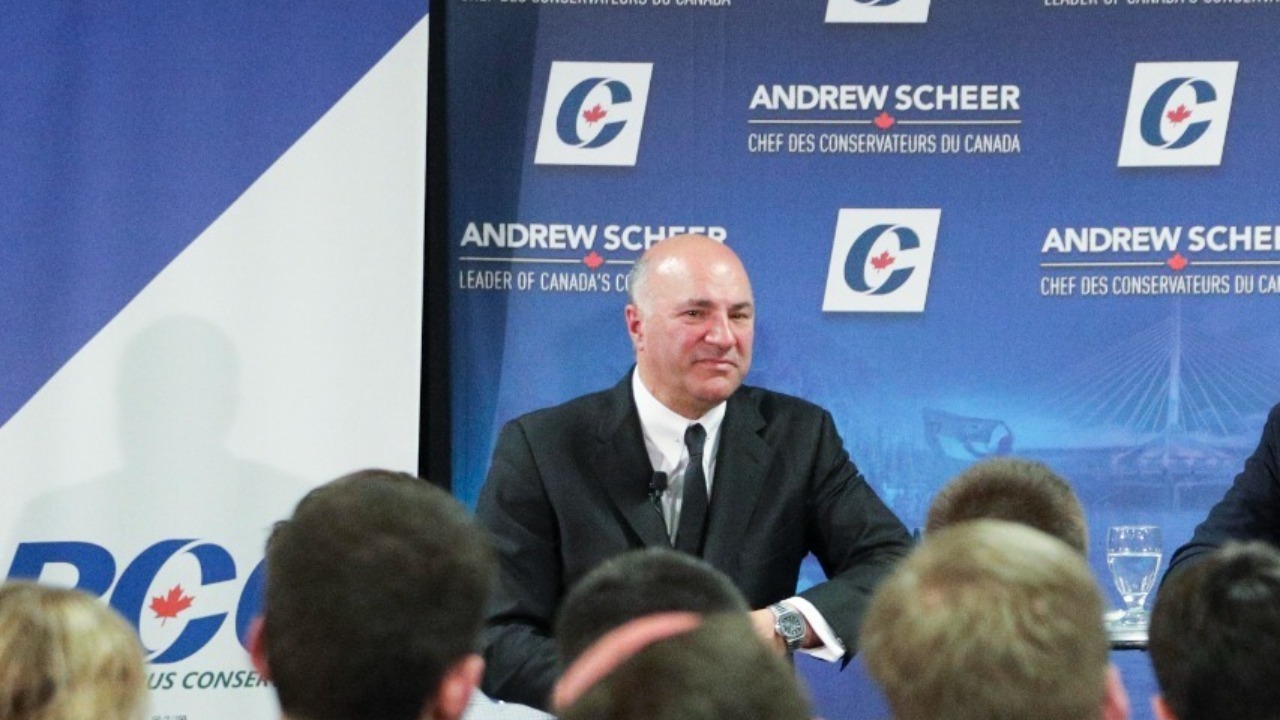
Kevin O’Leary, the investor best known from the TV show “Shark Tank,” says many people could stop working once they have $500,000 saved. In recent comments highlighted by Yahoo’s coverage, he claimed that half a million dollars in the bank can let someone “do nothing else to make money” and still live “comfortably” off the interest. That view challenges the more common advice that says you need at least $1 million to retire and has sparked debate about how far $500,000 can really stretch.
Writers who examined his comments, including Kristin Hitchcock and editor Andrea Basse at FinanceBuzz, stress that O’Leary’s scenario only works with very modest spending. The key question is not whether the math could work in a perfect world, but whether real people can live with the limits his plan requires. His $500,000 number ends up less like a universal rule and more like a test: if you can live inside that tight budget, you might retire earlier than you thought; if not, the gap shows what needs to change.
What O’Leary actually says about $500K
In the Business Insider interview that helped spread his comments, O’Leary laid out a simple version of retirement math. He argues that someone with $500,000 saved could invest that money, live off the interest, and leave the original amount untouched. In his view, that income could cover basic bills so the person does not need a job, as long as they accept a no-frills lifestyle.
The FinanceBuzz breakdown of his claim explains that O’Leary is not talking about a high-cost retirement full of luxury trips and constant upgrades. Instead, he is describing a “workable” life where your spending is tied to what that $500,000 can safely earn. Hitchcock notes that he presents the number as a threshold where a careful saver can stop worrying about a paycheck and start thinking more about how to use their time, not as a promise that everyone with $500,000 will feel rich.
The fine print behind “comfortable”
When O’Leary says you can live “comfortably” off the interest from $500,000 and “do nothing else to make money,” he is using a very strict idea of comfort. The Yahoo summary of his remarks repeats that $500,000 and modest spending could be enough to quit working, but the lifestyle he points to looks closer to a lean budget than to a dream retirement. “Modest spending” here likely means low housing costs, limited travel, and careful control over things like dining out, new gadgets, and paid entertainment.
This is where his message clashes with how many people picture life after work. The FinanceBuzz article notes that his claim assumes a disciplined, almost minimalist approach to expenses, where every big purchase is weighed against the need to protect the principal. In practice, that could mean a smaller home or apartment, driving older cars longer, and relying on low-cost hobbies. Some people might welcome that as freedom from the grind; others may see it as a long-term austerity plan that does not match their hopes for retirement.
Why he is not planning to stop working
There is another twist to O’Leary’s advice: he does not plan to stop working himself. In the Business Insider piece, he talks about moving into acting roles as a new challenge, even though he already has far more than $500,000. He says he enjoys it when people doubt him and likes to prove he can succeed in new areas, which shows he sees work as a source of energy, not just a way to pay the bills.
That attitude shifts the meaning of his $500,000 target. Instead of a finish line where work ends, it becomes a point where work turns into a choice. His own life suggests that the goal is control over your time, not a total break from activity. For many people, the realistic version of his plan may look similar: leave a stressful full-time job, then pick up part-time work, freelance gigs, or creative projects that bring in some income and keep life interesting.
How the $500K math is framed
The FinanceBuzz analysis, which includes a detailed numerical breakdown, walks through how O’Leary’s idea might work. It focuses on the concept that $500,000, invested in interest-bearing accounts or similar tools, can produce enough yearly income to cover a modest lifestyle. The core rule is that you spend only the income and leave the $500,000 itself alone, so the money can keep working for you.
The breakdown also stresses how important it is to match your spending to what your savings can safely earn. If your budget stays within that limit, the principal can last. If your costs run higher, you start to dip into the $500,000, which makes the plan weaker over time. The article presents his number as a benchmark for people who are willing to live below what many retirement calculators assume, and it contrasts that with more traditional advice that often pushes for a higher savings target before leaving work.
Where the critique comes in
One major gap in the $500,000 story is what it leaves out about risk. The Yahoo piece that quotes O’Leary’s line about having $500,000 “in the bank” and doing “nothing else to make money” does not go deep into health shocks, long-term care, or support for adult children and other family members. These are the kinds of costs that can suddenly add thousands of dollars a year and do not fit neatly into a steady interest-only plan. Without room for surprise expenses, even a careful budget can fall apart.
Interest rates and inflation also matter. O’Leary’s idea assumes you can earn a steady, meaningful return on relatively safe investments, enough to keep up with rising prices. If rates drop or inflation runs high, the same $500,000 produces less spending power. That risk is part of why many planners suggest a higher starting balance or a flexible plan that allows for some part-time income. Over a retirement that might last 26 years or more, small changes in returns and prices can add up to big differences in how secure you feel.
More From The Daily Overview
*This article was researched with the help of AI, with human editors creating the final content.

Alex is the strategic mind behind The Daily Overview, guiding its mission to uncover the forces shaping modern wealth. With a background in market analysis and a track record of building digital-first businesses, he leads the publication with a focus on clarity, depth, and forward-looking insight. Alex oversees editorial direction, growth strategy, and the development of new content verticals that help readers identify opportunity in an ever-evolving financial landscape. His leadership emphasizes disciplined thinking, high standards, and a commitment to making sophisticated financial ideas accessible to a broad audience.