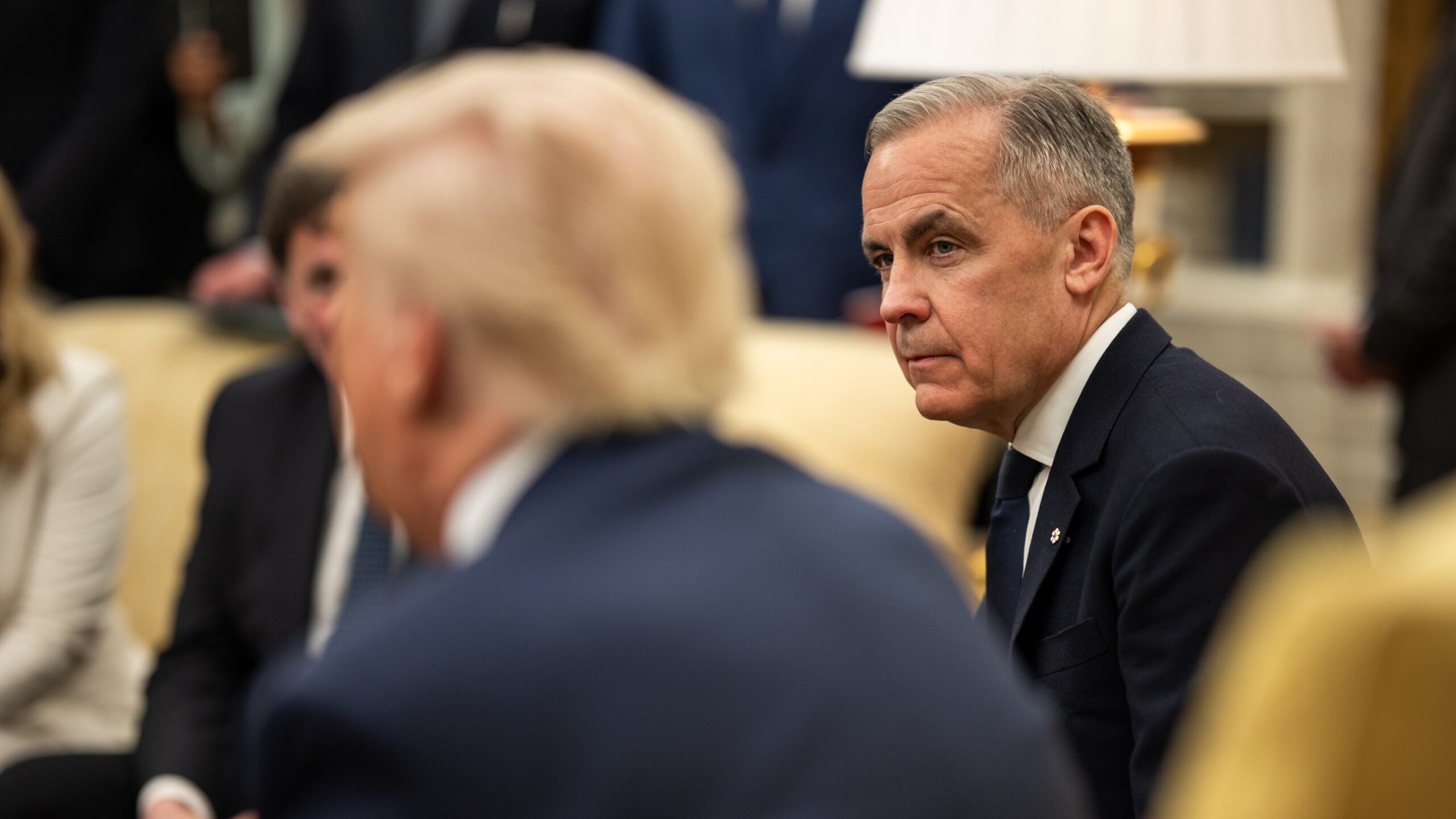
Canada has jolted North American trade politics by sharply cutting tariffs on Chinese-made electric vehicles, even as President Donald Trump keeps the United States on a hard line against Beijing. The move opens the door for Chinese brands to gain a real foothold in Canada’s EV market and potentially creep closer to American drivers through the back door. It also tests how far Ottawa is willing to diverge from Washington on industrial strategy at a moment when both economies are racing to dominate the next generation of carmaking.
At the center of the shift is a new tariff-quota deal that lowers duties on a limited number of Chinese EVs while tying the arrangement to agricultural concessions and investment promises. I see it as a calculated gamble: Prime Minister Mark Carney is betting that cheaper electric cars and better access for Canadian farm exports are worth the political heat from Washington and from domestic auto workers who fear being undercut.
From alignment to rupture in North American EV policy
For years, tariff policy in the United States and Canada moved in lockstep, particularly on sensitive sectors like autos, which made Ottawa’s sudden break on Chinese EVs all the more striking. Historically, both countries treated Chinese manufacturers as a shared strategic challenge, yet Canada is now cutting duties just as President Trump keeps the pressure on, leaving Chinese companies such as BYD and other Chinese automakers facing a divided North American front. That divergence gives Beijing a new opening in a market that had largely been closed off by high tariffs and political hostility.
The practical effect is that Canada is becoming the first major Western economy to welcome a significant volume of Chinese EV imports while its closest ally doubles down on protection. In policy terms, Ottawa is signaling that it will not simply mirror Washington’s approach to industrial competition, even in a sector as integrated as autos. In market terms, I expect the shift to accelerate the arrival of Chinese brands in Canadian showrooms and to test whether consumers prioritize price and range over geopolitical concerns when they shop for their next car.
The tariff-quota deal: 49,000 EVs and a 6.1% rate
The core of the new arrangement is a tariff-quota that allows 49,000 vehicles from China to enter Canada each year at a sharply reduced duty. Within that quota, Chinese electric cars will face a tariff of just 6.1%, a level that makes them far more competitive against North American and European rivals. Prime Minister Mark Carney is reopening Cana’s market to these imports as part of a broader package that also touches agriculture and investment, effectively trading limited auto access for gains in other sectors.
On the Chinese side, the deal is paired with relief on agricultural tariffs that had been squeezing Canadian exporters. Beijing had previously slapped a 75.8% tariff on canola seeds, and the new understanding rolls back some of that pressure while also easing barriers on other farm goods. For Ottawa, the package is being sold as a “landmark” rebalancing that secures both EV supply and farm access, with Carney presenting it as a strategic use of Canada’s limited leverage rather than a simple concession to China’s auto industry.
Carney’s China strategy and the canola connection
Prime Minister Mark Carney’s approach is rooted in a broader reset with Beijing that goes beyond cars. Earlier this year, Prime Minister Mark framed the EV tariff cut as part of a push to reopen Cana’s economic ties with China after years of tension, arguing that Canadian consumers need more affordable electric options and farmers need reliable access to Asian markets. The government’s message is that the EV quota is a tool to unlock broader trade benefits, not an end in itself.
The political choreography has been deliberate. Carney reached what was described as a landmark tariff-quota deal with China that explicitly links EV imports to canola exports, tying the fate of auto workers and prairie farmers together in a single negotiation. In practice, that means Chinese EV makers gain predictable access to Canada’s market while Canadian canola producers get relief from punishing duties that had threatened their largest foreign buyer. I see that linkage as the clearest sign that Ottawa is willing to use the EV transition as a bargaining chip in a much wider trade game.
Industry backlash, union fears and the ‘cheap has a price’ warning
Not everyone in Canada is convinced the bargain is worth it. Ontario Premier Doug Ford has blasted the arrangement as a lopsided deal, warning that allowing 49,000 Chinese electric vehicles into the market at a 6.1% tariff risks undercutting the massive EV and battery investments now flowing into Ontario. Auto unions echo that concern, arguing that Chinese producers benefit from state support and lower labor standards that Canadian plants cannot match.
Industry leaders and labor groups have sharpened their critique with a simple phrase, saying that cheap has a when it comes to imported EVs. They warn that a flood of low-cost Chinese models could erode the business case for new Canadian assembly plants and battery factories that are still ramping up production. I read their anxiety as a sign that the EV transition is no longer an abstract climate goal but a live industrial battle, where every percentage point of tariff and every quota slot can shift jobs and investment across borders.
Washington’s alarm and the US political stakes
South of the border, the reaction has been swift and sharp. American officials have publicly warned that Canada will regret its decision to allow Chinese EVs into its market, casting the move as a security and economic risk rather than a simple trade tweak. For President Donald Trump, who has built his economic agenda around confronting Beijing, Ottawa’s shift looks like a direct challenge to his strategy of using tariffs to shield American manufacturing from Chinese competition.
Yet the rupture is not as sudden as it appears. Officials in Ottawa have stressed that Trump was informed of Canada’s Chinese EV plans in advance, with Friday’s deal described as the product of intensive discussions that followed Carney’s meeting with Xi on the sidelines of an Asia Pac summit. Even so, the United States has kept its own tariffs on Chinese vehicles intact, preserving a hard barrier at the border that could become more important if Chinese brands use Canada as a staging ground to approach American consumers.
More From TheDailyOverview

Grant Mercer covers market dynamics, business trends, and the economic forces driving growth across industries. His analysis connects macro movements with real-world implications for investors, entrepreneurs, and professionals. Through his work at The Daily Overview, Grant helps readers understand how markets function and where opportunities may emerge.


