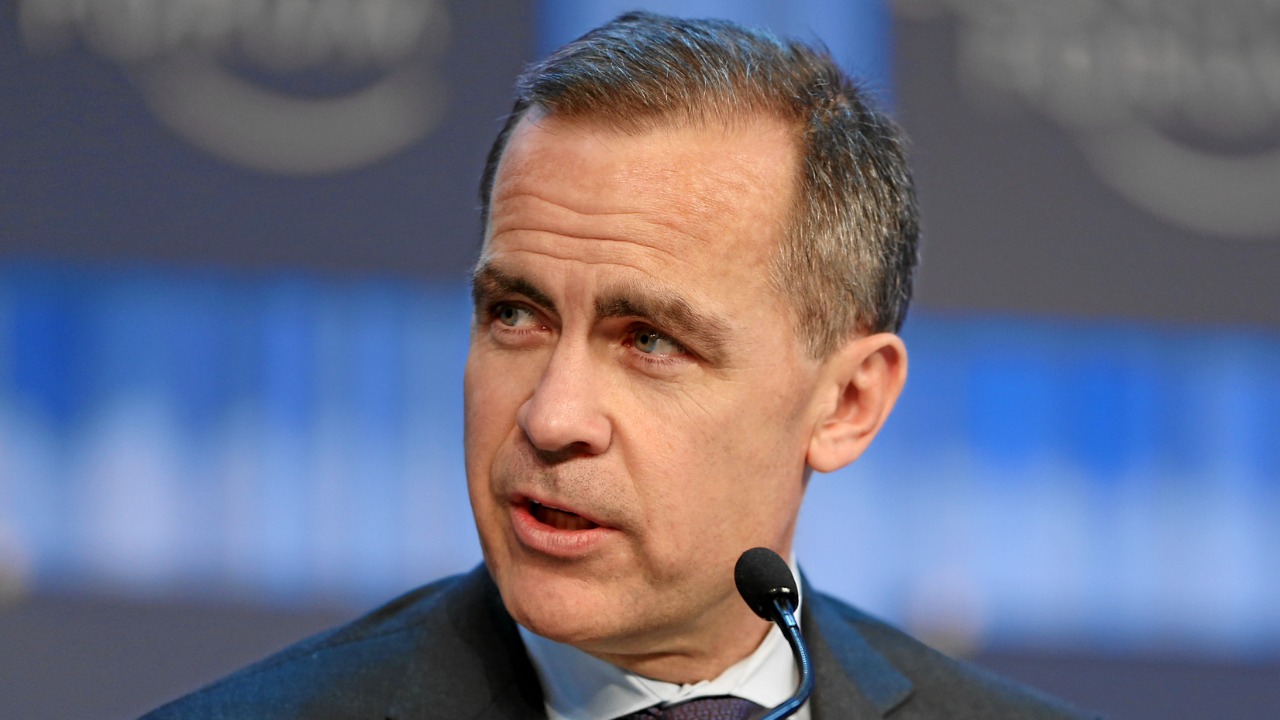
Prime Minister Mark Carney has scrapped Canada’s national electric vehicle sales mandate, a centrepiece of the country’s previous climate strategy, while insisting the auto sector’s long‑term future is still battery powered. In its place, Ottawa is rolling out richer rebates, tougher tailpipe rules and fresh industrial subsidies that shift the focus from quotas on dealers to incentives for drivers and factories. The result is a sharp policy pivot that softens short‑term pressure on automakers but keeps Canada tied to an electric endgame.
The move reflects a political and economic calculation: mandates were colliding with supply constraints, U.S. tariffs and industry warnings, even as public appetite for EVs remained fragile. Carney is betting that a mix of cash on the hood, regulatory nudges and manufacturing support can deliver more durable progress than a single, rigid target ever could.
The end of the EV sales mandate
The centre of gravity in Canada’s EV policy has shifted from compulsory sales targets to a broader industrial strategy. Earlier this week, the federal government formally cancelled the national EV sales mandate that had required automakers to ensure a rising share of their Canadian deliveries were zero‑emission, with at least 20 per cent of new light‑duty vehicles qualifying by 2026 and steeper thresholds after that. The policy, known as the EV Availability Standard, had been designed to push companies like Tesla Inc. and legacy manufacturers to prioritize Canadian allocations in order to avoid costly penalties, but it also risked constraining consumer choice if supply lagged behind the rules, a concern that surfaced repeatedly in industry feedback and is reflected in the decision to unwind the EV mandate.
Ottawa’s new automotive strategy explicitly repeals that framework and replaces it with a more flexible regime that leans on emissions performance rather than fixed EV quotas. Instead of forcing a specific percentage of electric sales, the government is allowing automakers to continue selling gasoline and hybrid models as long as their overall fleet emissions fall over time, a shift that is spelled out in the description of the new automotive strategy. For consumers, the immediate effect is subtle, since showroom lineups will not change overnight, but for manufacturers the regulatory risk calculus is very different: compliance now hinges on engineering cleaner fleets rather than hitting a single EV share number in every model year.
Rebates return and spending ramps up
If the mandate was the stick, the revived purchase incentives are the carrot. Carney is restoring the federal rebate of up to $5,000 on qualifying electric vehicles, a program that had previously been scaled back and is now being reintroduced as part of a broader effort to keep EVs within reach of middle‑income buyers. The new plan also sets aside significant public money for the supply side, with Ottawa earmarking $1.5 billion to support Canadian EV manufacturing and sales, including investments in assembly plants, battery facilities and supply chains that can help domestic producers compete under changing trade conditions, a commitment detailed in the description of Ottawa.
The government is also scaling up the total pool of consumer support, with Carney pledging $2.3 billion in rebates over the life of the new auto plan, a figure that signals a long‑term commitment to subsidizing the transition rather than a short‑lived pilot. That funding is meant to cover both fully electric models and plug‑in hybrids, with specific caps on vehicle price and battery size that will shape which cars and SUVs qualify, and it is framed as part of a national strategy to keep cleaner vehicles affordable for households that might otherwise stick with internal combustion. The promise of $2.3 billion in consumer rebates was highlighted when Carney unveiled the plan, underscoring how central direct financial support has become to his EV pitch.
From quotas to tailpipes: a regulatory pivot
Behind the political drama, the technical architecture of Canada’s climate policy for vehicles is being rewired. Instead of binding sales quotas, the government is tightening vehicle emissions standards that apply across automakers’ fleets, effectively forcing companies to improve fuel efficiency and roll out more zero‑emission models without dictating an exact sales mix in each year. Analysts describe this as a shift from a quantity target to a performance standard, one that still aims to decarbonize road transport but gives manufacturers more leeway in how they get there, a dynamic captured in the explanation that the government plans to repeal the mandate while strengthening regulations on vehicle emissions.
Carney’s team argues that this approach avoids placing disproportionate burdens on the auto sector at a time when companies are already grappling with supply chain disruptions, high capital costs and volatile demand. Supporters of the change say that replacing the EV sales mandate with stronger emissions rules focuses on the environmental outcome while easing compliance headaches, a rationale summarized in the assertion that such changes help avoid burdens on the auto sector. Critics, however, warn that without a clear, enforceable EV share target, Canada risks falling behind jurisdictions that are locking in firm phase‑out dates for combustion engines, and they question whether emissions standards alone will deliver the same market certainty for charging networks and battery investments.
Industry pressure, U.S. politics and cross‑border realities
The retreat from a hard mandate did not happen in a vacuum. Auto manufacturers and dealers had been warning that the previous rules were unrealistic given current production plans, battery supply constraints and the patchy rollout of charging infrastructure, particularly outside major cities. Those concerns were amplified by the trade environment, with U.S. tariffs and shifting American industrial policy making cross‑border vehicle production more complicated and raising fears that rigid Canadian rules could turn into a competitive disadvantage, a tension that surfaced in accounts of pressure from the auto industry and the impact of U.S. tariffs on Canada.
Carney himself has framed the new plan as a way to keep Canada aligned with, but not captive to, U.S. policy. He announced the measures at the Martinrea auto parts manufacturing facility in Woodbridge, using the factory setting to emphasize jobs and investment while signalling a subtle pivot away from simply mirroring American rules. Reporting on the event notes that the strategy is part of a broader shift in which Canada is recalibrating its auto policy in light of changing U.S. approaches, with the visit to the plant and the imagery captured by Bloomberg and Getty Images underscoring the political theatre. The message to both Detroit and domestic unions is that Canada will remain a serious player in North American auto production, but on terms that reflect its own climate goals and industrial priorities.
Carney’s electric endgame and the political risk
For all the talk of retreat, Carney has been careful to insist that the destination has not changed. He has repeatedly stressed that the future strength of Canada’s auto industry requires a transition to electric vehicles, warning that what was once a competitive advantage in clean technology could become a serious vulnerability if the country falls behind. That argument is echoed in accounts of his remarks that, while he pivoted away from mandates, he still believes the sector’s long‑term health depends on embracing an electric future, a stance captured in descriptions of how Carney framed the shift. In that sense, the new policy is less a surrender than a recalibration, one that trades a blunt instrument for a more complex mix of incentives, regulations and industrial support.
The political gamble is that voters and environmental advocates will accept slower, more market‑driven progress in exchange for lower upfront costs and fewer visible disruptions. Some climate campaigners have already labelled the repeal of the mandate another retreat, pointing to earlier rollbacks and warning that Canada’s credibility is at stake, concerns that surfaced in coverage quoting David Ljunggren of Reuters. At the same time, industry voices that had pressed for change are welcoming the new balance, with some noting that the combination of rebates, emissions standards and manufacturing support still pushes the market toward electrification, just on a trajectory that is more closely aligned with real‑world demand and production capacity.
More From The Daily Overview
*This article was researched with the help of AI, with human editors creating the final content.

Grant Mercer covers market dynamics, business trends, and the economic forces driving growth across industries. His analysis connects macro movements with real-world implications for investors, entrepreneurs, and professionals. Through his work at The Daily Overview, Grant helps readers understand how markets function and where opportunities may emerge.

