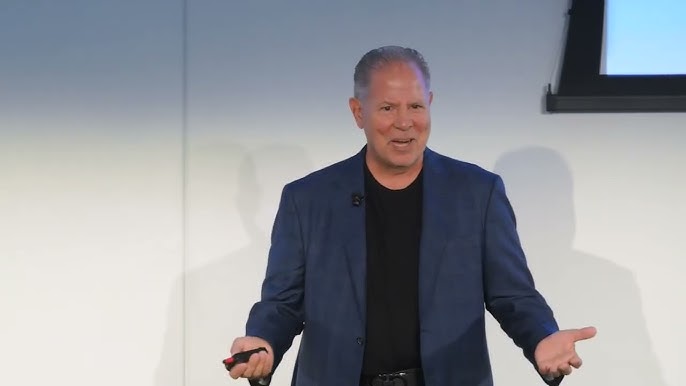
When IgniteTech’s chief executive ordered a sweeping restructuring that removed roughly four out of five employees, it looked less like a transformation than a controlled demolition. The trigger was not a cash crunch or a collapsing product line, but a revolt against artificial intelligence tools that he insisted were non‑negotiable. Two years later, he is still adamant that replacing about 80% of the workforce was the only way to save the company and says he would make the same call again.
The story of that decision, and the AI‑heavy business that emerged from it, has become a touchstone in the debate over how far leaders should go when staff resist technological change. I see it as a case study in what happens when a CEO treats AI adoption as an existential bet rather than a gradual upgrade, and what that means for everyone else watching from the sidelines.
The all‑or‑nothing AI bet at IgniteTech
IgniteTech is an enterprise software firm that built its strategy around acquiring and running a portfolio of business applications, and its leadership decided that future growth depended on embedding artificial intelligence into almost everything it sold. The company positioned itself as a kind of “software utility,” and its public materials describe a focus on modernizing legacy tools with automation and data‑driven features, a direction that set the stage for a much more aggressive AI push inside IgniteTech. That push, however, collided with a workforce that was not convinced the technology was ready or that it would benefit their day‑to‑day work.
According to accounts of the period, the chief executive, identified in coverage as Eric Vaughan, convened an all‑hands meeting with his global remote team and made it clear that the status quo was over. Gone were the comfortable routines and quarterly goals that had defined life at the company, replaced by a mandate to retool products and internal processes around machine learning and automation. Reporting on that meeting describes how some employees saw the new tools as a threat to their roles or to product quality, and how that skepticism hardened into what leadership viewed as active resistance that could sabotage the AI program if it was allowed to continue unchecked, a concern reflected in later headcount figures.
Firing 80% and rebuilding around AI‑first talent
The confrontation culminated in a decision that still reverberates across the tech industry: the CEO fired roughly 80% of the company’s staff after concluding that they would not embrace the new AI‑centric model. In one detailed account, the move is described as a deliberate purge of roles that leadership believed could be restructured or automated, with the goal of creating a unified AI‑led structure rather than a hybrid organization split between early adopters and holdouts. A separate analysis of the episode notes that a CEO fired 80% of staff for resisting AI adoption, underscoring just how sweeping the cuts were.
Eric Vaughan has since defended the scale and speed of the layoffs in stark terms. In one interview, IgniteTech’s leader is quoted as saying that changing minds was harder than adding skills, and that he had tried bringing in outside experts to evangelize AI before concluding that the internal opposition was too entrenched. Coverage of that period notes that where others saw promise, Vaughan saw a risk that skeptics would slow or derail the transformation, a view that shaped his choice to remove nearly four out of five employees rather than continue to negotiate with them, as described in a detailed account of the.
“Was Necessary, Would Do It Again”
Two years after the restructuring, the CEO’s stance has not softened. In a widely cited remark, IgniteTech CEO Eric Vaughan Says, Was Necessary, Would Do It Again, After Firing 80% Employees, framing the decision as a hard but unavoidable step to keep the business viable. In that same coverage, he argues that keeping people who refused to work with AI would have ruined the company, and he describes himself as both the architect of the layoffs and the sponsor of an AI adoption programme that was meant to give staff a path to stay if they were willing to adapt, a defense captured in reports that quote Eric Vaughan Says,.
Other profiles of the episode echo that message, describing a tech CEO who once laid off 80% of his staff for not embracing AI fast enough and who still argues that the move was necessary. Those reports emphasize that he sees the cuts not as a cost‑saving measure but as a cultural reset, designed to replace skeptics with people who are eager to experiment with automation and machine learning. One such piece notes that this CEO believes anyone worried about AI taking their job should instead focus on learning how to use it, a sentiment that aligns with the way CEO level leaders increasingly talk about reskilling as a personal responsibility rather than a corporate perk.
Inside the AI rebuild: products, payroll and profit
What happened after the layoffs is central to Vaughan’s argument that the gamble paid off. By the end of 2024, the company had launched two patent‑pending AI solutions, including a platform for AI‑based email automation that was built by a much smaller but more specialized team. Reporting on that period notes that in the months since the restructuring, Vaughan focused on hiring people who could unlock AI’s benefits rather than trying to convert skeptics, and that this shift in recruiting priorities reshaped the company’s skills base, as described in a follow‑up analysis of the.
The financial and operational changes were just as dramatic. One report describes how IgniteTech CEO Eric Vaughan overhauled the software firm by replacing most of its workforce with AI‑driven talent, pairing a leaner human staff with automation to support a major acquisition and what is described as rare profitability in a crowded enterprise market. That same coverage notes that while most tech firms were cautiously experimenting with AI, Vaughan believed it was easier to hire people who already embraced the tools than to teach them new skills, a philosophy that shaped the company’s new operating model and is captured in profiles of Eric Vaughan and his strategy.
The human cost and the new AI workplace norm
Behind the metrics and product launches, the human impact of the decision remains stark. Coverage of the restructuring notes that it was technical staff who bore much of the brunt, even though they were the ones building and maintaining the software that IgniteTech sells to enterprise customers. At the same time, the company attempted to cushion the shift with substantial investment, redirecting around 20 per cent of payroll to AI tools and training that would support the new model, a reallocation that signaled how seriously leadership took the transition and that is detailed in reports on how Around one‑fifth of compensation spending was repurposed.
Two years on, the episode has become a reference point in global debates about AI and employment. One account describes a CEO who laid off 80% employees globally for refusing to adopt AI and who now says that, after two years, he stands by that choice, highlighting how IgniteTech CEO Eri…c Vaughan replaced a large share of his workforce with AI‑aligned hires according to Vaughan’s own interview. Another report frames the story as a leader who once laid off nearly 80% of his staff because they refused to adopt AI fast enough and who now insists he would do it again, a narrative that has been summarized in coverage noting that, two years later, he says he would do it again and that he would still make the same call, as reflected in a follow‑up piece that emphasizes By the end of that period. For other executives, the lesson is less about copying the exact playbook and more about recognizing that AI strategy is now inseparable from people strategy, a reality underscored every time leaders weigh whether to persuade, retrain or, as in this case, replace.
In my view, the IgniteTech story crystallizes a hard truth about the current AI wave: technology decisions are increasingly culture decisions, and culture decisions are ultimately employment decisions. Some leaders will see Eric Vaughan’s approach as a blueprint, others as a cautionary tale, but no one watching closely can pretend that resisting or embracing AI is a neutral choice anymore. The next time a CEO calls an all‑hands to announce a new automation push, staff will remember what happened when one leader decided that 80% resistance was 80% too much, a memory reinforced by coverage of how CEO level decisions can redraw the line between human work and machine work almost overnight.
More From TheDailyOverview

Silas Redman writes about the structure of modern banking, financial regulations, and the rules that govern money movement. His work examines how institutions, policies, and compliance frameworks affect individuals and businesses alike. At The Daily Overview, Silas aims to help readers better understand the systems operating behind everyday financial decisions.

