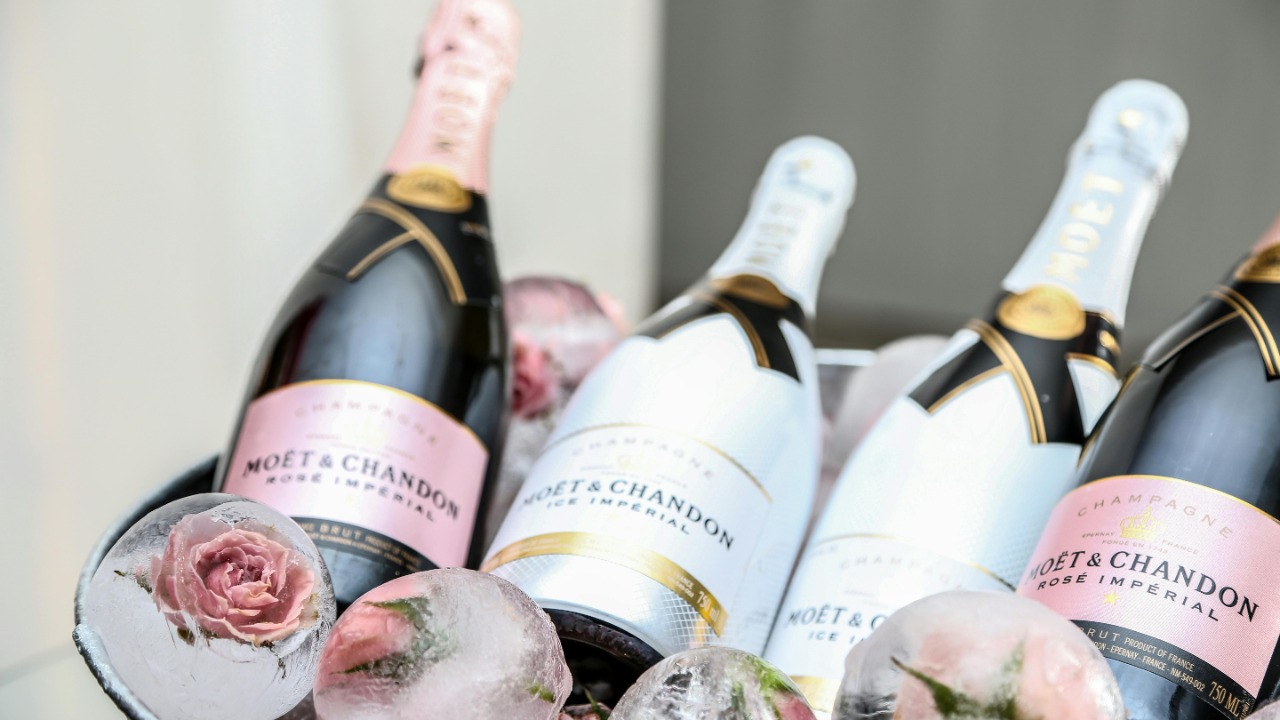
Champagne is ending 2025 on a high, with bottles flying off shelves and producers talking again about growth rather than survival. Yet as the sector heads into 2026, that buoyant demand is colliding with a harsher reality of tariff threats, labor disputes, and structural strains that could flatten the mood as quickly as a warm bottle left open overnight.
Behind the festive headlines, the region that built its reputation on celebration is wrestling with questions about who picks the grapes, who pays the tariffs, and who ultimately absorbs the cost of a fragile supply chain. I see an industry that still has pricing power and cultural cachet, but also one that must navigate politics in Washington and Brussels, worker unrest in the vineyards, and climate and demographic pressures that no marketing campaign can wish away.
Champagne’s demand rebound sets a fragile high bar for 2026
The starting point for 2026 is a market that has rediscovered its appetite for bubbles. Global sales have climbed back to, and in some cases beyond, pre‑pandemic levels, with the global champagne market size valued at USD 7.95 billion in 2025 according to Dec KEY MARKET INSIGHTS. That figure reflects not only volume but also the ability of producers to hold premium pricing, especially in export markets where Champagne still signals status in a crowded sparkling wine field.
As 2025 drew to a close, trade observers noted that Champagne was trending up again, often described as a leading indicator for the broader drinks market because consumers tend to cut back on celebratory bottles first in a downturn and add them back when confidence returns. That makes the current rebound a double edged sword. It confirms that global drinkers still prize the category, but it also raises expectations for 2026 at precisely the moment when tariffs, labor unrest, and supply constraints threaten to choke off the momentum.
Macro drivers: luxury appetite, emerging markets and tech
Underneath the headline growth, the demand story is being reshaped by deeper macro forces. A Dec Macro Drivers Analysis for the Champagne Market points to rising global wealth, especially in Asia and the Middle East, and a renewed appetite for Western luxury goods as key supports for the category. Technological tools, from vineyard sensors to AI‑driven demand forecasting, are also cited as pivotal in helping producers manage costs and match production to shifting consumer tastes in a rapidly evolving landscape.
At the same time, the same Dec KEY MARKET INSIGHTS research notes that the global market is projected to keep expanding as younger consumers in urban centers discover Champagne through cocktails, nightclubs, and social media, and as more markets learn to recognize and value Western luxury goods. That combination of structural demand and new channels gives producers a powerful tailwind going into 2026, but it also makes the sector more exposed to policy shocks, from tariffs to labor regulation, that can ripple quickly through finely tuned global distribution networks.
North America’s thirst meets tariff anxiety
Nowhere are those cross‑currents more visible than in North America, where Champagne has become a staple of both high‑end restaurants and mass‑market celebrations. An Oct report on North America Champagnes notes that the region, comprising the United States, Canada, and Mexico, accounts for a substantial share of global consumption. Producers and importers are leaning heavily on AI‑driven analysis of consumer behavior and purchasing patterns to fine tune assortments, set prices, and foster loyalty in markets where competition from Prosecco, Cava, and domestic sparkling wine is intense.
Yet that demand is increasingly entangled with trade politics. Reporting on This New Year Eve has highlighted how strong tariffs and a weak dollar have already weighed on Champagne importers, with some buyers in the United States openly worrying about the impact of any additional tariff and a weak dollar combination on shelf prices. For 2026, the question is not whether North Americans still want Champagne, but how much sticker shock they are willing to tolerate if political decisions in Washington and Brussels push landed costs sharply higher.
Tariff threats from Washington hang over every bottle
Tariffs are no longer an abstract risk for Champagne, they are a recurring feature of the political conversation in the United States. President Donald Trump floated a 200% tariff on European wine, Champagne and spirits earlier in 2025, a threat that did not ultimately materialize but that underscored how exposed the category is to sudden policy shifts. In a separate account of those threats, Trump was quoted attacking The Europ bloc as one of the most hostile and abusive taxing and tariffing partners, language that keeps the possibility of renewed trade confrontation alive even if specific measures have been delayed.
Another report on tariff rhetoric noted that Trump has repeatedly singled out The European Union in social media posts, framing aggressive duties on imported alcohol as a way to punish what he describes as unfair treatment of American exporters, a stance detailed in coverage of The European Union. For Champagne houses that rely on the United States as a high margin export market, the risk is that even if a 200% tariff never lands, the constant threat of new duties will force importers to hedge, delay orders, or shift promotional budgets away from French bottles toward less politically exposed alternatives.
Labor abuses and worker shortages collide in the vineyards
While trade policy grabs headlines, the more immediate pressure point for Champagne producers is in the vineyards and cellars. Reports from the 2023 harvest described how Heatwaves in March 2021 burnt the vines, days of frost followed, then torrential rains in June and Jul triggered disease pressure, a sequence that left growers scrambling for labor to salvage what they could. At the same time, demographic shifts in many wine‑growing countries are making it harder to find seasonal workers at all, a trend summed up in a trade fair analysis that begins, tellingly, with the phrase Because the demographics in many wine‑growing countries will aggravate staff shortages even further in the future.
Those structural shortages have collided with a reckoning over working conditions. Investigations into harvest practices in the region have documented cases of overcrowded housing, unpaid overtime, and abusive subcontracting, with one detailed account titled Beneath the Bubbles describing how Champagne’s Harvest Faces Reckoning Over Worker Exploitation and how Sales of Champagne have traditionally masked the vulnerability of a largely migrant workforce. As the pool of available workers shrinks, producers who fail to improve conditions risk not only reputational damage but also the very real possibility that there will simply not be enough hands to bring in the 2026 crop.
Unions, big houses and the fight over value
The labor story is not confined to seasonal pickers. It is also playing out inside the largest Champagne houses, where unions are pressing for a bigger share of the value created by booming exports. Coverage of the sector has highlighted how the CGT labor union at LVMH has targeted Moët & Chandon and Veuve Clicqu, arguing that workers who kept production running through years of crisis should not see their real wages eroded just as profits recover. In a separate account of the same dispute, a spokesman for Moët & Chandon declined to comment directly on pay negotiations, underscoring how sensitive the issue has become for global luxury groups.
Regulators and industry bodies are also signaling that the old model of looking the other way on labor conditions is no longer acceptable. A Sep report on how Champagne faces labor reform warned that Any negligence in labor conditions could tarnish the global reputation of Champagne, a name synonymous with luxury and celebration, and insisted there is no room for complacency. For 2026, that means producers must budget not only for higher wages and better housing, but also for audits, compliance systems, and potential legal exposure if they fall short, all of which could feed back into higher prices for consumers.
Regulation, scarcity and the limits of growth
Even if demand holds and labor issues are addressed, Champagne’s growth is capped by geography and law. The region’s vineyards are tightly regulated under the French system of Appellation d’Origine Controlee, which strictly defines where and how grapes can be grown and how the wine can be made. A market trends report framed this as Strict AOC Regulations and Limited Production, noting that Champagne is protected by law through Appellation Origine Controlee rules that prevent producers from simply planting more vines whenever demand spikes.
That scarcity is part of the brand’s allure, but it also makes the market more vulnerable to shocks. Another analysis of the global market emphasized that Champagne accounts for only a sliver of the world’s sparkling wine output, with Synonymous with north‑eastern France, Champagne represents about 10% of global sparkling wine production by volume but a far larger share by value. That imbalance means that if tariffs or labor disputes disrupt supply, there is limited capacity to make up the shortfall with authentic Champagne, forcing consumers either to trade down to other sparkling wines or to pay sharply higher prices for the real thing.
Dry styles, sustainability and shifting consumer tastes
Within the category, producers are also grappling with changing tastes and sustainability expectations. A detailed Aug report on Dry Champagne Market Size and its Sustainability and Insights and Regional Scope through 2033 notes that Dry Champagne Market Revenue has been buoyed by consumers who prefer less sugar and who are increasingly attentive to environmental credentials. Producers are responding with lower dosage styles, organic and biodynamic viticulture, and lighter packaging, all of which require investment but also open doors in markets where eco‑labels and calorie counts influence purchasing decisions.
These shifts dovetail with the broader premiumization trend captured in Dec KEY MARKET INSIGHTS, which highlights how consumers are willing to pay more for bottles that signal craftsmanship, origin, and responsible production. For houses that can credibly tell that story, 2026 could be a year of margin expansion even if volumes plateau. For those that cannot, there is a risk of being squeezed between nimble grower‑producers at the top and cheaper sparkling alternatives at the bottom, especially as fine wine buyers, already feeling the pinch in their wallets, react to reports that The Champagne industry has endured a variety of shocks that have pushed some drinkers toward more affordable options.
A sector looking for hope amid real risks
As 2026 begins, the mood in Champagne is cautiously optimistic but undeniably tense. Commentators observing This New Year Eve have noted that This New Year the Champagne market is looking for hope, with signs that demand is stabilizing even as producers and consumers alike feel the pinch in their wallets. Another account of the same moment stressed that The Champagne market appears to be stabilizing, but that strong tariffs, a weak dollar, and lingering supply chain issues continue to cloud the outlook for both retailers and drinkers who have grown used to steady price increases.
From my vantage point, the sector’s resilience will depend on whether it can turn its current challenges into catalysts for reform. If producers invest in fair labor practices, embrace technology to manage scarce resources, and engage constructively with policymakers on both sides of the Atlantic, Champagne can remain a symbol of celebration rather than a casualty of trade wars and social backlash. The alternative is a 2026 defined by shortages, reputational damage, and a widening gap between the image in the glass and the realities in the vineyards of France, a risk that no amount of marketing gloss can fully disguise.
More From TheDailyOverview

Grant Mercer covers market dynamics, business trends, and the economic forces driving growth across industries. His analysis connects macro movements with real-world implications for investors, entrepreneurs, and professionals. Through his work at The Daily Overview, Grant helps readers understand how markets function and where opportunities may emerge.

