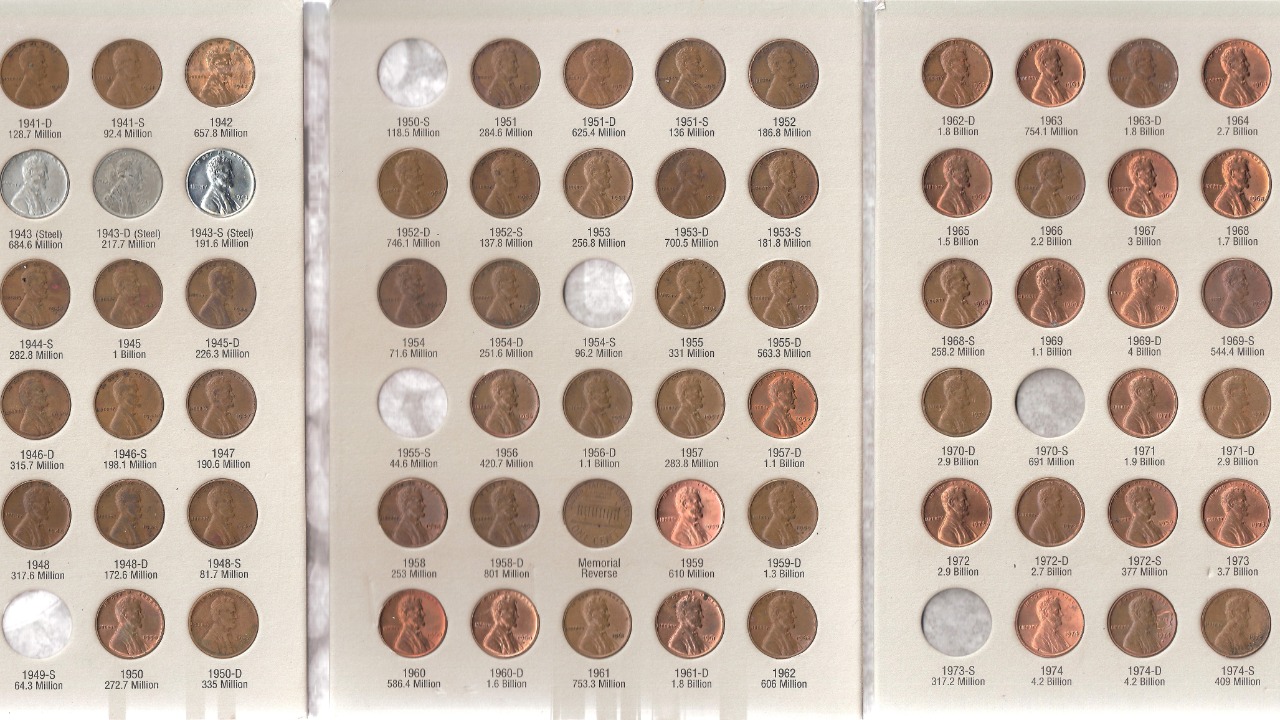
In the world of pocket change, a handful of Lincoln cents are worth far more than their face value, with some documented sales climbing into the six-figure range. A small group of rare dates, mint errors, and unusual compositions has turned ordinary-looking pennies into serious auction prizes, and collectors are still hunting them in circulation and old jars at home. I want to walk through the specific traits that separate a life-changing cent from the rest of the copper-colored crowd so you can check your own coins with a sharper eye.
The six-figure standouts collectors chase
When people talk about a penny being worth a house, they are usually referring to a short list of legendary Lincoln cents that combine extreme scarcity with strong collector demand. The most famous is the 1943 copper cent, a coin that should have been struck on zinc-coated steel planchets during the wartime metal shift but instead ended up on leftover bronze blanks. Only a tiny number of genuine 1943 copper cents are known, and authenticated examples have sold at major auctions for prices that reach well into six figures, with top-condition pieces pushing toward the $200,000 mark and beyond, as documented in detailed auction records. That kind of price is not a theoretical estimate, it reflects actual sales where collectors competed aggressively for a coin that should not exist.
The 1944 steel cent sits in the same category of “wrong metal” rarities, created when a small number of zinc-coated steel planchets from 1943 were accidentally used after the Mint returned to copper-based alloy in 1944. Genuine 1944 steel cents are dramatically rarer than regular 1944 copper cents and have also brought six-figure prices when certified in high grades, according to specialist population and price data. These coins are not just curiosities, they are centerpieces of advanced Lincoln cent collections, and their documented sale prices are the clearest proof that a one-cent piece can cross into the $200,000 conversation when the right combination of error and condition comes together.
Key dates and semi-key pennies hiding in plain sight
Beyond the headline-grabbing wrong-metal errors, there is a tier of “key date” and “semi-key” Lincoln cents that can be surprisingly valuable even without dramatic mint mistakes. The 1909-S VDB, struck in San Francisco with designer Victor David Brenner’s initials prominently on the reverse, is the classic example, with relatively low mintage and intense collector interest driving strong prices. Well-preserved 1909-S VDB cents routinely command four-figure sums, and certified high-grade pieces have sold for tens of thousands of dollars, as reflected in long-running price guides. While that does not reach the six-figure tier, it shows how a coin that still looks like an ordinary wheat cent to a casual observer can be worth far more than pocket change.
Other key dates, such as the 1914-D and 1931-S Lincoln cents, also bring substantial premiums when found in sharp, original condition. Population reports and auction archives show that uncirculated examples of these dates can sell for thousands of dollars, especially in top-graded “red” designations that preserve the original mint color, as seen in detailed series breakdowns. I find that this middle tier of value is where many casual collectors have realistic upside: a coin pulled from a family collection or old roll might not pay off a mortgage, but it can still be a meaningful windfall if it turns out to be a scarce date in better-than-average shape.
Famous error cents that look ordinary at first glance
Some of the most valuable pennies owe their price tags not to the year or mintmark but to dramatic errors that slipped past quality control. The 1955 doubled die obverse cent is the textbook case, with its bold, doubled lettering on “LIBERTY” and “IN GOD WE TRUST” visible to the naked eye. Collectors have chased this variety for decades, and certified high-grade examples have sold for tens of thousands of dollars, according to well-documented auction histories. Even circulated pieces with clear doubling bring strong premiums, which is why I always recommend that people look closely at the date and inscriptions on 1950s cents before tossing them back into change.
Later doubled dies and other striking errors can also be worth serious money, though they rarely reach the same iconic status as the 1955 variety. For example, certain 1972 doubled die cents and off-center strikes with full dates and mintmarks have documented sales in the hundreds or low thousands of dollars, as cataloged in specialized error listings. The key point is that many of these coins do not scream “rarity” at first glance; they often look like slightly odd pennies until someone with a magnifier and a bit of knowledge recognizes the misaligned design or doubled lettering that signals a valuable mistake.
How metal composition and condition drive big prices
Composition is one of the quiet forces behind six-figure penny prices, especially in the wartime years when the Mint experimented with different metals. The 1943 copper and 1944 steel cents are the most dramatic examples, but composition matters across the series, from early bronze issues to the later copper-plated zinc cents introduced in the 1980s. Collectors and grading services rely on precise weight and, when necessary, advanced testing to confirm whether a coin is struck on the correct planchet, and those diagnostics underpin the high prices recorded in verified case studies. Without that scientific confirmation, a coin that looks unusual might simply be a plated fake or a damaged piece with no special value.
Condition is the other major driver that separates a nice find from a record-setter. Professional grading scales, which run from Poor-1 to Mint State-70, assign significant premiums to coins that retain sharp detail, original luster, and minimal marks. For many of the key dates and famous errors, the price curve is steep: a coin that might be worth a few hundred dollars in circulated condition can jump to tens of thousands in a top uncirculated grade, as shown in side-by-side price comparisons. I have seen collectors underestimate a coin because it looked “old,” only to learn that its well-preserved surfaces made it far more desirable than a worn example of the same date.
Practical steps to check your own pennies
For anyone staring at a jar of change and wondering where to start, a simple, methodical approach can make the search manageable. I begin by sorting coins by decade, pulling out wheat cents (those with the two wheat ears on the reverse) and any pieces from the early 1980s or earlier that look unusually bright or heavy. From there, I focus on the key dates and error years that have documented value, using concise reference charts to cross-check mintmarks and varieties. A basic magnifying glass or a jeweler’s loupe is usually enough to spot obvious doubling, off-center strikes, or other anomalies that might justify a closer look.
Once a coin seems promising, the next step is to compare it against clear photographs and diagnostics from trusted numismatic resources, then consider professional grading if the potential value appears significant. Major grading services publish detailed submission guidelines that explain how to send coins in for authentication and encapsulation, which is often essential for six-figure rarities like the 1943 copper cent. I also recommend checking recent auction results for similar pieces, since realized prices in public sales provide a more realistic benchmark than outdated anecdotes. Not every odd-looking penny will turn out to be a jackpot, but with a structured process and reliable data, it only takes one exceptional cent to turn a routine coin check into a very real payday.
More From TheDailyOverview
- Dave Ramsey says these two simple questions show whether you’re rich or poor
- Retired But Want To Work? Try These 18 Jobs for Seniors That Pay Weekly
- IRS raises capital gains thresholds for 2026 and what’s new
- 12 ways to make $5,000 fast that actually work

Cole Whitaker focuses on the fundamentals of money management, helping readers make smarter decisions around income, spending, saving, and long-term financial stability. His writing emphasizes clarity, discipline, and practical systems that work in real life. At The Daily Overview, Cole breaks down personal finance topics into straightforward guidance readers can apply immediately.

