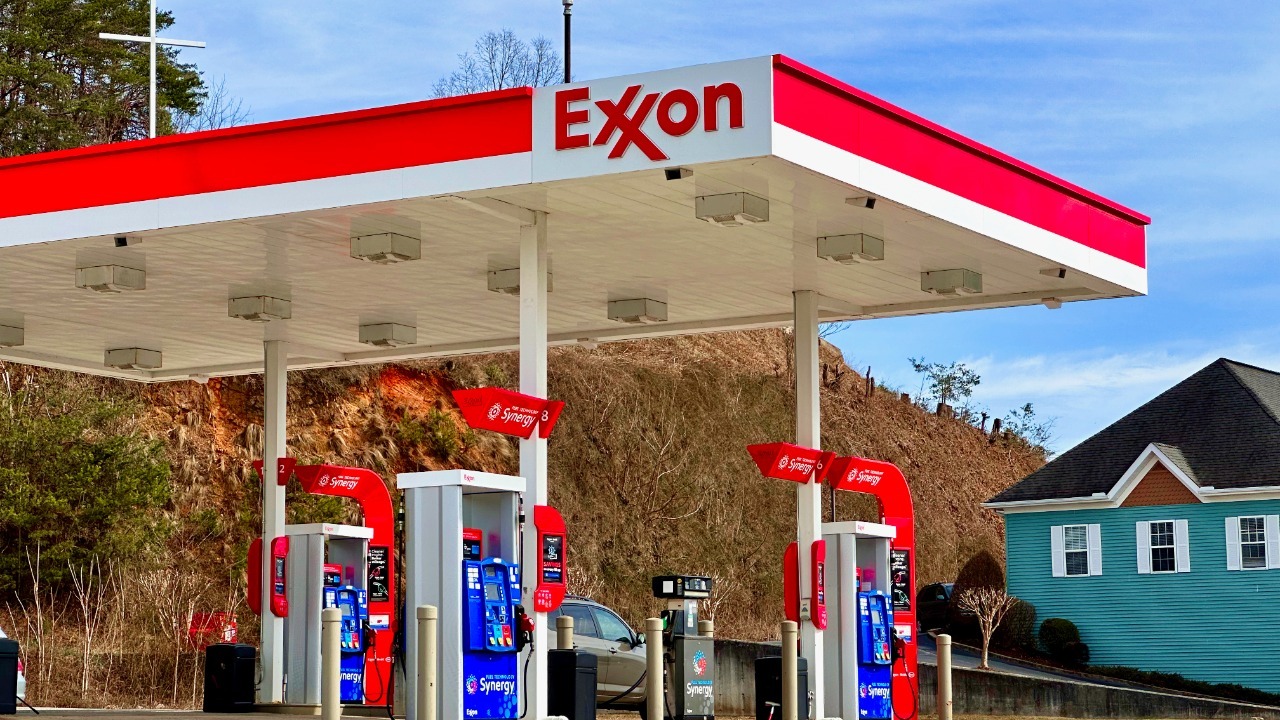
Houston’s two oil titans are being squeezed by falling profits just as Venezuela dangles the prospect of a massive production revival. Chevron and Exxon Mobil are both signaling caution, but they are not aligned on how aggressively to lean into the country’s reopening, turning a long‑running rivalry into a test of strategy in one of the world’s most politically fraught oil patches.
The clash is unfolding as investors scrutinize every dollar of capital spending and every word executives use about Venezuela, Guyana and the wider region. With earnings under pressure and Washington’s policy toward Caracas in flux, the choices these companies make now will shape not only their own fortunes but also the balance of power in the Americas’ oil future.
Profits sag as investors hunt for a new growth story
Both companies are confronting a sharp comedown from the boom years, which is forcing a tougher conversation about where the next leg of growth will come from. Exxon reported fourth‑quarter earnings of $6.5 billion, down 15 percent from $7.6 billion a year earlier, while its full‑year 2025 earnings also retreated. Chevron’s profit has slipped as well, with lower oil prices dragging its annual result to $28.8 billion, its weakest since 2021. Analysts have zeroed in on these numbers as evidence that the easy gains from post‑pandemic demand have faded, leaving management under pressure to justify every new frontier they pursue.
Executives are acknowledging that reality in unusually blunt terms. A Quick Summary of their latest results notes that Exxon Mobil and Chevron have posted their smallest annual profits since 2021, a comedown that coincides with U.S. oil prices ending 2025 about 20 percent lower. Another breakdown of the same earnings season underscores that Exxon and Chevron are being asked to explain how they will grow in a world where geopolitical risk, from the capture of strongman Nicolás Maduro’s foreign assets to sanctions policy, can erase billions overnight.
Rival visions for Venezuela’s reopening
Into that earnings squeeze steps Venezuela, a country with vast reserves and a long history of expropriation that both tempts and terrifies global majors. Chevron and Exxon Mobil, Houston’s oil majors, are taking notably different tacks on how to approach Venezuelan oil as profits drop, turning the country into a fresh arena for their rivalry. Reporting from Chevron and Exxon in Houston highlights how one company is more willing to talk up the country’s promise while the other stresses legal and political uncertainty.
Chevron Chief Executive Mike Wirth has been careful to frame that optimism as conditional. In a recent briefing, Chevron Chief Executive said Friday that it is too early to determine the company’s long‑term outlook on Venezuela, even as he acknowledged that the company certainly could see operations and its footprint expand there. A separate account of the same remarks notes that Friday’s message was that any expansion would depend on how U.S. and Venezuelan authorities manage sanctions and contracts, a reminder that even the more bullish Houston major is not writing blank checks.
Wait‑and‑see spending and the lure of 50% growth
Despite the rhetoric, both companies are keeping their wallets closed for now. Exxon and Chevron have declined new spending in Venezuela and are instead taking a wait‑and‑see approach for the years ahead, a stance that reflects both shareholder caution and regulatory uncertainty. One detailed breakdown of their capital plans notes that Exxon is balancing its reduced earnings with a disciplined approach to high‑risk jurisdictions, while Chevron is signaling that it will not rush into large new projects until the political picture is clearer.
Yet the potential prize is hard to ignore. One assessment of the country’s reopening argues that There is the potential for up to an incremental 50% production growth over the next 18 to 24 months as companies secure additional authorizations and resolve a long‑running dispute between the two countries. That kind of 50% uplift would be material for any portfolio, particularly for Chevron, the only U.S. oil major currently operating production in Venezuela, and for Exxon, which is weighing whether the risk‑reward balance has finally shifted in its favor.
Guyana, Stabroek and a South American scorecard
The contest over Venezuela cannot be separated from the companies’ jockeying next door in Guyana, where Exxon has been the dominant operator and Chevron has muscled in through acquisitions. Chevron’s purchase of Hess Corp, chronicled by Bob Campbell, gave it a coveted partnership in the country’s offshore development and additional assets in the Permian Basin, among other regions. Another analysis notes that Chevron, which is the second‑largest Permian producer after Exxon, became Exxon’s top partner in Guyana after it closed its $53 billion deal, turning rivals into reluctant partners in one of the world’s hottest oil plays.
For Exxon, a major question is whether the company will be able to access new parts of the Stabroek Block in neighboring Guyana, where earlier investments had been expropriated twice before. A separate briefing on the same issue notes that For Exxon, the Stabroek Block is not just another asset but a test of whether political risk in the region can be managed. Local observers add that Prospects for new discoveries outside Guyana’s most successful offshore oil block, the Stabroek Block, are being revisited for commercial viability, underscoring how closely the industry is watching every exploration result in the basin.
Trump, Washington and the geopolitics of risk
Layered on top of geology and balance sheets is a volatile political backdrop that neither company can control. President Trump has signaled interest in massive infrastructure investment tied to Venezuela, raising the prospect that Washington could tilt the playing field in favor of one Houston major over the other. One investor‑focused analysis frames the current moment as a potential Second Chevron Vs, arguing that Venezuela policy from Trump could hand Chevron another South American win over Exxon Mobil on top of its Guyana project, which Exxon operates.
Executives are treading carefully in public as they navigate that political minefield. On Friday, On Friday, Woods said his comments at the White House were meant to communicate the significant challenges that have to be addressed before Venezuela becomes a logical partner, while also acknowledging that Chevron, the only U.S. oil major currently pumping there, has a head start. A separate account of the same briefing notes that Venezuela offers a glimmer of potential but with a long road ahead, a phrase that neatly captures how both companies are trying to reassure investors that they see the upside without underestimating the risk.
More From TheDailyOverview
*This article was researched with the help of AI, with human editors creating the final content.

Grant Mercer covers market dynamics, business trends, and the economic forces driving growth across industries. His analysis connects macro movements with real-world implications for investors, entrepreneurs, and professionals. Through his work at The Daily Overview, Grant helps readers understand how markets function and where opportunities may emerge.

