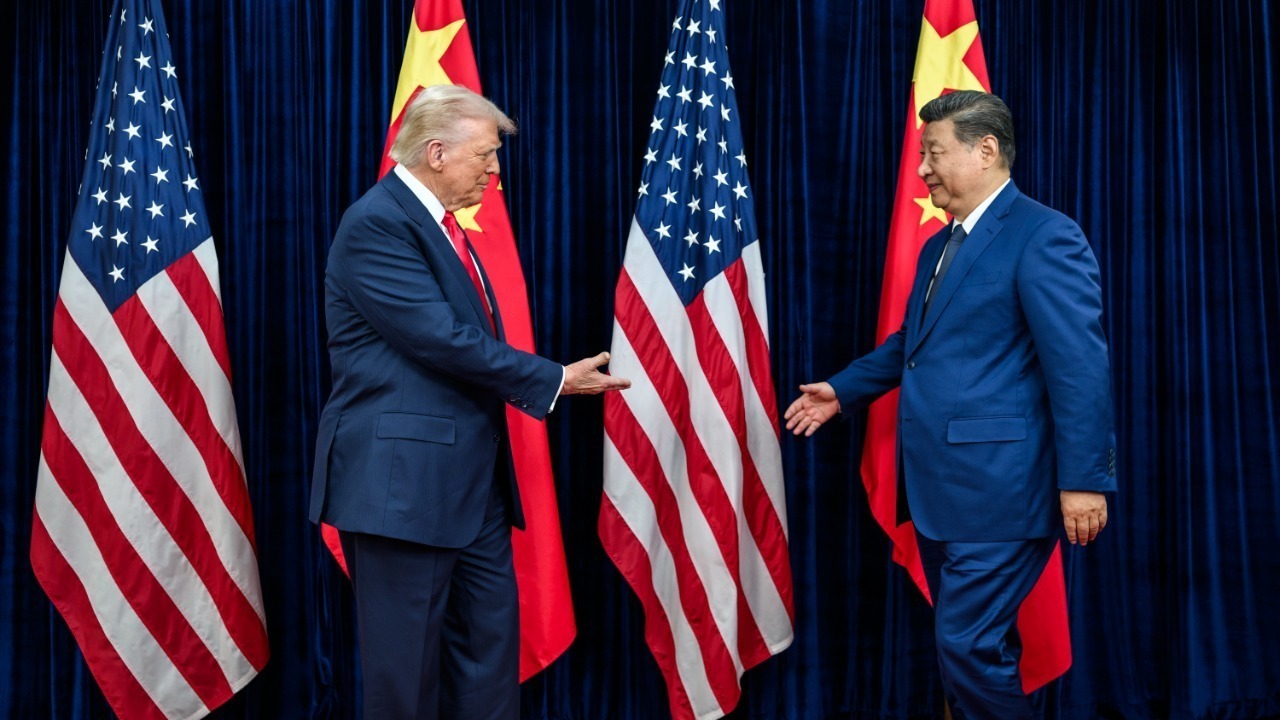
China has quietly stepped back from financing Washington’s deficits, selling U.S. government debt for nine straight months even as global demand for Treasuries hits record highs. The shift leaves Beijing holding its smallest stash of U.S. bonds since the global financial crisis, while other foreign investors rush to fill the gap.
The divergence captures a deeper realignment in how major economies manage their reserves and hedge political risk. I see China’s retreat, and the simultaneous surge of buying from allies and hedge funds, as a stress test of the idea that U.S. Treasuries are the world’s ultimate safe asset.
China’s long retreat from U.S. debt
China has been trimming its exposure to U.S. government bonds for years, but the latest data show that the pullback has entered a more determined phase. Official figures indicate that China has been a net seller of U.S. Treasuries for nine consecutive months, a rare uninterrupted streak. In November alone, China sold a net $5.39 billion of U.S. debt, extending a selling pattern that has been in place since early spring. That steady drip has pushed Beijing’s holdings down to levels not seen since before the post‑crisis surge in reserve accumulation.
The scale of the drawdown is striking. By November, China’s stash of U.S. government debt had fallen to $682.6 billion, the lowest since September 2008. Separate reporting describes how China has been cutting its U.S. bond holdings since the first term of U.S. President Donald Trump, dropping from a peak that once approached US$1.2 trillion. I read the latest nine‑month selling streak as the acceleration of a long, deliberate repositioning rather than a sudden panic.
From Treasuries to gold and “other assets”
Beijing is not simply shrinking its reserves, it is reshaping them. Official commentary and data show that Focus in Beijing has shifted toward diversifying away from U.S. debt and into gold and other reserve assets. Reports describe how China has cut its U.S. debt holdings to a 17‑year low while increasing its bullion stockpile, a classic move for a country that wants to reduce exposure to another nation’s policy choices. I see that as a hedge not only against market volatility but also against the risk of financial sanctions.
At the same time, Chinese authorities are reallocating into what one report describes as “other assets,” including instruments that are less directly tied to U.S. fiscal and monetary decisions. Analysts note that Beijing has been buying alternatives as its Treasury holdings fall to a September 2008 low, with concerns about the Fed and U.S. debt sustainability cited as key drivers. In my view, that combination of gold buying and diversification underscores that this is a strategic, politically informed shift rather than a purely market‑driven trade.
Record foreign demand masks China’s exit
China’s retreat is happening against a backdrop of surging global appetite for U.S. government paper. Official data show that Holdings of U.S. Treasuries by foreign investors rose to an all‑time peak of $9.355 trillion in November, up from $9.243 trillion a month earlier. Another dataset puts Global holdings of U.S. Treasury securities at approximately $9,355.4 billion, after an increase of $112.8 billion in November alone. In other words, while Beijing sells, the rest of the world is still piling in.
Some of that demand is coming from traditional allies and financial centers. The UK is widely seen as a major custody hub that often serves as a proxy for Hedge fund flows into Treasuries, meaning some of the buying recorded there may actually reflect global speculative and arbitrage strategies. Japan is also central: Japan is currently the largest foreign holder of U.S. Treasuries, with holdings rising to $1.13 trillion in early 2025, underscoring how U.S. allies are still anchoring the market even as China steps back.
Why Beijing is uneasy with Treasuries
China’s selling spree is not happening in a vacuum. Analysts point to a mix of political and economic concerns, including worries about the independence of the U.S. central bank and the long‑term trajectory of American debt. Reporting from Asia notes that Beijing has been dumping more U.S. debt and buying other assets as President Trump targets the Federal Reserve, with Treasury holdings hitting a September 2008 low. I read those moves as a signal that Chinese policymakers no longer view Treasuries as a politically neutral store of value.
There is also a longer arc of mistrust. One account stresses that China has continued selling its U.S. bonds since the first term of President Donald Trump, a period marked by tariffs and technology restrictions that weaponized economic ties. When I connect that history with the current concerns about the Fed and U.S. debt sustainability, the pattern looks less like a tactical trade and more like a structural downgrading of U.S. assets in China’s strategic toolkit.
Can others keep absorbing U.S. debt?
For now, the answer appears to be yes. Even as China sells Treasuries for nine straight months, foreign buyers are snapping up the supply. One report notes that In November, China sold a net $5.39 billion of U.S. debt according to Thursday’s Treasury data, yet overall foreign holdings still climbed to fresh records. That suggests the marginal buyer is now more likely to be a U.S. ally, a hedge fund, or an energy exporter than Beijing.
Energy producers in particular are stepping up. One dataset shows that Treasury holdings by Saudi Arabia rose by $14.4 billion in November, helping lift global totals. Meanwhile, coverage of Treasureis trading notes that foreign buyers have been “snapping up” new issuance even as China keeps selling the securities. As long as that pattern holds, Washington can finance its deficits without Beijing’s help, but the composition of its creditors will look very different from the world that existed before the Trump era.
More From TheDailyOverview

Grant Mercer covers market dynamics, business trends, and the economic forces driving growth across industries. His analysis connects macro movements with real-world implications for investors, entrepreneurs, and professionals. Through his work at The Daily Overview, Grant helps readers understand how markets function and where opportunities may emerge.

