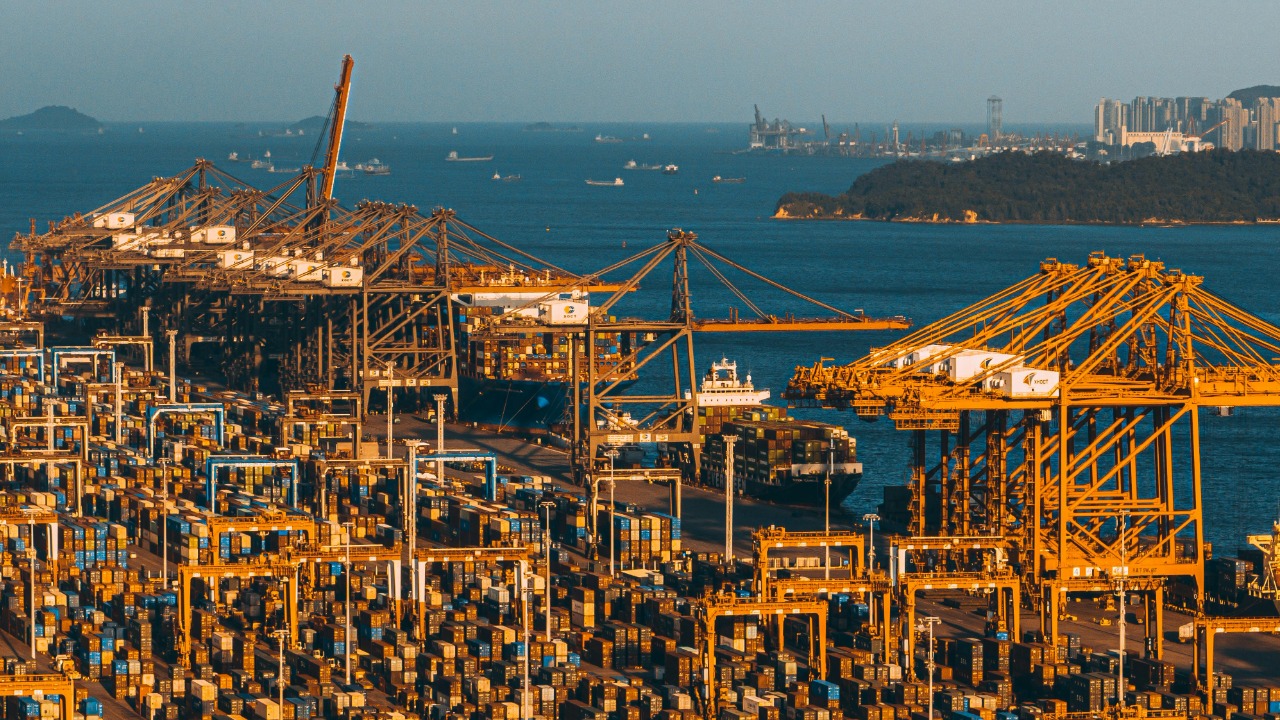
China’s trade machine just delivered a blunt verdict on Washington’s tariff strategy. In 2025 the country booked a record trade surplus of $1.2 trillion, a figure that surged even as President Donald Trump escalated duties on Chinese goods. Rather than forcing Beijing to bend, the tariff fight has coincided with a wider realignment of global supply chains that is still tilting in China’s favor.
The headline number matters because it captures more than a single year’s windfall. It signals that the world’s second‑largest economy has entrenched itself as an export superpower, even while growth at home is under strain and geopolitical tensions are rising. I see that surplus as both a warning light for policymakers in Washington and Brussels and a reminder that decoupling from China is proving far harder in practice than in rhetoric.
Trump’s tariffs meet a $1.2 trillion wall
The core political story is simple: a trade war meant to shrink the imbalance has instead coincided with a bigger one. Official data show that $1.2 trillion surplus in 2025, even as Trump kept tariffs in place and layered on new measures targeting sectors from electric vehicles to advanced machinery. The White House framed those duties as leverage to force market opening and re‑shore manufacturing, yet the aggregate trade gap with China has not closed in the way tariff advocates promised.
Part of the explanation is that the global economy adjusted around the tariffs rather than collapsing under them. Many multinationals shifted the final stages of assembly to third countries, but a large share of the value in those products still originated in China. At the same time, Chinese exporters cut prices, absorbed some tariff costs, and leaned on a weaker currency to stay competitive, which helped keep volumes high even as the policy environment hardened.
Inside the surplus: exports, imports and a shifting global order
Look under the hood and the surplus is as much about weak imports as strong exports. Reporting from China’s customs data shows that outbound shipments held up better than many economists expected, while inbound goods, especially consumer‑oriented products and some commodities, lagged. That pattern reflects a domestic economy where households are cautious and investment is skewed toward state‑backed projects rather than broad private demand.
At the same time, the external environment has been surprisingly supportive for Chinese manufacturers. A rebound in global goods demand, particularly for electronics, machinery and green‑energy equipment, helped push the surplus to what one analysis described as a 20 percent jump to almost $1.2 trillion, even with Trump’s tariffs still in place, a surge highlighted in coverage from HONG KONG. That combination of resilient exports and softer imports is exactly what widens a surplus, and it underscores how much the rest of the world still relies on Chinese factories for everything from smartphones to solar panels.
HONG KONG’s vantage point on a global imbalance
The political symbolism of the announcement also matters. Officials in HONG KONG highlighted that China’s trade surplus surged to a record of almost $1.2 trillion in 2025, with the figure released on a Wednesday that instantly reverberated through currency and equity markets. From that vantage point, the surplus is not just a bilateral issue with the United States but a marker of China’s role at the center of Asian and global supply chains.
HONG KONG’s financial community has long served as a barometer for how investors interpret Beijing’s economic trajectory. The reaction to the surplus data suggested a mix of admiration and anxiety: admiration at the sheer scale of China’s export engine, anxiety that such a large and persistent imbalance could invite more aggressive trade remedies from Washington and other capitals. I see that tension as a defining feature of the next phase of globalization, where markets reward efficiency while politicians push back against concentrated dependencies.
Why tariffs have not broken China’s export engine
Trump’s tariffs were designed to make Chinese goods more expensive and less attractive, yet the record surplus shows how adaptable both firms and consumers have been. Analyses of China’s 2025 trade point to several structural advantages that blunted the impact: dense supplier networks, world‑class logistics, and the ability of local governments to extend cheap credit and tax breaks to keep factories humming. When tariffs raised costs at the border, many Chinese producers simply moved up the value chain or shifted to products that were not yet targeted.
There is also the reality that American and European consumers still want what China sells. From budget Android phones to mid‑range electric vehicles, Chinese brands have carved out price points that are hard to match. Even when importers tried to diversify, they often found that alternative suppliers in Southeast Asia or Latin America still relied on Chinese components, meaning a large share of the value added remained in China. That is why, despite the tense back‑and‑forth over tariffs, the country could still report a record surplus, a dynamic captured in coverage of Despite the tariff battle that has defined recent years.
Global ripple effects and the next phase of the trade fight
A surplus of this magnitude does not exist in a vacuum. It feeds directly into debates over industrial policy in Washington, Brussels and Tokyo, where officials argue that China’s export strength is amplified by subsidies and an undervalued currency. One assessment from Bloomberg China noted that the country’s trade surplus has now exceeded US$1 trillion for multiple years, reinforcing the perception that the imbalance is structural rather than cyclical. That backdrop is likely to fuel calls for new tools, from outbound investment screening to coordinated tariffs on sectors like clean tech.
For Beijing, the surplus is both a cushion and a vulnerability. It provides foreign currency earnings that help stabilize the financial system at a time when property developers are under stress and local governments are heavily indebted. Yet it also deepens China’s exposure to external demand at a moment when many advanced economies are flirting with slower growth. I read the $1.2 trillion figure as a sign that China has won this round of the trade confrontation, but it is a win that locks the country more tightly into a model that depends on selling to markets that are increasingly inclined to push back.
More From The Daily Overview

Grant Mercer covers market dynamics, business trends, and the economic forces driving growth across industries. His analysis connects macro movements with real-world implications for investors, entrepreneurs, and professionals. Through his work at The Daily Overview, Grant helps readers understand how markets function and where opportunities may emerge.

