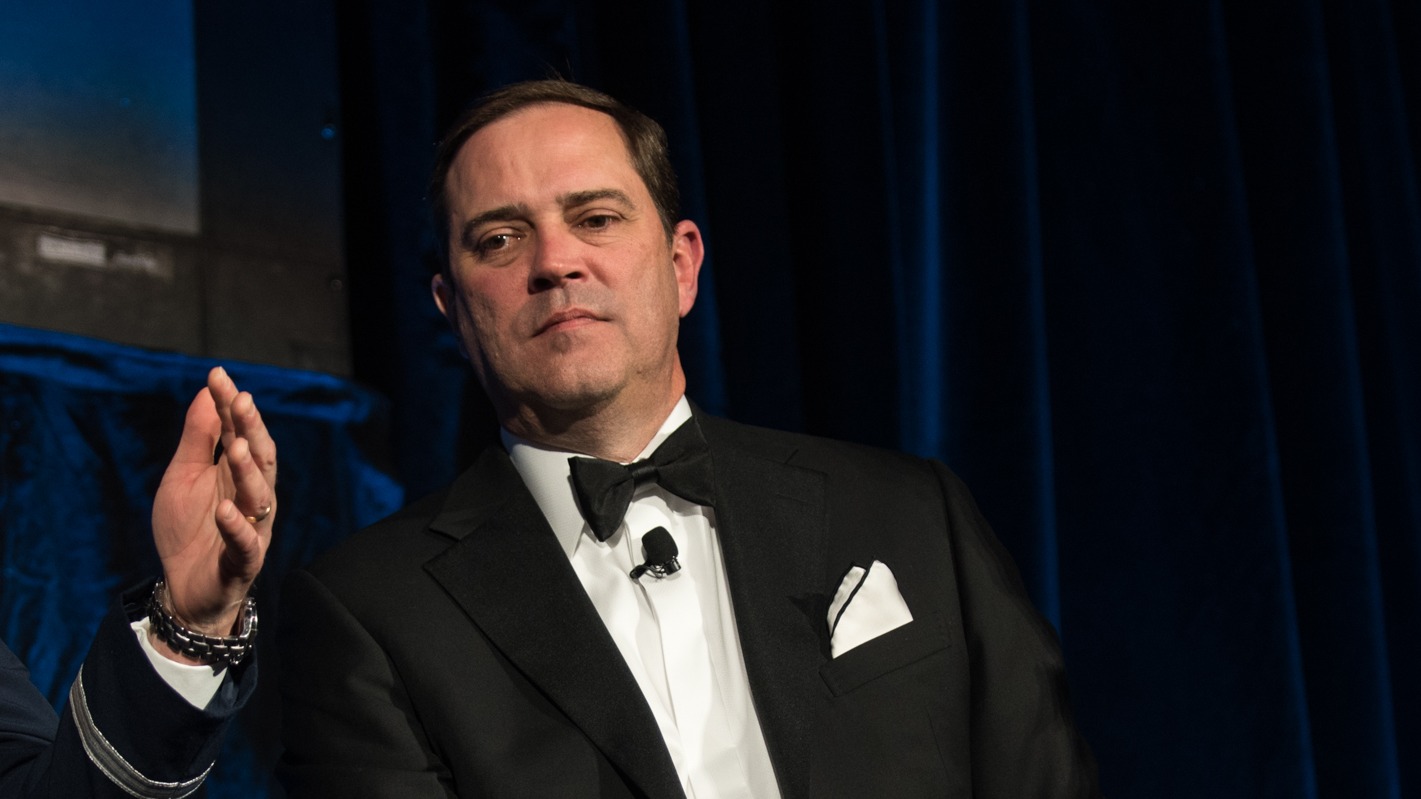
The head of one of the world’s biggest networking companies is warning that artificial intelligence will not just create winners, it will also leave a trail of lost jobs. Cisco chief executive Chuck Robbins has described an approaching wave of workplace disruption as “carnage” for workers who fail to adapt, even as he champions AI as a historic growth engine. His message lands at a moment when Cisco itself is cutting thousands of roles while pouring money into new AI infrastructure.
That tension, between optimism about productivity and fear of displacement, is now at the center of the corporate AI story. From Davos stages to internal restructuring memos, the same theme keeps surfacing: the technology is coming either way, and the real divide will be between people and companies that learn to use it and those that do not.
The CEO who says AI will be bigger than the internet
Chuck Robbins is not a casual AI skeptic, he is one of its loudest evangelists. At the World Economic Forum in Davos, he argued that artificial intelligence will be “bigger than the internet,” a claim that reflects how deeply Cisco is betting on the technology across its networking hardware, software and services. In reporting on that appearance, one account noted that he framed AI as a once in a generation platform shift, on par with the early web but ultimately more transformative for how data moves and decisions are made, a view echoed in coverage of his remarks in AI plans. For a company that built its fortune wiring the backbone of the internet, calling the next wave even larger is a striking statement of intent.
That same message was reinforced in a separate profile that described how, By Rithula Nisha Ebrahim, Chuck Robbins, CEO of Cisco, Speaking at the WEF Annual Meeting in Davos, urged executives to move quickly or risk being left behind. In that account, he warned that companies that fail to adapt to AI will lose out to more agile rivals, and he cast Cisco as a key supplier of the networking and security infrastructure that will underpin AI data centers worldwide, a positioning detailed in coverage of his Davos comments in Davos remarks. The bigger than the internet line is not just hype, it is the strategic narrative Cisco is using to justify a painful internal overhaul.
From AI “victors” to job market “carnage”
It is in that context that Robbins’s warning about “carnage” in the labor market lands with particular force. In a recent interview, he argued that AI will produce clear “victors” among both companies and workers, but that the transition will be brutal for those who do not keep up. One detailed account of his comments reported that he told Jan, Faisal Islam, Economics editor and Oliver Smith, Business reporter that AI is going to “change everything,” and that Winners will emerge from the shift while others are left behind, a framing captured in coverage of his remarks to Faisal Islam. The language is blunt, and it is aimed as much at employees as at investors.
Robbins has also leaned on a comparison that will be familiar to anyone who lived through the late 1990s: the Dotcom bubble. In another interview, the Cisco CEO likened the current AI boom to that earlier era, warning that while there will be enormous value created, there will also be “carnage along the way” as overhyped projects fail and weaker firms collapse. One report summarizing his comments noted that he told Jan that AI has already been through one speculative cycle and that companies should brace for a post bubble downturn, a warning detailed in coverage that described AI as being likened again to the Dotcom bubble by the Cisco CEO. For workers, that means the risk is not just automation, it is also the fallout from corporate overreach.
“Embrace AI at work” or risk being replaced
Robbins’s starkest message is directed at individual employees. He has argued that people should not focus primarily on AI taking their job, but on the risk that “someone who’s very good using AI” will take it instead. In one widely cited exchange, he urged staff to “embrace AI at work” and not to “run away from those kinds of things,” a line that appeared in a report that also highlighted that there were exactly 282 Comments responding to his remarks, a sign of how polarizing the advice has become, as captured in coverage of those Comments. The subtext is clear: AI will be a tool that amplifies the most adaptable workers, not a neutral force that treats everyone equally.
Another account of the same theme quoted him more directly, saying that “you shouldn’t worry as much about AI taking your job as you should worry about someone who’s very good using AI taking your job,” and again tying that warning to the Dotcom era as a cautionary tale. That report described how the Cisco CEO said the effects of AI will cause “carnage in the jobs market” as employees who resist new tools fall behind, a perspective laid out in coverage that framed AI as being likened again to Dotcom by the Cisco CEO. For office workers staring down generative tools that can already draft emails, summarize meetings and write code, the message is both a threat and a roadmap.
Cisco’s own restructuring shows the stakes
The credibility of Robbins’s warning is sharpened by what is happening inside his own company. Cisco Systems is planning to lay off 7% of its employees, its second round of job cuts this year, as it shifts its focus toward higher growth areas such as artificial intelligence and cybersecurity. One report on the restructuring described how thousands of roles are being eliminated as Cisco reallocates resources to AI optimized networking gear and security products, a move that underscores how even established tech giants are reshaping their workforces around new priorities, as detailed in coverage of the job cuts. For the workers affected, the AI boom is not an abstract future, it is a present day redundancy notice.
A follow up account of the same restructuring emphasized that Cisco Systems is planning to lay off 7% of its employees as it shifts its focus to technology such as artificial intelligence and cybersecurity, repeating the figure to underline the scale of the change. That report framed the cuts as part of a broader pivot in which legacy hardware lines are de emphasized in favor of AI ready platforms, a trend that mirrors moves at other large vendors, and it highlighted how the company is investing heavily in data center gear designed for AI workloads, as described in coverage of the Cisco Systems. The company that once symbolized the internet boom is now reorganizing itself around AI, and the human cost of that shift is already visible.
A bubble, a burst, and what workers can do now
Robbins is not alone in warning that the AI surge has all the hallmarks of a bubble. One detailed market focused report quoted him saying that the AI bubble will burst and that there will be “carnage along the way,” even as he reiterated that artificial intelligence will be “bigger than the internet” in the long run. That piece described how Jan and other commentators have seized on his remarks as evidence that even insiders expect a painful correction, and it noted that Artificial intelligence is being treated simultaneously as an unstoppable force and a speculative mania, a duality captured in coverage of his warning that AI could cause carnage along the. For workers, that means volatility in hiring, sudden shifts in corporate strategy and the risk that today’s hot AI project becomes tomorrow’s cost cutting target.
More From TheDailyOverview
*This article was researched with the help of AI, with human editors creating the final content.

Grant Mercer covers market dynamics, business trends, and the economic forces driving growth across industries. His analysis connects macro movements with real-world implications for investors, entrepreneurs, and professionals. Through his work at The Daily Overview, Grant helps readers understand how markets function and where opportunities may emerge.