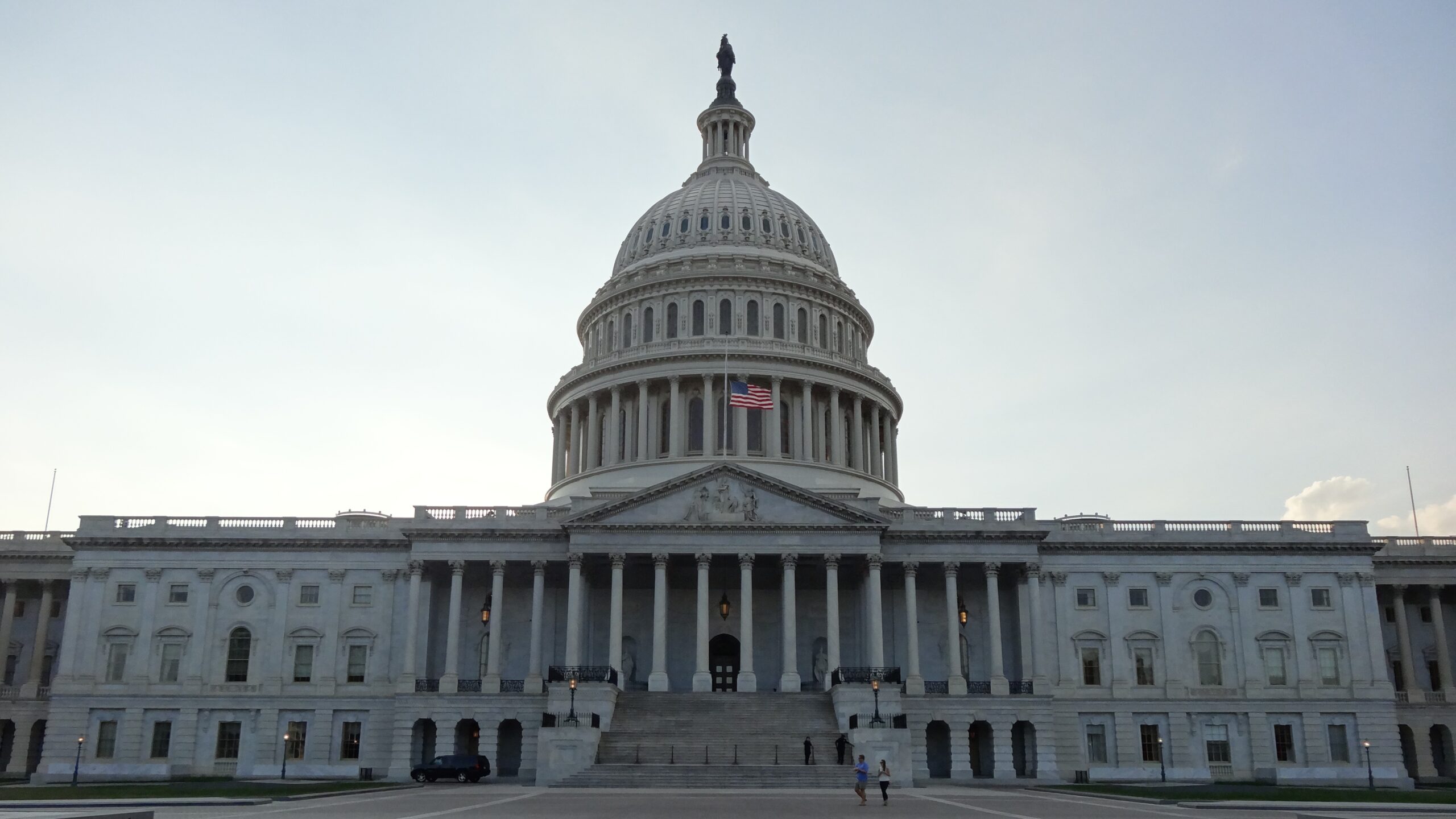
Washington is again racing the clock as a funding deadline approaches and a partial federal shutdown looms for this weekend. The immediate trigger is a clash over money for immigration enforcement and border security, but the stakes reach far beyond one department, from air travel and tax filing to key economic data and immigration processing. I see a familiar pattern returning only weeks after a record stoppage, with the same structural weaknesses in the budget process now colliding with a fresh round of political brinkmanship.
How the government ended up back on the brink so quickly
The federal government is operating on temporary funding that runs out for a large slice of agencies at the end of the week, and the basic problem is that Congress still has not finished its regular appropriations work for the fiscal year. Many agencies depend on annual spending bills, and when those are not enacted on time, the government must partially shut down under long standing rules that bar unfunded operations. That is the backdrop for the current standoff, which comes Just two and a half months after a fall 2025 shutdown that lasted a record 43 days and covered all 12 areas of appropriations, a disruption that still hangs over this debate.
Lawmakers are again relying on short term extensions, and the latest patch set up a new deadline around Jan. 30, when another government shutdown could begin if Congress fails to act. Analysts tracking Government shutdown chances say the odds now hinge on whether the Senate can advance a compromise this week, with markets and prediction platforms watching at least Tuesday, Jan. 27, as a key marker. Kathryn Palmer has noted that the chances of a partial government shutdown have increased as negotiations drag on, and that 42 days after the last one ended, Washington is already flirting with another lapse in funding.
The DHS and immigration fight at the center of the showdown
At the core of this impasse is a fight over the Department of Homeland Security, particularly funding for Immigration and Customs Enforcement and related border operations. Senators are being told they will not get the same leeway to vote down the DHS bill while supporting the rest of the funding package, which means the entire appropriations bundle is effectively being held hostage to the immigration fight. Senate Democrats are under pressure from their base to block what they see as excessive enforcement money, while GOP leaders are insisting on robust DHS resources, a dynamic that has turned a narrow policy dispute into a shutdown level confrontation.
President Donald Trump has made border security a central political priority, and that has sharpened the stakes around the DHS bill. The Senate is in session Tuesday, Jan. 27, with hopes that The Senate can hold a decisive vote on the DHS funding bill before the deadline, but opposition remains entrenched. One account of the Video Transcript of recent floor debate describes Support among Democ lawmakers eroding for any deal that does not constrain immigration enforcement, while another report notes that Senators aligned with the GOP are warning they will not back a package that trims DHS too deeply.
What happens if the clock runs out this weekend
If the Senate fails to move a spending measure in time, a partial U.S. government shutdown will begin at 12:01 a.m. ET Saturday, cutting off money for several major departments while others that were funded earlier keep operating. Congress is running out of Time to avoid that outcome, and staff across Washington are preparing contingency plans for a weekend lapse. A detailed overview of Government shutdowns explains that when appropriations expire, agencies must identify which functions are legally exempt, keep those running with limited staff, and halt the rest until Congress restores funding.
In this case, the Department of Homeland Security would be at the center of the disruption, but the effects would ripple outward. A breakdown of Government shutdown chances notes that the current deadline covers a subset of agencies, unlike the previous stoppage that hit all 12 appropriations areas, yet the impact could still be significant. Another analysis of a partial government shutdown looms warns that Partial funding gaps can be especially confusing for the public, because some services continue while others stop, and that Senate Democrats are weighing whether the leverage they gain on immigration is worth the risk of another weekend of chaos.
IRS, air travel and the economy: why this shutdown would “hit differently”
One of the most immediate flashpoints is the Internal Revenue Service, which is entering peak filing season just as its funding is at risk. IRS Cuts Likely as Congress Works Through FY appropriations have already been flagged, and if appropriations lapse, the agency will lean on contingency plans to keep core tax season operations going. Even so, IRS funding could lapse Saturday, and one analysis by Jeremy Tanner for NEXSTAR warns that taxpayers could see slower responses, delayed refunds and reduced customer service if the shutdown drags on, despite assurances that the most essential processing will continue.
Travelers and businesses are also watching what happens at The US Department of Transportation, which oversees air traffic controllers as part of the Federal Aviation Administration. A detailed look at how another government shutdown is looming says that if a partial shutdown begins, controllers and some Transportation Security Administration officers would likely be required to work without pay, a situation that can strain staffing and morale even if flights keep moving. Economists quoted in another report on how this one could hit differently in the economy point out that key data releases could be postponed, complicating decisions for the Federal Reserve and private investors, and that the last shutdown, which lasted 43 days, offered a stark example of how quickly routine government functions can become economic headwinds.
Who feels it first: workers, immigrants and ordinary households
Federal workers in the affected agencies would be among the first to feel the impact, with many facing furloughs and others ordered to work without pay until Congress acts. A memo on Tax Policy for the Week of January 26 notes that While New York and other states are already planning for future budgets, federal employees are again bracing for uncertainty as Congress Works Through FY funding fights. For households, the most visible effects could include slower processing of passports and visas, longer waits for customer service at agencies, and potential delays in some benefit programs that rely on staff who might be furloughed.
Immigration lawyers are warning that the disruption could be especially sharp for foreign workers and the employers who rely on them. An analysis of Potential Immigration Impacts on Employers explains that Just two and a half months after the last shutdown, companies are again facing the prospect of limited State Department operations and slower visa processing if Congress misses the Jan. 30 deadline. That same report notes that to avoid a partial government shutdown, lawmakers must pass the remaining bills by January 30, 2026, and that any lapse could quickly cascade into backlogs at consulates and domestic immigration offices, complicating hiring and travel plans for months.
More From TheDailyOverview
*This article was researched with the help of AI, with human editors creating the final content.

Grant Mercer covers market dynamics, business trends, and the economic forces driving growth across industries. His analysis connects macro movements with real-world implications for investors, entrepreneurs, and professionals. Through his work at The Daily Overview, Grant helps readers understand how markets function and where opportunities may emerge.

