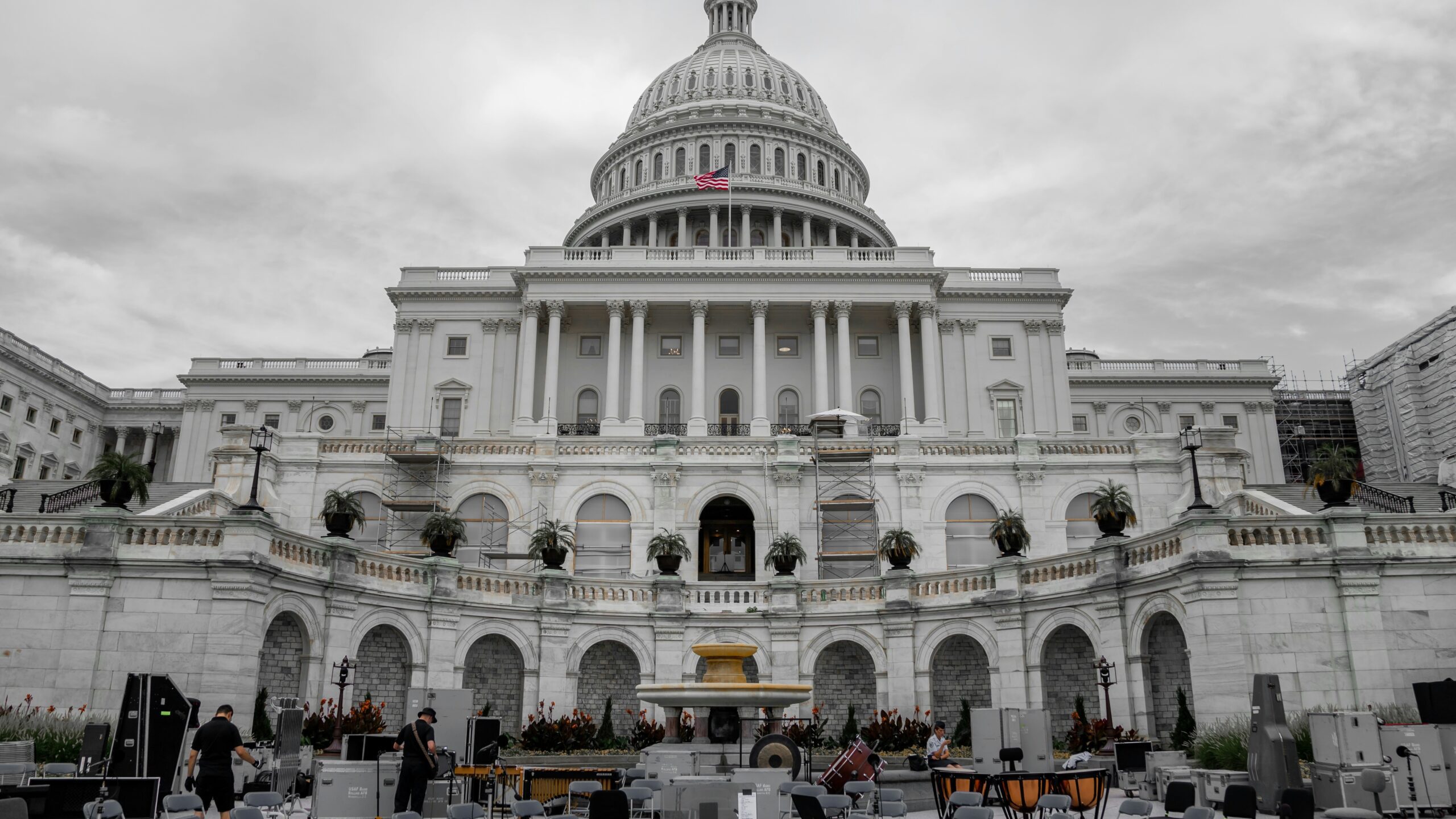
The partial federal government shutdown that began on January 31, 2026, after Congress failed to reach a funding agreement, has settled into a stalemate with no resolution on the calendar. Lawmakers left Washington for a recess without passing the spending bills needed to reopen affected agencies, and the procedural machinery in the Senate has already failed to break the impasse. The result is a slow-grinding disruption to federal services and paychecks that could stretch well into March, with the political incentives on both sides pointing toward prolonged conflict rather than compromise.
How the Senate Stalled and Why DHS Became the Sticking Point
The clearest evidence that Congress is locked in place came when a cloture motion on H.R. 7147, the legislative vehicle for Department of Homeland Security appropriations for fiscal year 2026, failed in the Senate with a 52–47 vote. Under Senate rules, 60 votes are needed to advance past a filibuster, so even a nominal majority was not enough to move the bill forward. That procedural defeat did not happen in a vacuum. The Senate had already passed five other funding bills but deliberately stripped out the DHS measure, a move that the office of Democratic Senator Patty Murray of Washington framed as a strategy to force negotiations over ICE and CBP accountability. By decoupling DHS from the rest of the spending package, Senate Democrats ensured that the most contentious issues around border and immigration enforcement would have to be confronted head-on.
This tactical split turned DHS funding into the single pressure point of the broader budget fight. According to the Associated Press, lawmakers on both sides are dug in over demands for oversight and accountability measures tied to immigration enforcement personnel, with Democrats pressing for new guardrails on how agencies like Immigration and Customs Enforcement and Customs and Border Protection operate and Republican leaders resisting efforts to attach such conditions to a must-pass bill. Reporting from the Guardian underscores that key homeland security functions—from certain administrative operations to support roles that underpin border and aviation security—are at risk of degradation as the shutdown drags on. What distinguishes this standoff from many past shutdowns is its narrow focus: most of the government’s spending authority has been renewed, but the single agency at the center of the country’s most polarizing policy debate remains unfunded, leaving both parties wary that any concession could be interpreted as weakness on immigration and border control.
What a Lapse in Funding Actually Does to Federal Workers
The human cost of this standoff is spelled out in bureaucratic detail across official planning documents. The Department of Homeland Security’s own lapse-in-appropriations guidance, dated March 3, 2025, describes how the agency sorts its workforce into exempt and excepted categories during a funding gap and how an orderly shutdown is executed for everything else. Activities that are legally required or tied directly to the safety of human life and the protection of property continue, but training, routine administrative support, and non-emergency programs are wound down or halted. The Office of Personnel Management’s detailed contingency plan for operations without appropriations, updated on January 27, 2026, sets out how agencies categorize employees and includes full-time equivalent counts of retained versus furloughed staff, all governed by the Antideficiency Act and OMB Circular A-11.
For the workers caught in the middle, the distinction between “excepted” and “furloughed” is largely academic when payday arrives. According to the Associated Press, thousands of DHS employees in components such as the Transportation Security Administration and Border Patrol are still reporting for duty without pay during the shutdown, while colleagues in non-excepted roles have been ordered to stay home. The Social Security Administration, in a public update issued on February 2, confirmed that Congress failed to reach an agreement on funding beginning January 31 but emphasized that retirement and disability benefits would continue to be paid on schedule because they are financed through trust funds and considered mandatory spending. Meanwhile, the Guardian reported that roughly 13% of the federal civilian workforce is affected by this limited shutdown, a share that may sound modest on paper but still represents hundreds of thousands of people facing delayed paychecks, mounting bills, and uncertainty about how long they will be asked to shoulder the financial burden for a political fight they do not control.
Escalating Pressure and Limited Off-Ramps
As the shutdown moves deeper into February, the pressure on lawmakers is building from several directions. Agency leaders are warning that prolonged lapses in pay and support functions could harm recruitment and retention in mission-critical roles, particularly in law enforcement and cybersecurity positions that already struggle with turnover. Union representatives for federal employees have amplified those concerns, arguing that repeated shutdowns send a message that public servants are expendable bargaining chips rather than essential workers. At the same time, state and local partners that rely on DHS grants and coordination for disaster preparedness and emergency response are beginning to question how long they can plan around temporary workarounds before critical capabilities degrade. The longer the impasse lasts, the harder it becomes for either party to claim that the disruption is manageable.
Despite those mounting costs, the structural incentives that produced the stalemate remain intact. Because most of the government is funded, there is no broad-based outcry from constituencies far removed from homeland security or immigration policy, and that blunts the traditional political backlash that has pushed past shutdowns toward resolution. With Senate rules requiring 60 votes to advance the DHS bill and both parties wary of alienating core supporters, the likeliest off-ramps involve either a narrow compromise on specific oversight provisions or a short-term extension that punts the same fight into later in the year. For now, neither side has signaled a readiness to move first, leaving federal workers and the public to absorb the slow, grinding consequences of a shutdown centered on a single, deeply contested department.
More From The Daily Overview
*This article was researched with the help of AI, with human editors creating the final content.

Grant Mercer covers market dynamics, business trends, and the economic forces driving growth across industries. His analysis connects macro movements with real-world implications for investors, entrepreneurs, and professionals. Through his work at The Daily Overview, Grant helps readers understand how markets function and where opportunities may emerge.

