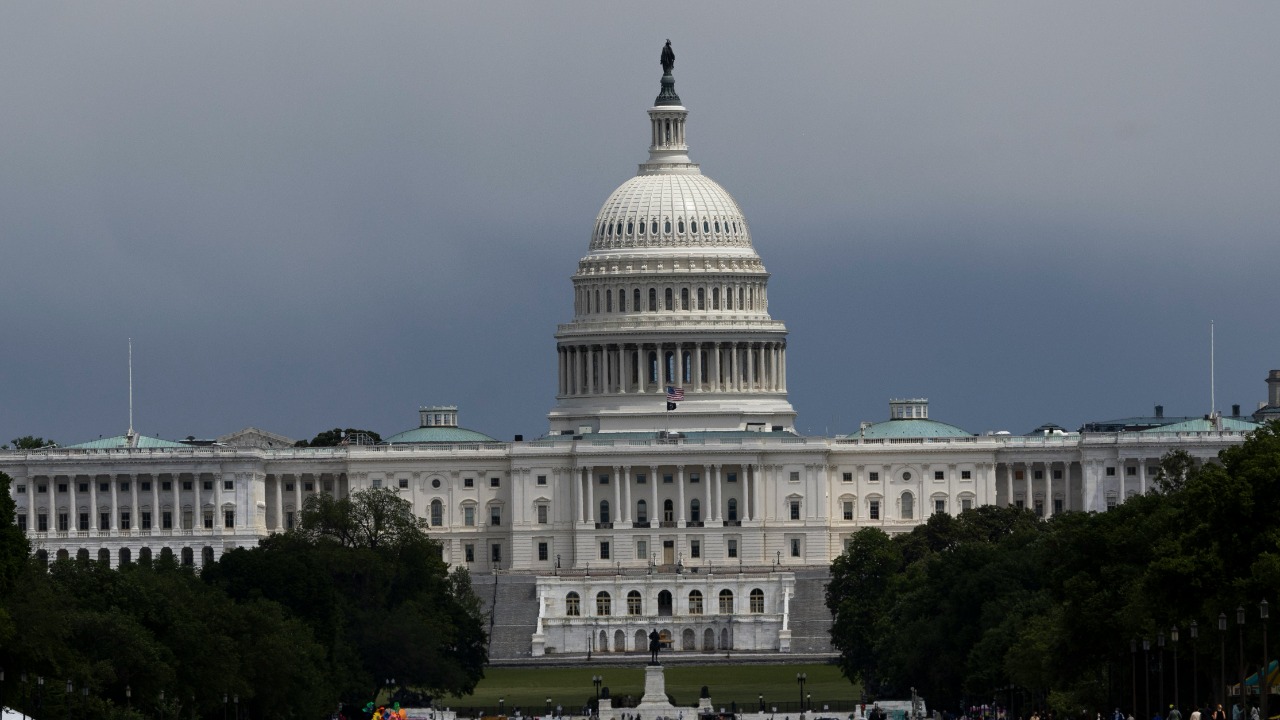
Congress has blocked the District of Columbia from opting out of federal tax breaks on tips, overtime pay, and a senior standard deduction, forcing the city to conform to changes enacted under the One, Big, Beautiful Bill. The President signed H.J.Res. 142 into law, nullifying the D.C. Income and Franchise Tax Conformity Revision Temporary Amendment Act of 2025 and ending a months-long standoff between Capitol Hill and the D.C. Council. The result reshapes how roughly 700,000 District residents will file their 2025 taxes while stripping the city of revenue it had earmarked for local family tax credits.
What the Federal Tax Breaks Actually Do
The One, Big, Beautiful Bill created new above-the-line deductions for workers who earn tips or overtime. The Treasury Department and IRS spelled out the mechanics in official guidance for 2025 filers, confirming that qualified tips and qualified overtime each carry their own deduction caps and income-based phaseouts. A separate IRS tax tip issued in late January 2026 walked filers through the practical steps for claiming the breaks on their returns. The law also introduced a larger standard deduction for seniors, which the shorthand debate has labeled a “$6,000 senior break,” though primary IRS documents focus most of their detail on the tips and overtime provisions.
For tipped workers in restaurants, hotels, and similar industries, the new deduction can reduce taxable income meaningfully, especially for those below the phaseout thresholds. Overtime earners in hourly jobs stand to benefit as well, since the deduction applies to pay that exceeds a standard 40-hour workweek. These are not small-dollar line items for the people they reach. But the benefits flow unevenly: salaried professionals who rarely earn tips or overtime see little direct gain, and higher earners phase out of eligibility altogether. That distribution mattered to D.C. lawmakers, who saw the federal package as a poor fit for the District’s tax base and spending priorities and worried that conforming locally would trade away revenue they wanted to channel into more targeted anti-poverty measures.
Why D.C. Tried to Opt Out
In December 2025, the D.C. Council moved to decouple its local income tax code from the new federal provisions. The emergency legislation, recorded as Act 26-214, and its companion temporary law, codified as Law 26-89, amended specific D.C. Code sections governing the standard deduction and conformity definitions. The Council’s logic was straightforward: by declining to mirror the federal deductions at the local level, the District could preserve revenue and redirect it toward a $1,000 child tax credit and an expanded local earned income tax credit, priorities laid out in a Council release on family tax savings. Council members argued those programs would deliver more targeted relief to low-income D.C. families than the federal tips and overtime breaks.
The decoupling also carried a broader fiscal calculation. City officials warned that conforming to the full federal package could cost the District roughly $60 million in annual revenue, according to reporting from a major local newspaper. That gap would have to be filled through spending cuts or other tax adjustments. The Council framed its action as a responsible exercise of local governance, choosing which federal changes to adopt and which to skip based on the District’s own budget realities. Members also stressed that D.C. has long used partial conformity with federal tax rules, rather than automatic adoption, as a tool to balance competitiveness with the need to finance city services.
How Congress Overrode the D.C. Council
Under the Home Rule Act, Congress retains the power to review and reject D.C. legislation, though it rarely uses that authority on tax policy. This time, the 119th Congress passed H.J.Res. 142, a joint resolution of disapproval that voided the D.C. Council’s temporary tax law and restored full conformity with the new federal deductions. The measure moved through both chambers with Republican support and was presented to the President in early February 2026. A White House notice on recently enacted legislation confirmed that the resolution was signed, formally blocking the District’s attempt to chart its own course on the new tax breaks.
Republican leaders cast the override as a defense of D.C. residents’ right to benefit from the same tax relief available to filers nationwide. Chairman James Comer of the House Committee on Oversight and Accountability, along with Rep. Nick Langworthy Gill, publicly celebrated the vote in a committee release that praised House action to ensure tax relief for District residents. The House Majority Leader’s office described the effort as blocking the D.C. Council’s “attempt to deny residents historic tax relief.” From the Republican perspective, the Council was standing between its own constituents and a tax cut that Congress had already promised to workers nationwide, and intervention was framed as necessary to keep D.C. from becoming an outlier.
D.C. Delegate Calls the Override Unprecedented
D.C. Delegate Eleanor Holmes Norton offered a sharply different reading of the same events. She argued that using a disapproval resolution to dictate local tax conformity crossed a line that Congress had previously respected, even when it disagreed with District leaders on social issues or criminal law. For Norton and other home rule advocates, the episode underscored how vulnerable D.C. remains to federal intervention in core budget choices, despite having an elected mayor and council. They warned that if Congress is willing to overturn the city’s decision on whether to adopt a specific deduction, it could just as easily step in on future debates over rates, brackets, or locally designed credits.
Local officials and advocates also highlighted the practical trade-offs that the override imposes. Because the federal tips, overtime, and senior deductions will now flow through to the D.C. income tax, the city must absorb the associated revenue loss without the offsetting savings it expected from decoupling. That leaves less room in the budget for the child tax credit and expanded earned income tax credit the Council had championed, or forces cuts elsewhere to keep those programs intact. The clash therefore goes beyond symbolism: it directly affects which District residents receive the most help from limited tax dollars, low-wage parents targeted by local credits, or a broader group of workers eligible for the new federal-style deductions.
What It Means for D.C. Taxpayers and Home Rule
For individual filers, the immediate impact is relatively clear. When they prepare their 2025 D.C. returns, residents will be able to claim the same categories of tips and overtime that qualify for the new federal deductions, subject to the income limits and caps outlined in IRS guidance. Seniors who meet the federal criteria for the enhanced deduction will see parallel treatment on their District forms as well. Tax software and preparers will not have to navigate a patchwork in which federal and D.C. rules diverge on these items, a simplification that Republicans emphasized in defending the override. In the short term, many workers will see modestly lower D.C. tax bills than they would have under the Council’s decoupling plan.
The longer-term implications are more unsettled. The District’s budget office will have to update its revenue estimates to reflect the forced conformity, and the Mayor and Council will face fresh choices about whether to scale back, delay, or find alternative funding for the child and earned income tax credits they had hoped to expand. Advocates for home rule worry that Congress’s willingness to intervene on a technical matter of tax conformity could embolden future majorities to revisit other aspects of D.C. fiscal policy, from business taxes to housing subsidies. The episode thus becomes a test case for how far federal lawmakers are prepared to go in asserting control over the city’s finances, and how much room District leaders truly have to tailor their tax code to local needs.
More From The Daily Overview
*This article was researched with the help of AI, with human editors creating the final content.

Julian Harrow specializes in taxation, IRS rules, and compliance strategy. His work helps readers navigate complex tax codes, deadlines, and reporting requirements while identifying opportunities for efficiency and risk reduction. At The Daily Overview, Julian breaks down tax-related topics with precision and clarity, making a traditionally dense subject easier to understand.