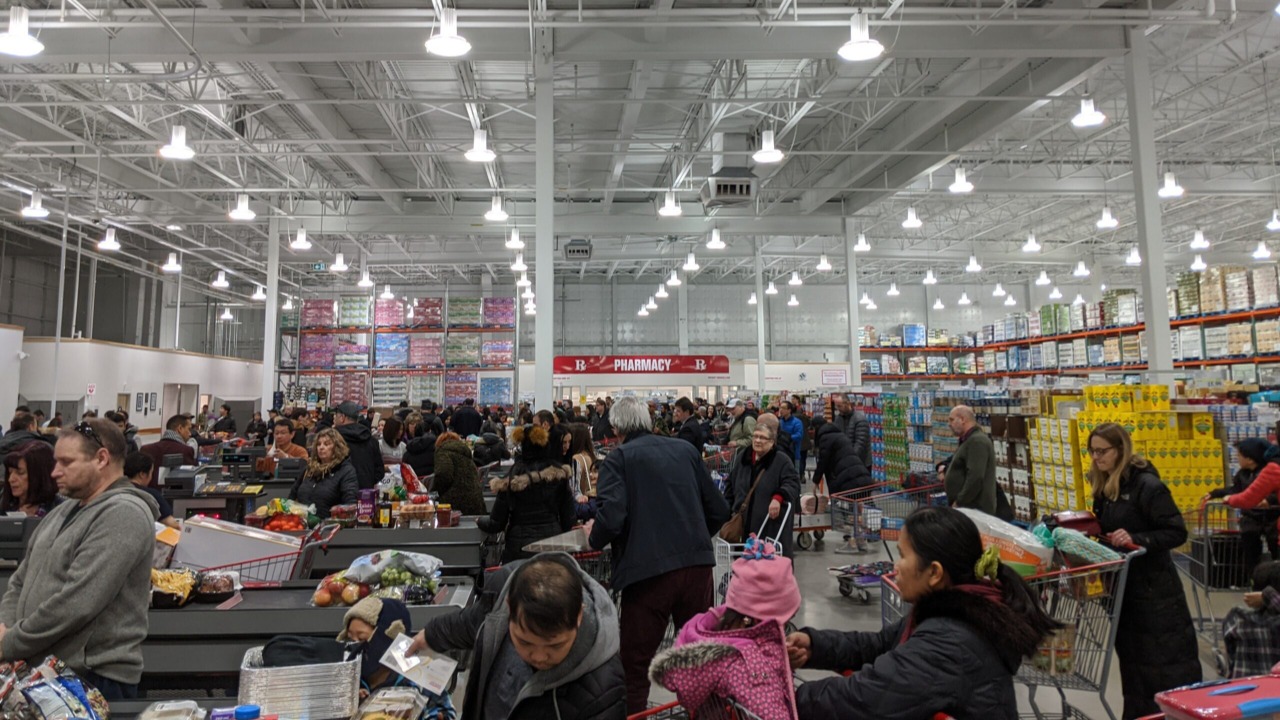
The U.S. economy has shifted back into high gear, with growth accelerating to its fastest pace in two years as household spending powers through higher borrowing costs and lingering inflation. The latest figures show consumers opening their wallets for everything from restaurant meals to new cars, even as confidence surveys flash warning signs. That tension between robust activity and fragile sentiment is now the central story of American growth.
Growth roars back as households keep spending
The headline number is striking: the U.S. economy expanded at a 4.3% annual rate in the third quarter, a pace that would have seemed unlikely when interest rates started climbing aggressively a few years ago. In WASHINGTON, officials and analysts alike are pointing to everyday purchases, from streaming subscriptions to airline tickets, as the main reason output has accelerated rather than stalled. That 4.3% figure, reported out of WASHINGTON, marks the strongest quarterly performance in roughly two years and underscores how central household demand remains to the broader economy.
What makes this surge more notable is the backdrop of global uncertainty and tighter financial conditions that would normally sap momentum. Instead, U.S. shoppers have continued to travel, dine out and upgrade big-ticket items like SUVs and home appliances, helping the country outpace many of its trading partners. The fact that growth has accelerated even as other major economies struggle with weaker exports and manufacturing slowdowns highlights how much of the current expansion is being driven from the checkout line rather than the factory floor.
Inside the consumer engine: where the money is going
To understand why growth has picked up, it helps to look at the composition of spending rather than just the top-line number. Consumer outlays did not just hold steady, they accelerated, rising at a 3.5% annual rate after a 2.5% gain in the previous quarter, according to one detailed breakdown of gross domestic product. That step up in momentum, from 2.5% to 3.5%, reflects stronger demand for both services like travel and health care and goods such as electronics and late‑model vehicles, as captured in the latest Consumer spending analysis.
In practical terms, that means more families booking flights on apps like Delta and United, more orders flowing through platforms such as Amazon and Walmart.com, and steady traffic at brick‑and‑mortar retailers from Target to Costco. The rebound in services is especially important, since sectors like hospitality, entertainment and personal care tend to be labor intensive and feed directly into job creation. When households feel secure enough to commit to a weeklong vacation or a new gym membership, it signals a level of confidence in their paychecks that can sustain growth even when other parts of the economy are wobbling.
Resilient spending, shaky confidence
There is a paradox at the heart of this expansion: people say they are worried, yet their behavior at the cash register tells a different story. Surveys show Consumer confidence has slumped to its lowest level since the United States rolled out tariffs on some of its trading partners earlier in the year, a drop that would typically foreshadow weaker demand. Instead, households have kept spending at a pace strong enough that analysts describe them as remarkably Resilient, even as they report anxiety about prices, politics and global instability.
That disconnect is not just academic, it shapes how policymakers and businesses interpret the data. On one side, the slump in confidence suggests a fragile mood that could quickly sour if job growth slows or gas prices spike again. On the other, the actual flow of money into restaurants, auto dealerships and online marketplaces indicates that many households still have enough income and savings to keep the economy moving. The risk is that if sentiment deteriorates further, people may abruptly pull back on discretionary purchases, turning today’s strength into tomorrow’s slowdown.
Inflation, the Fed and the rate‑cut debate
The durability of consumer spending is now colliding with the Federal Reserve’s effort to bring inflation under control without tipping the economy into recession. Economists warn that persistent and potentially worsening price pressures could complicate any move toward lower interest rates early next year. Some of those Economists argue that as long as households are spending aggressively and growth remains above trend, the Fed will be wary of cutting too soon, a tension reflected in their focus on the central bank’s favored inflation gauge and its recent uptick after a modest 0.1% increase in the second quarter, as highlighted in one Fed focused analysis.
That debate is sharpened by the fact that the Fed already imposed much higher borrowing rates in 2022 and 2023 in its drive to curb the inflation that surged after the pandemic. Mortgage rates climbed, credit card APRs jumped into the twenties for many borrowers, and auto loans for popular models like the Ford F‑150 or Toyota RAV4 became significantly more expensive. Yet, despite those headwinds, households have continued to spend enough that growth is now the strongest in two years, a reality that complicates any argument for rapid easing. As one account of the current expansion notes, this resilience has emerged even after the Fed pushed borrowing costs sharply higher.
Politics, perception and a K‑shaped reality
The economic crosscurrents are not just a challenge for central bankers, they are also a political problem for President Donald Trump. On paper, the combination of strong growth, easing gas prices and a cooling but still expanding job market should be a clear asset for the White House. Yet Jason Furman, who served as a top economic advisor to former President Barack Obama, has said he feels “a tiny bit bad” for Trump because gas prices are low but consumer confidence is still plummeting. Furman describes a landscape of Mixed and Conflicting economic signals that add up to what he calls a K‑shaped economy, where some households are doing well while others feel squeezed, a dynamic he laid out in a recent Furman interview.
That K‑shape helps explain why many Americans tell pollsters the economy is poor even as aggregate data points to solid gains. Households with stable jobs, fixed‑rate mortgages and stock market exposure are benefiting from rising asset values and steady paychecks, and they are the ones driving much of the discretionary spending that shows up in GDP. Others, especially renters facing steep increases, workers in more precarious service jobs, or families carrying variable‑rate debt, feel the sting of every uptick in prices and interest costs. For them, the official growth numbers can feel disconnected from daily life, feeding a sense of frustration that shows up in confidence surveys and political discontent.
How long can consumers carry the load?
The central question now is whether households can keep powering the expansion at this pace, or whether the strain of higher prices and borrowing costs will eventually force a pullback. Analysts who focus on the composition of growth note that the current upswing is unusually dependent on personal consumption rather than business investment or exports. In WASHINGTON, some observers argue that such a consumer‑heavy pattern can persist as long as the labor market remains tight and wage growth stays ahead of inflation, a view echoed in coverage that emphasizes how Resilient household demand has been.
At the same time, there are clear limits to how long consumers can outrun their own pessimism. If confidence remains at levels last seen during tariff shocks, and if inflation fails to ease in a way that is visible at the grocery store and in monthly rent bills, even well‑paid workers may start to rebuild savings rather than spend. For now, the data shows an economy growing at 4.3%, powered by a 3.5% surge in consumer spending, despite a backdrop of slumping sentiment and contentious politics. How that tension resolves, whether through a gentle cooling of demand or a sharper adjustment, will determine whether this becomes a brief burst of strength or the foundation for a more durable expansion.
More From TheDailyOverview

Grant Mercer covers market dynamics, business trends, and the economic forces driving growth across industries. His analysis connects macro movements with real-world implications for investors, entrepreneurs, and professionals. Through his work at The Daily Overview, Grant helps readers understand how markets function and where opportunities may emerge.

