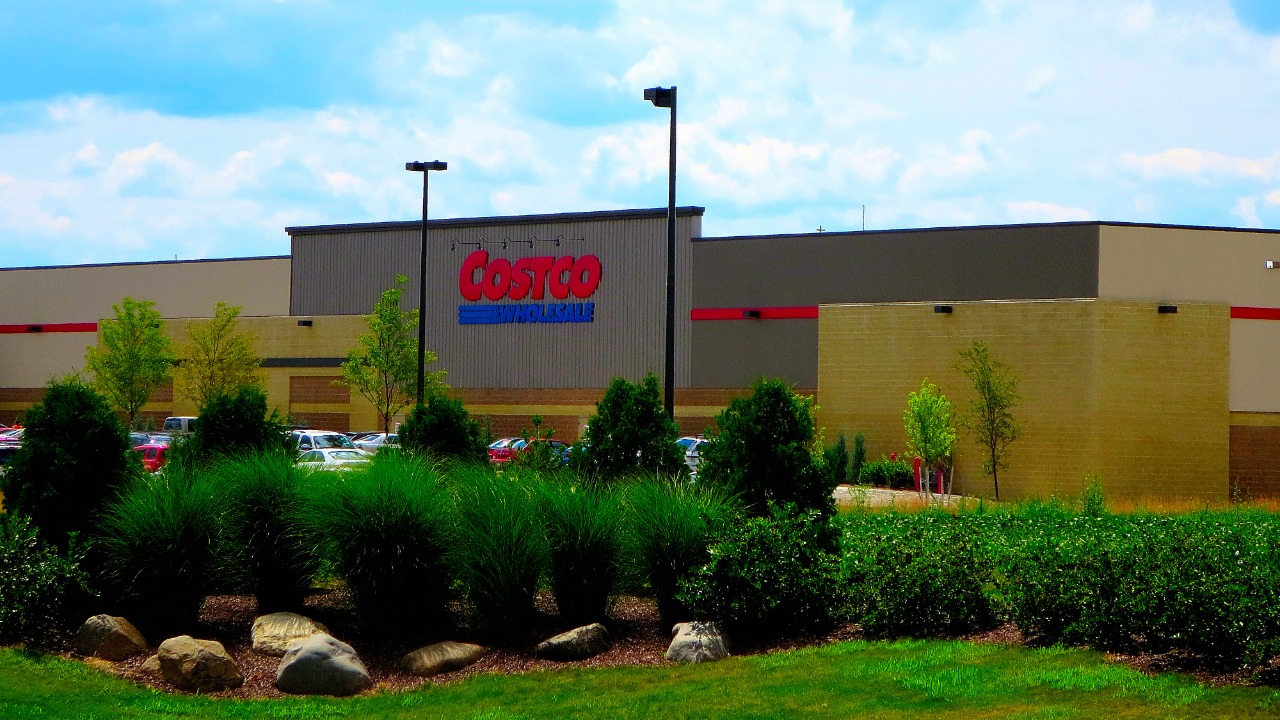
Costco Wholesale has moved from quietly managing tariff costs to directly challenging the legal foundation of President Donald Trump’s trade strategy, asking a federal court to order a full refund of duties it has paid. The warehouse giant is not just seeking relief for its own balance sheet, it is testing whether the White House ever had the authority to levy these sweeping import charges in the first place.
By taking on the administration in court, Costco is aligning itself with a growing corporate backlash against tariffs that have reshaped global supply chains and raised prices across the consumer economy. The case could determine whether companies that paid billions at the border can claw that money back, and whether Trump’s preferred tool of economic statecraft survives its most serious legal test.
The lawsuit that puts Trump’s tariff power on trial
At the center of the fight is a complaint filed by Costco Wholesale in the Court of International Trade, where the company is asking judges to treat the tariffs it paid as unlawful and therefore refundable. In its filing, Costco argues that the Trump administration relied on emergency powers that were never meant to authorize broad-based import duties, and it wants the court to consider every tariff charge it has incurred under that framework. The case, brought by Costco Wholesale Corporation, explicitly asks the Court of International Trade to review all tariffs collected while the dispute is argued, a direct challenge to the legal scaffolding of Trump’s trade agenda that was previewed in a description of the suit shared by Costco Wholesale has sued the Trump administration.
The company’s legal theory turns on the International Emergency Economic Powers Act, or IEEPA, the statute Trump has leaned on to justify tariffs as a tool of national security and foreign policy. Costco’s complaint notes that the text of IEEPA “does not use the word ‘tariff’ or any term of equivalent meaning,” arguing that Congress never gave presidents a blank check to rewrite the tariff schedule under the guise of emergency action. By insisting that IEEPA was “first and foremost” designed for targeted financial sanctions rather than across-the-board import taxes, Costco is effectively asking the court to draw a bright line between emergency economic measures and the kind of structural trade policy that traditionally runs through Congress, a point underscored in the lawsuit’s discussion of IEEPA.
Why Costco is willing to fight for a full refund
Costco’s decision to sue is rooted in the basic math of its business model, which depends on razor-thin margins and high-volume sales of everything from televisions to frozen shrimp. Tariffs that run into double digits on imported goods can quickly erode that formula, forcing the company either to absorb the hit or pass it along to shoppers who expect low prices in exchange for their membership fees. Trump has repeatedly justified his sweeping tariffs by calling them a necessary tool to pressure trading partners and impose sanctions against other nations, but for a retailer that competes on price, those duties function as a direct tax on its core promise to customers, a tension that frames Costco’s challenge to Trump’s tariffs.
Costco is also signaling that it does not want to be left holding the bill if courts eventually conclude that the administration overstepped. The company’s lawsuit seeks a full refund of the tariffs it has paid, not a partial rebate or a forward-looking policy change, which would directly bolster its financial position and potentially free up capital for store expansion, wage increases, or price cuts. For a retailer that has built a loyal following through its membership-based model, the stakes are not abstract: every dollar tied up in contested duties is a dollar that cannot be used to sharpen its price edge against rivals like Walmart’s Sam’s Club or Amazon’s bulk offerings.
A broader corporate revolt against Trump’s trade strategy
Costco is not alone in turning to the courts to challenge Trump’s use of tariffs as a catchall policy lever. Other companies like Bumble Bee Foods, EssilorLuxottica, Kawasaki Motors, Revlon and Yokohama Tire have filed similar complaints, arguing that the administration’s approach has saddled them with unpredictable costs and distorted their global sourcing plans. These firms span sectors from canned tuna to motorcycles and cosmetics, which underscores how widely the tariffs have rippled through the economy and how many industries now see litigation as their best shot at relief from duties that have climbed as high as 50 percent on imports from 57 countries, a pattern detailed in coverage of other companies like Bumble Bee Foods, Kawasaki Motors, Revlon and Yokohama Tire.
By joining this wave of lawsuits, Costco is helping to transform what began as a series of isolated challenges into a coordinated test of Trump’s trade doctrine. The company has effectively aligned itself with a coalition of importers that want courts to clarify whether the president can unilaterally impose tariffs at this scale, or whether such moves must be more tightly tethered to explicit congressional authorization. That alignment is reflected in reporting that Costco has sued the Trump administration over tariff refund eligibility, a step that places it squarely inside a broader corporate push to recover duties if the legal foundation of the tariffs collapses, as described in accounts of how Costco sues Trump administration over tariff refund eligibility.
How a Costco win could reshape trade law and the federal balance sheet
The legal stakes of Costco’s case extend far beyond one retailer’s ledger. If the Court of International Trade, and ultimately the Supreme Court, agree that Trump misused IEEPA or other authorities to impose tariffs, the federal government could be forced to unwind years of trade policy and return vast sums to importers. Investors and policy analysts have already gamed out a scenario in which the United States might have to refund as much as $1 trillion if the Supreme Court overturns Trump’s tariffs, a possibility flagged by hedge fund manager Jason Bessent in his warning that the US could be forced to refund $1 trillion if the Supreme Court overturns Trump’s tariffs, a scenario that would test the capacity of the Treasury and the courts to process such a wave of claims, as outlined in analysis that the US could be forced to refund $1 trillion if Supreme Court overturns Trump’s tariffs, Bessent says.
Such an outcome would not only reshape trade law, it would also scramble the politics of tariffs that Trump has cast as a signature tool of economic nationalism. A ruling that sharply limits presidential authority to levy duties under emergency statutes would push future administrations back toward traditional trade negotiations and congressional oversight, reducing the appeal of unilateral tariff threats as a diplomatic weapon. It would also raise complex questions about which companies qualify for refunds and how far back those claims can reach, a process that could take years to unwind and that some observers have already described as a colossal mess in online discussions of how Costco sues the Trump administration, seeking a refund of tariffs.
Costco’s move and the emerging playbook for tariff refunds
Costco’s lawsuit also illustrates a new playbook for companies that want to hedge against the risk that Trump’s tariffs are eventually struck down. By filing now, the retailer is preserving its place in line if courts later decide that duties collected under contested authorities must be repaid, a strategy that other importers are watching closely. In effect, Costco is treating litigation as a form of insurance policy against legal and political volatility, a stance that reflects how deeply tariffs have become embedded in corporate planning and how uncertain their future now appears in light of challenges like the one brought by Costco.
The company is hardly a lone outlier in this approach. Costco has joined a roster of businesses that are suing for refunds if Trump’s tariffs fall, a group that spans sectors and includes firms that have quietly paid duties while waiting for a legal opening to recoup them. That emerging coalition is visible in reporting that Costco joins companies suing for refunds if Trump’s tariffs fall, a sign that corporate America is no longer content to simply lobby behind the scenes but is instead using the courts to force a reckoning over the scope of presidential trade powers, a trend captured in coverage that Costco joins companies suing for refunds if Trump’s tariffs fall.
More From TheDailyOverview
- Tennessee loses $2.6B megafactory and faces major layoffs
- Retired But Want To Work? Try These 18 Jobs for Seniors That Pay Weekly
- What to do with your pennies after the U.S. stops minting them
- Home Depot CEO warns of a troubling customer trend in stores

Grant Mercer covers market dynamics, business trends, and the economic forces driving growth across industries. His analysis connects macro movements with real-world implications for investors, entrepreneurs, and professionals. Through his work at The Daily Overview, Grant helps readers understand how markets function and where opportunities may emerge.

