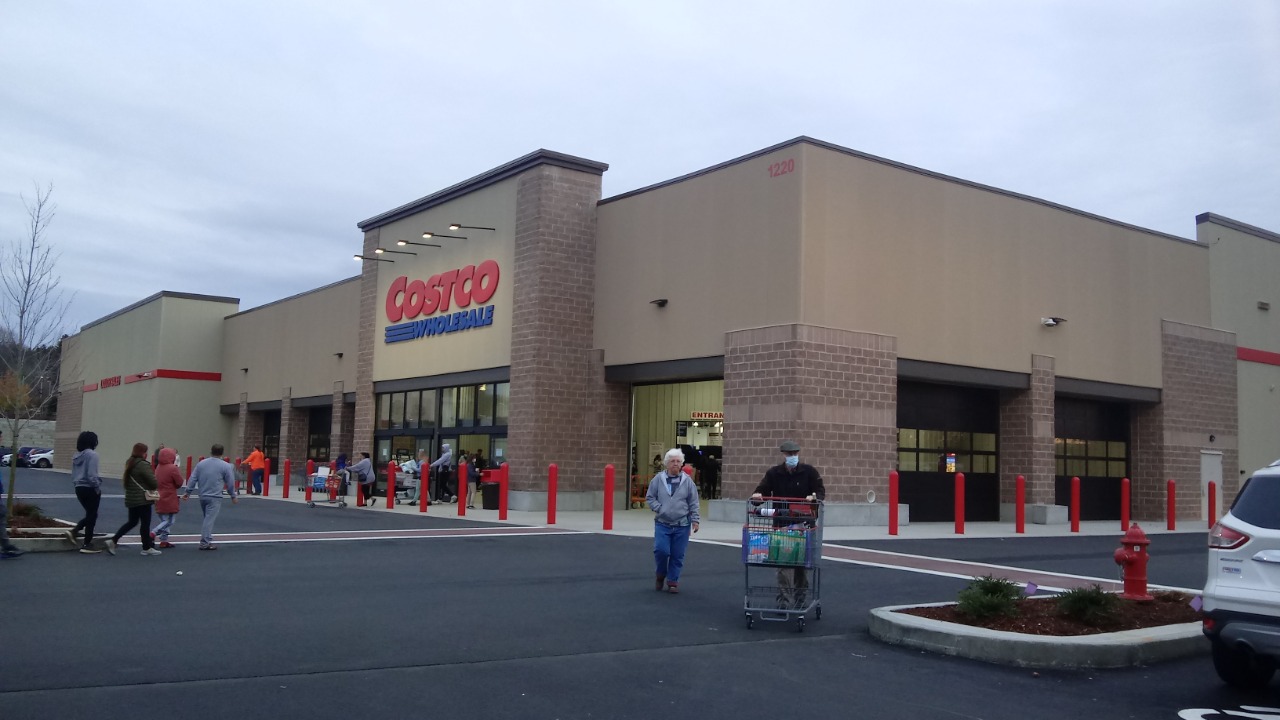
Costco is testing a new limited-time food court item that has shoppers drawing direct comparisons to one of McDonald’s most iconic seasonal offerings, the Shamrock Shake. The timing is no accident: the warehouse giant’s latest play arrives just as McDonald’s brings back its own green-tinted shake for 2026, complete with a charitable tie-in. With both companies competing for budget-conscious consumers who want a treat without a big price tag, the rivalry between a membership warehouse and the world’s largest fast-food chain is heating up in an unexpected category.
Costco’s Food Court Ambitions Go Seasonal
Costco has long treated its food court as a loss leader designed to reward members and drive foot traffic. The $1.50 hot dog combo is legendary for its price stability, and the company has steadily expanded its prepared food offerings over the years. Now, reports from shoppers and food bloggers indicate the retailer is rolling out a limited-time creamy shake at select locations, priced well under $2, that features a minty, green-hued profile strikingly similar to McDonald’s signature seasonal drink. While Costco has not issued a formal press release detailing the item’s ingredients, launch timeline, or nationwide availability, the buzz has been loud enough to put McDonald’s seasonal dominance into question.
The move fits a broader pattern. Costco’s latest quarterly results showed the company continuing to expand its warehouse footprint and sales performance across the United States and internationally. That scale matters here: every new warehouse location is another food court capable of serving thousands of members per day, and a seasonal item with viral appeal could turn routine shopping trips into destination visits. The company’s overall sales trajectory suggests it has the infrastructure and customer base to make a limited-time food court product land with real force.
McDonald’s Shamrock Shake Returns With a Charitable Twist
On the other side of the counter, McDonald’s is leaning into its own seasonal playbook. The Shamrock Shake returned to participating restaurants in February 2026, according to a local report that attributes the timing to a company news release. The chain has marketed the shake as more than just a dessert: each purchase triggers a 25-cent donation to Ronald McDonald House Charities, giving the promotion an emotional hook that goes beyond flavor. A McDonald’s owner and operator quoted in the same report emphasized the shake’s ability to bring smiles while supporting families in need, framing the product as a feel-good tradition rather than a simple menu addition.
McDonald’s corporate communications have reinforced this positioning. The company’s newsroom has tied Shamrock Shake season to a Grimace-themed celebration honoring Ronald McDonald House Charities, blending nostalgia with cause marketing. That combination of a beloved flavor, a decades-old brand character, and a charitable donation structure has made the Shamrock Shake one of the most recognizable limited-time offerings in American fast food. Any competitor entering this space has to contend not just with taste preferences but with the goodwill McDonald’s has built around the product over the years.
Why Price Could Decide This Fight
The most obvious advantage Costco holds is price. McDonald’s Shamrock Shakes typically sell for between $3 and $5 depending on size and market, and those prices have crept upward alongside broader menu inflation across the fast-food industry. Costco’s food court, by contrast, has historically absorbed costs to keep items at attention-grabbing price points. If the warehouse retailer can deliver a comparable shake experience for under $2, the value gap becomes difficult for McDonald’s to close, especially among families already inside a Costco for their weekly grocery run.
That said, price alone does not explain why consumers choose one seasonal treat over another. McDonald’s benefits from drive-through convenience, standalone locations, and a marketing machine that can blanket television, social media, and in-app promotions simultaneously. Costco requires a paid membership to access its food court in most locations, which limits the addressable audience. The warehouse club’s shake would need to be good enough to generate word-of-mouth excitement among existing members rather than pull in new customers off the street. The question is whether Costco’s built-in traffic, backed by tens of millions of member households in the U.S. alone, is large enough to make a dent in McDonald’s seasonal sales without needing to convert non-members.
The Limited-Time Playbook Both Companies Share
Scarcity is a proven sales driver in food retail, and both Costco and McDonald’s understand this well. McDonald’s has refined the limited-time offer into an art form: the Shamrock Shake appears for a few weeks each year, generating social media countdowns and lines at drive-throughs. The annual disappearance is part of the appeal, creating a ritual that encourages repeat visits during a short window. Costco uses a similar but less structured version of this strategy with its rotating food court specials and its famous Kirkland Signature products that appear and vanish from warehouse shelves without warning. The retailer’s fan base has built entire online communities around tracking which items are available at which locations, creating organic marketing that costs the company nothing.
A seasonal shake would slot neatly into that dynamic. Costco shoppers already treat the food court as a reward for surviving the bulk-buying experience, and a limited-time item gives them a reason to visit more frequently during the promotion window. For McDonald’s, the risk is not that Costco will permanently replace the Shamrock Shake in consumer habits but that it could siphon off a meaningful number of impulse purchases during the same late-winter window. If a family can grab a similar shake for less than half the price while picking up paper towels and rotisserie chicken, the drive-through detour becomes harder to justify.
Costco’s Scale Creates a Real Competitive Threat
What makes this competition more than a novelty story is Costco’s sheer size. The company operates hundreds of warehouses across the United States, with additional locations in countries including Canada, Mexico, Japan, South Korea, and the United Kingdom. Its first quarter fiscal 2026 results confirmed continued expansion and strong sales performance, signaling that the retailer is not slowing down its physical footprint even as e-commerce grows. Each of those warehouses includes a food court, meaning a single menu decision at the corporate level can reach millions of consumers within days.
McDonald’s, of course, operates on an even larger scale, with thousands of U.S. locations and a global presence that dwarfs most competitors. But the competitive dynamic here is not about matching McDonald’s store for store. It is about whether Costco can capture a share of the seasonal treat occasion, a moment when consumers decide to indulge in something fun and fleeting, at a price point McDonald’s cannot match without eroding its own margins. The warehouse club does not need to win the shake wars outright. It just needs to prove that its food court can compete for the same emotional purchase that McDonald’s has owned for decades.
What the Charitable Angle Means for McDonald’s Defense
One area where McDonald’s retains a clear edge is the charitable component of its Shamrock Shake campaign. The 25-cent-per-item donation to Ronald McDonald House Charities gives consumers a reason to feel good about their purchase beyond the taste itself. RMHC supports families with sick children by providing housing near hospitals, and the Shamrock Shake has been one of the charity’s most visible fundraising vehicles for years. That emotional connection is difficult to replicate, and Costco has not announced any charitable tie-in for its new food court item.
This matters because consumer behavior around seasonal treats is not purely rational. People buy Shamrock Shakes partly because they taste good, partly because they are only available for a short time, and partly because the purchase feels like participation in something bigger. If Costco’s offering is positioned as nothing more than a cheap alternative, it may attract price-sensitive buyers but fail to generate the kind of cultural moment that McDonald’s creates every February. The warehouse club would need to build its own narrative around the item, whether through exclusivity, quality, or some other hook, to compete on more than just cost.
A Broader Shift in Where Americans Eat Affordably
The Costco-versus-McDonald’s shake skirmish reflects a larger trend in how Americans think about affordable eating out. Fast-food chains have faced growing consumer pushback over rising prices, with average combo meal costs climbing steadily over the past several years. Costco’s food court has emerged as an unlikely alternative dining destination precisely because its prices have remained comparatively low, even as ingredient, labor, and transportation costs have increased. Members can feed a family with pizza slices, hot dogs, and drinks for the price of a single fast-food combo, and a sub-$2 shake would fit neatly into that value proposition.
At the same time, consumers are blending errands and dining in ways that blur traditional category lines. A trip to a warehouse club can now double as a quick, low-cost meal, while fast-food chains increasingly pitch themselves as everyday coffee stops, snack providers, and mobile-order hubs. In that context, a minty green shake is more than a dessert. It is a symbol of where and how Americans choose to spend discretionary dollars when budgets feel tight. Whether shoppers opt for McDonald’s drive-through nostalgia with a charitable twist or Costco’s in-warehouse bargain with a similar flavor profile will say as much about shifting expectations for value and experience as it does about the drinks themselves.
More From The Daily Overview
*This article was researched with the help of AI, with human editors creating the final content.

Grant Mercer covers market dynamics, business trends, and the economic forces driving growth across industries. His analysis connects macro movements with real-world implications for investors, entrepreneurs, and professionals. Through his work at The Daily Overview, Grant helps readers understand how markets function and where opportunities may emerge.