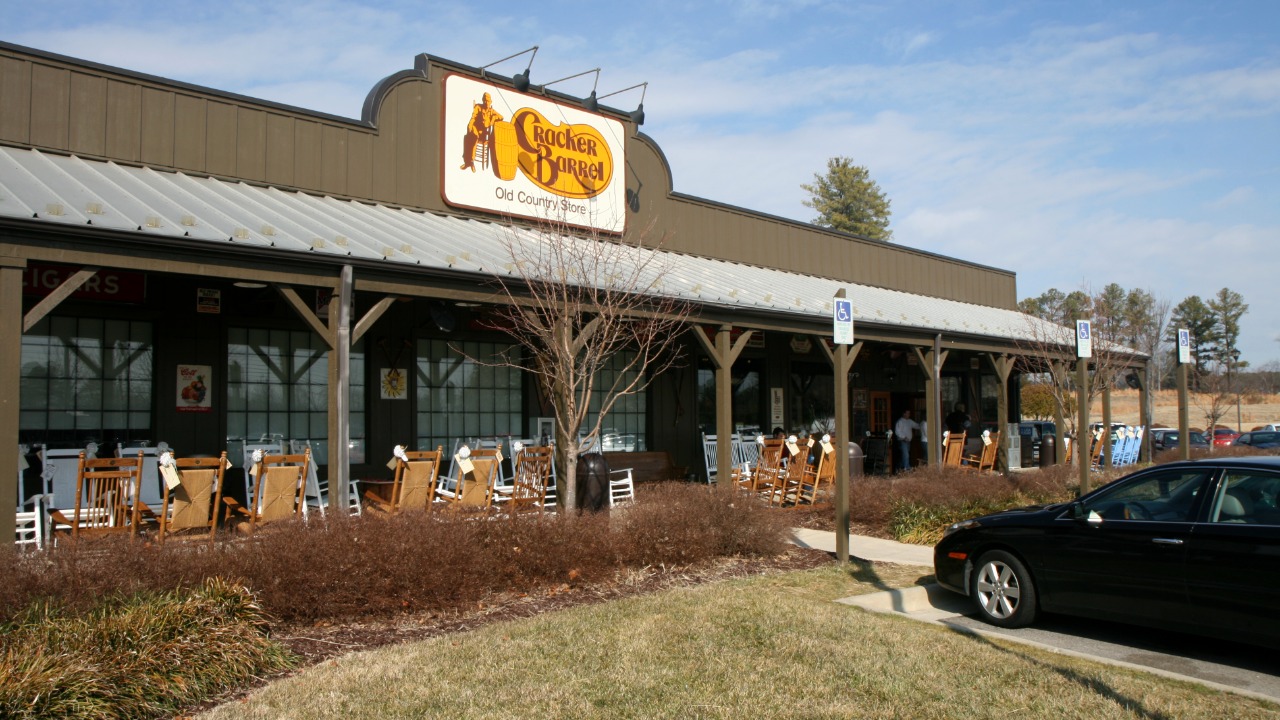
Cracker Barrel is facing a reckoning that reaches into every corner of its dining rooms and back-of-house prep lines. A crisis touching all 660 locations is forcing the company to rethink how it operates, and the first people feeling the strain are the workers who keep those stores running. The chain’s financial squeeze is no longer an abstract balance-sheet problem, it is reshaping schedules, paychecks, and the daily reality of life inside the “Old Country Store.”
The crisis hitting all 660 stores
The scale of the current downturn is striking because it is systemwide, not confined to a handful of underperforming markets. Reporting on the company’s recent turmoil describes a crisis that has slammed all 660 locations, turning what had long been a dependable roadside stop into a case study in how quickly a legacy restaurant brand can find itself on the defensive. When every store is under pressure at the same time, there is little room to quietly close a few weak units or shuffle staff around to absorb the shock.
For employees, that breadth means the usual safety valves are gone. A server who might once have transferred to a busier store to pick up more tables is now competing with colleagues across the region for the same shrinking pool of hours. Kitchen staff who counted on overtime during peak travel seasons are instead watching managers trim labor to the bone to protect margins. The crisis is not just about corporate strategy, it is about a workforce discovering that the brand’s troubles are now their own.
How a Tennessee comfort-food icon lost its cushion
Cracker Barrel Old Country Store built its reputation on predictability, from the peg games on the tables to the meatloaf on the menu. The company is rooted in Tennessee, and for decades that identity as a cozy, highway-adjacent refuge gave it a kind of cultural insulation. The chain’s folksy image and homestyle cooking made it a default choice for families on long drives and retirees looking for a leisurely breakfast, especially in smaller towns where national options were limited.
That cushion has thinned as consumer habits have shifted and competition has intensified. The same Tennessee-based charm that once differentiated Cracker Barrel Old Country Store now has to contend with fast-casual chains, delivery apps, and travelers who plan meals around mobile ordering rather than sit-down service. When a brand leans heavily on nostalgia, it can be slow to adapt to these shifts, and that lag shows up first in traffic declines and weaker sales, which then cascade into cost-cutting decisions that land squarely on staff.
The numbers behind the squeeze
Underneath the cultural story is a set of hard financial realities that explain why management is tightening the screws. In its First Quarter Fiscal 2026 report, the company highlighted that $797.2 million in total revenue flowed through the business over the period, a figure that sounds robust until it is stacked against rising food, labor, and occupancy costs. The same document’s First Quarter Fiscal Highlights underscore that even with that $797.2 m in revenue, profitability is under strain, which is why executives are scrutinizing every line item, including staffing.
When a company frames its performance in terms of “Total revenue” and how it “Compared to the prior year first quarter,” it is signaling to investors that growth alone is not enough if margins are eroding. That pressure filters down into store-level directives to cut labor hours, reduce overtime, and push managers to do more with less. Workers may not read the earnings release, but they feel its implications when schedules are posted with fewer shifts, when side work expands to cover tasks once handled by additional staff, and when the message from above is to protect adjusted EBITDA even if it means stretching crews thin.
Why workers are taking the hardest hit
In any downturn, the most flexible cost is usually labor, and Cracker Barrel’s current troubles are no exception. As the crisis has rippled across all 660 stores, frontline employees have absorbed the immediate impact in the form of reduced hours, leaner staffing on busy shifts, and heightened expectations to cover more roles at once. Servers report juggling larger sections, dishwashers see racks piling up faster than they can clear them, and hosts are asked to manage both the door and retail floor as managers look for every possible efficiency.
The reporting on the company’s weakened position makes clear that the financial fallout was swift and that workers were among the first to feel it. One account describes how the downturn exposed the depth of Cracker Barrel’s weakened position, leaving little buffer to shield staff from cuts. When a chain operates on thin margins, the path of least resistance is to trim schedules rather than immediately shutter stores, which means the pain is spread across thousands of workers instead of being concentrated in a smaller number of closures.
Inside the 660-store playbook: cuts, consolidation, and pressure
From a corporate perspective, managing a crisis across 660 locations requires a playbook that can be rolled out quickly and measured consistently. That often means standardized labor targets, strict controls on overtime, and aggressive monitoring of metrics like sales per labor hour. Store managers are handed these benchmarks and told to hit them, even if it means sending people home early on slow nights or running skeleton crews during what used to be peak periods. The result is a uniform tightening that may look efficient on a spreadsheet but feels punishing on the floor.
For employees, the consolidation of responsibilities is where the pressure becomes most visible. A single shift supervisor might be responsible for managing the dining room, overseeing the retail area, and handling back-office tasks that were once spread across multiple roles. In a chain that prides itself on a homey, unhurried atmosphere, that kind of multitasking can erode the very experience customers expect. Yet with the company’s financial position under scrutiny and all 660 locations under the same directive to rein in costs, there is little room for local managers to push back on the demands coming from above.
What this means for paychecks, tips, and job security
When hours are cut, the impact on workers is immediate and concrete. Hourly employees see their paychecks shrink, even if their base wage has not changed, because they are simply on the clock less often. For tipped workers, the picture is more complicated: fewer shifts can sometimes be offset by higher tip concentration on busy nights, but only if customer traffic holds up. In a crisis environment, that is far from guaranteed, and many servers find themselves working harder for the same or even lower take-home pay as they cover more tables with less backup from support staff.
Job security also becomes a daily question rather than a distant worry. When a company’s financial narrative centers on a weakened position and the need to stabilize performance across all stores, employees start to read every schedule change as a potential warning sign. A cut in hours can feel like the first step toward being pushed out, especially for part-time workers who rely on a minimum number of shifts to make ends meet. In that context, the chain’s systemwide crisis is not just a corporate story, it is a household-budget emergency for thousands of families tied to Cracker Barrel’s fortunes.
The strain on managers caught in the middle
While much of the focus falls on hourly staff, managers are also under intense strain as they try to reconcile corporate directives with on-the-ground realities. They are the ones who have to tell long-time employees that there are fewer hours to go around, who must enforce tighter labor controls even when the dining room is full, and who absorb customer frustration when service slows. Many of these managers came up through the ranks and feel a personal responsibility to their teams, which makes the current round of cuts emotionally as well as operationally difficult.
At the same time, managers are judged on their ability to hit financial targets that are shaped by the same First Quarter Fiscal Highlights and revenue comparisons that investors scrutinize. When the company points to $797.2 million in revenue and still signals concern about profitability, it is effectively telling managers that “good enough” is no longer acceptable. That pressure can lead to burnout at the leadership level, higher turnover among supervisors, and a feedback loop in which the loss of experienced managers further destabilizes store operations, compounding the stress on everyone else.
Customers notice when workers are stretched thin
The human cost of the crisis is most visible to the public in the subtle ways service changes. Longer waits to be seated, slower drink refills, and fewer staff circulating through the retail area are all signs that labor has been trimmed. Regulars who once recognized familiar faces on every visit may now encounter a rotating cast of newer employees as turnover rises. For a brand that trades heavily on a sense of continuity and comfort, those shifts can undermine the emotional connection that kept guests loyal even as newer competitors emerged.
Customers may not know the specifics of Cracker Barrel’s First Quarter Fiscal 2026 performance or the exact contours of its weakened position, but they feel the downstream effects. When a server apologizes for delays because “we are short-staffed tonight,” that is the crisis made tangible. Over time, if those experiences become the norm rather than the exception, some guests will quietly take their business elsewhere, which in turn deepens the financial strain and justifies further cuts. It is a cycle that can be hard to break once it takes hold across hundreds of locations at once.
What comes next for a chain under pressure
Looking ahead, the key question is whether Cracker Barrel can stabilize its finances without permanently alienating the workforce that powers its 660 stores. The company’s recent reporting shows it still commands significant revenue and a strong national footprint, but the margin for error has narrowed. If leadership continues to lean primarily on labor cuts to navigate the crisis, it risks hollowing out the very service culture that made the brand distinctive, especially in its Tennessee home base and other core markets where expectations are highest.
For workers, the path forward will depend on whether the company pairs cost controls with meaningful investments in training, scheduling stability, and communication about its plans. Employees are more likely to endure a rough patch if they believe there is a strategy to emerge stronger on the other side, rather than a slow grind of endless cuts. The current moment, with financial fallout already exposing Cracker Barrel’s weakened position, is a test of whether the chain can adapt its business model while still treating its staff as more than just a line item to be trimmed whenever the numbers tighten.
More From TheDailyOverview

Grant Mercer covers market dynamics, business trends, and the economic forces driving growth across industries. His analysis connects macro movements with real-world implications for investors, entrepreneurs, and professionals. Through his work at The Daily Overview, Grant helps readers understand how markets function and where opportunities may emerge.

