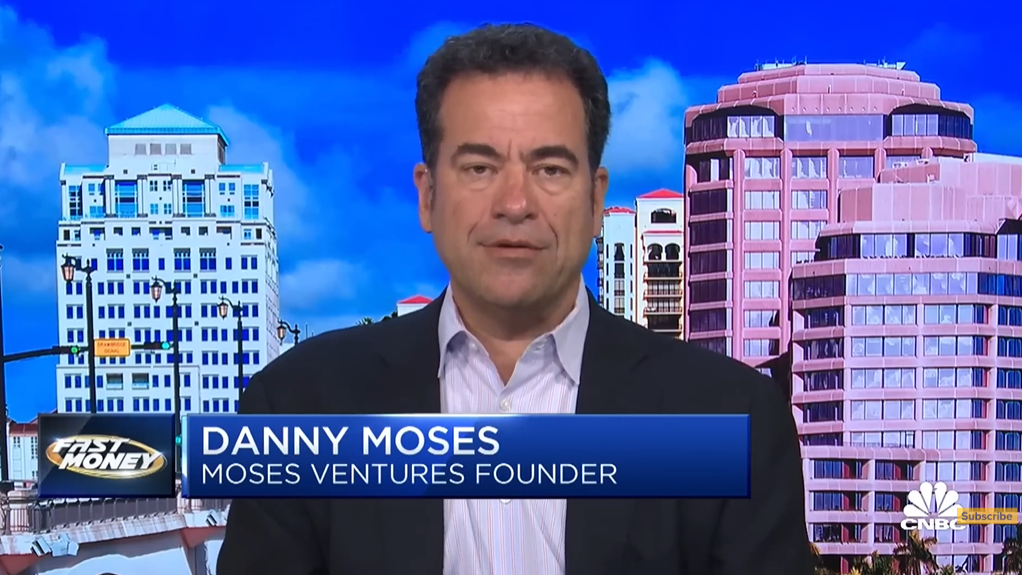
The frenzy around artificial intelligence has turned a handful of tech stocks into market darlings, but one of Wall Street’s most famous skeptics is warning that the story is starting to rhyme with past manias. Danny Moses, the “Big Short” trader who made his name spotting excess in subprime mortgages, now argues that the AI boom contains a genuine bubble, even as the underlying technology reshapes the economy. I see his message as a two-part playbook: recognize the speculative froth, then position in the parts of the ecosystem where cash flows and infrastructure demand can better justify the hype.
Moses is not dismissing AI outright, and that nuance matters for investors trying to navigate the next phase of this cycle. He is instead drawing a line between durable beneficiaries and companies priced for perfection, urging investors to treat AI as both a secular growth story and a classic late-cycle risk. The opportunity, in his view, lies in owning the right giants, avoiding the weakest hype names, and looking one layer deeper at the power and materials that will keep the AI machine running.
The ‘Big Short’ trader’s case that the AI bubble is real
Danny Moses built his reputation by betting against the housing market before the financial crisis, and he is now applying the same pattern recognition to artificial intelligence. As a key figure from The Big Short, he argues that AI has become a magnet for speculative capital in a way that resembles the dot‑com era of the early 2000s. I read his warning as less about the technology itself and more about the speed at which expectations, valuations, and retail enthusiasm have detached from what most companies can realistically earn from AI in the near term.
In his recent comments, Moses has been explicit that he believes there is currently a bubble in the artificial intelligence market, likening it to the environment that surrounded subprime mortgages during the last crisis. One summary describes him as a well‑known trader Danny Moses who sees echoes of the same behavioral excess that once fueled mortgage‑backed securities. From my perspective, when someone who profited from spotting systemic leverage calls an AI “bubble,” it is a signal to scrutinize not just earnings multiples but also the narratives that have become too easy to believe.
Why Moses still believes in AI as a secular growth story
What makes Moses’ stance more compelling than a simple bearish call is that he separates the long‑term trajectory of AI from the current pricing of many stocks tied to it. He has said that the AI trade is real and that the technology represents secular growth, even as he questions whether today’s valuations can be justified. In other words, he thinks investors can be right about the direction of the world and still lose money if they overpay for that future, a tension that has defined every major tech cycle.
According to one account, Moses thinks the answer to whether AI is both transformative and overhyped is yes, and he stresses that his views are not a blanket condemnation of Big Tech’s top names. I see this as a reminder that secular winners often emerge from bubbles, but they tend to be the companies with durable moats, diversified revenue, and the balance sheets to keep investing when the easy money fades. For investors, the challenge is to distinguish between AI as a lasting platform shift and AI as a marketing label slapped onto every growth pitch deck.
How he wants investors to play the tech side: giants over pretenders
Moses’ first major recommendation is to focus on the largest, most profitable technology platforms that are actually building and monetizing AI at scale. He has highlighted “Tech Giants and Uranium” as the twin pillars of his strategy, with the tech side anchored in companies like Microsoft and Amazon that already dominate cloud computing and enterprise software. In one breakdown of his approach, his Two Key Recommendations from The Big Short Prototype explicitly name “Tech Giants and Uranium,” and list Microsoft (MSFT.US) and Amazon (AMZN.US) as core examples.
He has also pointed to Amazon, Google, Meta, and Microsoft as the best illustrations of companies that can translate AI into real revenue and cost savings rather than just headlines. One report notes that the best examples include Amazon, Google, Meta, and Microsoft, even as Moses makes clear he does not hold an optimistic view toward every leader in the space. I interpret this as a barbell within Big Tech itself: favor the platforms with clear AI monetization paths in cloud, search, and advertising, and be more skeptical of those whose AI stories rely on distant or unproven business models.
The overlooked power trade: why Moses is leaning into uranium
The second leg of Moses’ playbook sits far from the usual AI stock lists, in the physical infrastructure that will power data centers. He has argued that the surge in AI workloads is colliding with tight electricity supply in the United States, which is forcing operators to rethink how they source reliable, low‑carbon power. In his view, that tension creates a structural tailwind for nuclear energy and, by extension, for uranium producers and related assets that can feed a new wave of reactors and small modular designs.
One analysis of his comments notes that, due to tight power supply in the U.S., some data centers are inclined to adopt small nuclear reactors as their primary energy source, and that Moses sees uranium as a way to participate in that growth. The report states that due to tight power supply, these facilities are looking at small nuclear reactors to meet AI‑driven demand, and that he wants to own the fuel that underpins that shift. I see this as a classic second‑derivative trade: instead of chasing the AI software names that everyone already owns, he is targeting the bottleneck in electricity that could become one of the most valuable inputs to the entire ecosystem.
Staying unscathed: risk discipline in a classic investment bubble
Moses’ broader risk message is that investors should treat AI as a “classic investment bubble” in the way they size positions and manage downside. He has warned that the math is starting not to work for some of the most aggressively priced names, a sign that expectations for growth and profitability have outrun even optimistic scenarios. One account quotes him saying that “we are reaching a point where the math is starting not to work,” and notes that Moses emphasized that his take on potential overvaluation does not negate the existence of smart, selective plays within the AI trade.
He has also been described as a renowned trader Danny Moses who believes the current artificial intelligence market is experiencing a bubble similar to the one that formed during the subprime mortgage crisis. From my vantage point, his advice boils down to three disciplines: stick with cash‑generating giants like Microsoft (MSFT) and Amazon that can fund AI internally, look to infrastructure plays such as uranium that benefit from AI’s power hunger, and be ruthless about trimming or avoiding the most speculative names whose valuations depend on flawless execution. In a market where AI narratives can drown out basic arithmetic, that kind of discipline may be the only way to participate in the upside without repeating the mistakes of the last great bubble.
More From TheDailyOverview

Grant Mercer covers market dynamics, business trends, and the economic forces driving growth across industries. His analysis connects macro movements with real-world implications for investors, entrepreneurs, and professionals. Through his work at The Daily Overview, Grant helps readers understand how markets function and where opportunities may emerge.

