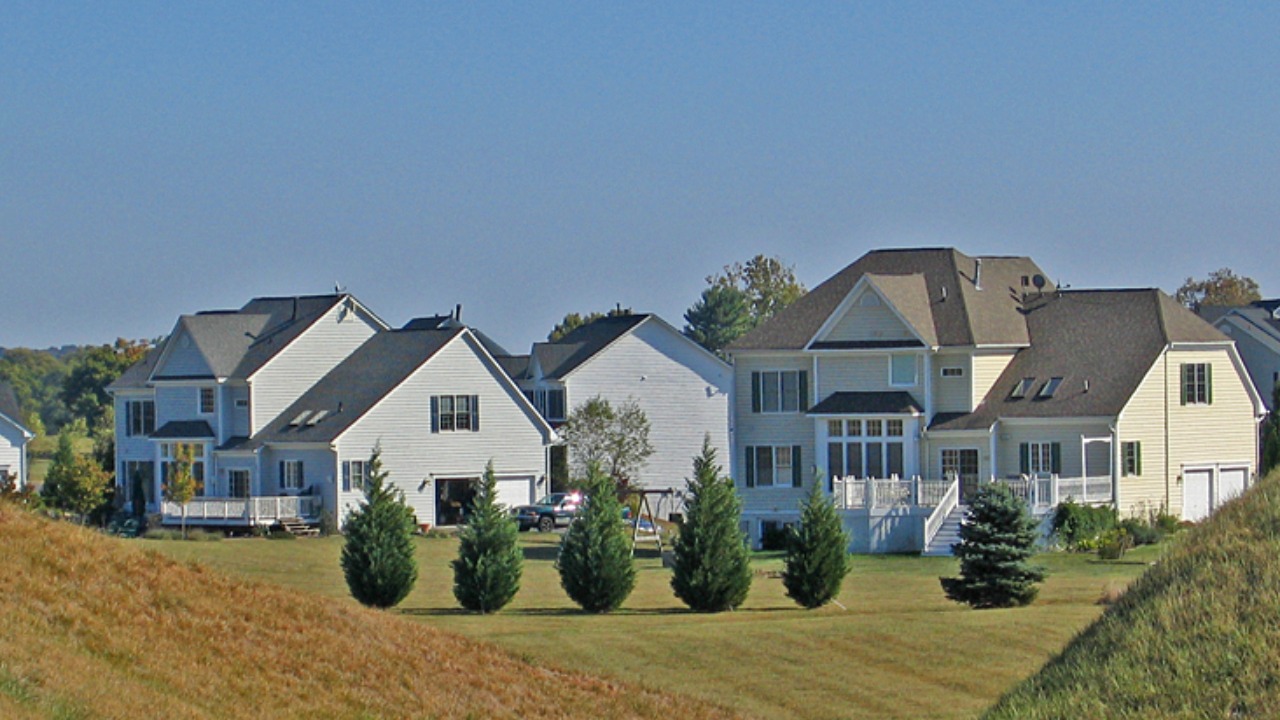
Across the United States, large suburban houses that once symbolized arrival are starting to feel strangely empty. Streets lined with three-car garages and two-story foyers now sit in a kind of suspended animation, with lights off, blinds drawn, and “For Sale” signs that linger longer than they used to. The data on vacancies and the backlash against oversized homes suggest that many of these McMansion-heavy subdivisions are quietly drifting toward a new status: not quite abandoned, but no longer fully alive.
What looks like prosperity from the curb can mask a more fragile reality inside the walls. High carrying costs, changing tastes, and a growing stock of vacant properties are turning some of these once-bustling enclaves into low-traffic, low-commitment neighborhoods where owners come and go, or never move in at all. I see a pattern emerging in the numbers and in the culture, and it points to a future where the biggest houses on the block are not the safest bets.
The rise and backlash of the McMansion ideal
The McMansion boom grew out of a simple promise: more house, more status, more comfort. For a generation of buyers, the sprawling floor plans, two-story great rooms, and elaborate façades offered a shortcut to a lifestyle that felt aspirational. Yet the very features that once made these homes so desirable are now part of the reason they are falling out of favor, as buyers question whether sheer size justifies the cost, the commute, and the upkeep.
Critics have not been subtle about their objections. On the surface, these houses promise luxury, but Detractors argue that they lack character and authenticity, pointing to jumbled architectural styles and superficial design elements that age quickly and feel disconnected from local context. That aesthetic critique dovetails with a practical one: as tastes shift toward walkable neighborhoods and more efficient layouts, the McMansion template looks less like a dream and more like a liability.
How oversupply and taste shifts hollow out big-house suburbs
As the first wave of McMansion buyers ages out of their homes, many of these properties are hitting the market at the same time. That creates pockets of oversupply in neighborhoods built around a single housing type and a narrow band of incomes. When everyone on the cul-de-sac is trying to sell a similar five-bedroom house with a bonus room and a three-car garage, the competition can be brutal, and some homes inevitably sit empty.
Earlier debates about whether Americans were “killing” the McMansion trend missed a more nuanced reality. The problem is not that large houses have vanished, but that they are increasingly mismatched with what younger buyers want and can afford. Analysis of the fate of McMansions has highlighted how these homes, once marketed as safe investments, can become stranded assets when demand softens and maintenance costs rise. The result is not a dramatic collapse, but a slow thinning out of full-time residents that leaves neighborhoods quieter and more brittle.
Vacant houses hiding in plain sight
One reason these neighborhoods can feel eerie is that vacancy is not always obvious. A house may be fully furnished, the lawn trimmed by a service, and yet no one actually lives there most of the year. National housing data show that a significant share of empty homes are not on the market at all, either for sale or for rent, which means they do not show up in the usual signals that a neighborhood is in trouble.
In 1,313 counties, seasonal units outnumbered the combined total number of units for rent or sale that were vacant, a striking sign of how many homes function more like part-time assets than primary residences. When that pattern overlaps with large-lot subdivisions, the effect is a kind of stealth hollowing out: the street looks occupied, but the social fabric is thin, with fewer kids on the sidewalks, fewer neighbors watching out for each other, and fewer people invested in long-term upkeep.
From dream home to “zombie” asset
At the more extreme end of the spectrum are properties that slip into limbo, neither fully occupied nor actively maintained. These so-called “zombie” houses are often caught in foreclosure or owned by investors who have little incentive to care for them. In neighborhoods dominated by big, expensive homes, a single neglected property can drag down the perception of the entire block, especially when it sits dark for months at a time.
Recent reporting by Journal Record Staff on the 2023 Vacant Property and Zombie Foreclosure Report found that Attom identified roughly 1 in 79 homes as vacant, with a subset classified as zombie foreclosures. When those distressed properties are large, high-cost houses, they can sit in legal and financial limbo for extended periods, amplifying the sense that parts of the subdivision are frozen in time. I see that dynamic as a warning sign for any community that has tied too much of its tax base and identity to a single, expensive housing product.
Why size and design make these homes hard to repurpose
In theory, a vacant house is just a unit waiting for the right buyer. In practice, the sheer size and layout of many McMansions make them difficult to adapt to new uses or new household types. Oversized primary suites, cavernous foyers, and redundant living spaces are hard to reconfigure without major renovation, and the cost of that work can exceed what the market will bear in a softening area.
That rigidity stands in contrast to older housing stock that can be more easily subdivided, converted to multi-generational living, or updated for new technologies. When I look at the typical McMansion floor plan, I see a house optimized for a very specific vision of family life and car-centric commuting. As energy prices, work patterns, and demographics shift, those design assumptions become constraints, locking owners into high utility bills and long drives while limiting options for creative reuse that might otherwise keep the neighborhood vibrant.
The quiet strain on local finances and services
Empty or underused large homes do not just affect their immediate neighbors. They also ripple through local budgets that depend heavily on property taxes. When high-assessed houses sit vacant, fall into disrepair, or sell at a discount, municipalities can face slower revenue growth at the same time they are grappling with aging infrastructure and rising service costs. That tension is especially acute in suburbs that built new roads, sewers, and schools to serve McMansion subdivisions and now must maintain them with a thinner base of full-time residents.
Vacancy also complicates planning for services like schools, transit, and emergency response. A street that looks full on paper may have far fewer children than expected, leading to under-enrolled schools and bus routes that no longer match where families actually live. Police and fire departments must still cover the same geography, even if many houses are dark most nights. I see that mismatch between built capacity and real occupancy as one of the defining challenges of these ghosted big-house neighborhoods.
Social capital in a neighborhood of part-time neighbors
Beyond the numbers, there is a human cost when a community shifts from lived-in to lightly used. Neighborhoods thrive on casual encounters, shared routines, and the small favors that build trust over time. When a significant share of houses are second homes, investment properties, or stuck in legal limbo, those everyday interactions become rarer. The result is a quieter, more transactional environment where people know the landscaper’s schedule better than their neighbors’ names.
McMansion-heavy areas are particularly vulnerable to this erosion of social capital because their design already limits spontaneous contact. Deep setbacks, wide driveways, and private backyards keep people in their cars and behind their fences. Add in a layer of vacancy and part-time occupancy, and the chances of building a resilient, mutually supportive community shrink further. I hear that in the way long-time residents describe their streets: not dangerous, not blighted, but oddly empty of life.
What buyers and owners can do differently
For current owners, the risk is that their largest asset may not perform the way they expected if the neighborhood continues to thin out. That does not mean every big house is doomed, but it does suggest a need for more realistic planning. Owners can invest in energy efficiency, flexible spaces, and curb appeal that emphasizes timeless design over trend-driven features, making their homes more attractive to a broader range of buyers if they need to sell.
Prospective buyers, meanwhile, can look beyond square footage and granite countertops to ask harder questions about neighborhood vitality. How many houses on the block appear lived in year-round? Are there kids outside, or is the street mostly quiet even on weekends? I find that paying attention to those subtle signals, along with local vacancy data and long-term infrastructure plans, offers a clearer picture of whether a seemingly luxurious subdivision is poised for renewal or drifting toward a quieter, more fragile future.
Rethinking the next generation of “dream” neighborhoods
The story of McMansions turning into semi-empty enclaves is ultimately a story about how we define success in housing. For years, the default metric was size, with bigger lots and bigger houses treated as automatic upgrades. The emerging data on vacancies, zombie properties, and seasonal units suggests that metric is no longer reliable. A neighborhood full of large, expensive homes can still feel hollow if too few people actually live there, participate in local life, or plan to stay.
As cities and suburbs plan for the next wave of growth, I believe the lesson is to prioritize flexibility, diversity of housing types, and walkable, human-scaled design over one-size-fits-all luxury. That shift will not rescue every existing McMansion subdivision, but it can prevent the next generation of “dream” neighborhoods from repeating the same mistakes. The quiet streets and dark windows of today’s big-house ghost zones are a reminder that a community’s health is measured less by the size of its homes than by the depth of its everyday life.
More From TheDailyOverview
- Tennessee loses $2.6B megafactory and faces major layoffs
- Retired But Want To Work? Try These 18 Jobs for Seniors That Pay Weekly
- What to do with your pennies after the U.S. stops minting them
- Home Depot CEO warns of a troubling customer trend in stores

Elias Broderick specializes in residential and commercial real estate, with a focus on market cycles, property fundamentals, and investment strategy. His writing translates complex housing and development trends into clear insights for both new and experienced investors. At The Daily Overview, Elias explores how real estate fits into long-term wealth planning.