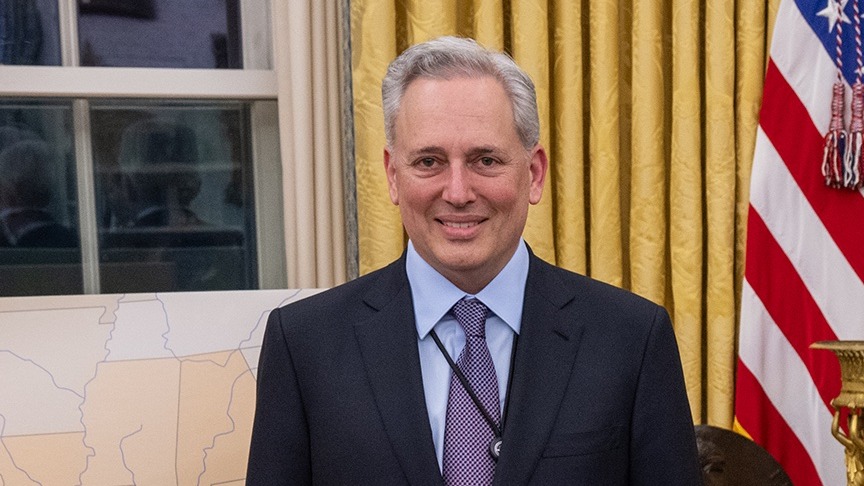
David Sacks is turning California’s proposed levy on billionaires into a national test of how far government can go in taxing wealth. By branding the measure an “asset seizure” and a political “opening shot,” President Donald Trump’s AI and crypto adviser is framing a state tax fight as a warning about the future of property rights in the United States.
At stake is a one-time, multibillion dollar charge on the fortunes of a small group of ultra-wealthy Californians, and a broader question of whether taxing existing assets crosses a line from ordinary revenue raising into confiscation. I see Sacks’s intervention as an attempt to draw that line in thick permanent marker, with Silicon Valley, Sacramento and Washington all watching closely.
What California’s Billionaire Tax Would Actually Do
Before weighing Sacks’s rhetoric, it is worth being precise about what California is proposing. The measure, often described as a levy on billionaires, would require Californians whose net worth exceeds $1.1 billion to pay a one-time tax equal to 5 percent of their assets. Separate reporting describes the same concept under the formal name Billionaire Tax Act, which would impose that 5 percent charge on California tax residents with fortunes starting at $1 billion, calculated on their total wealth rather than just income. In practice, that means everything from private company shares and real estate to art collections and crypto holdings would be swept into the tax base.
Supporters in Sacramento and among progressive activists argue that this is a targeted way to raise money from those best able to pay, especially after years in which asset prices have soared and pandemic-era gains have concentrated at the very top. Analysts note that California has flirted with similar ideas before, but the latest proposal is more aggressive because it is explicitly retroactive, potentially taxing existing fortunes that were built under a different set of expectations. A separate breakdown of the New California Wealth 2026 underscores that backers see it as a way to capture wealth that has so far escaped state income taxes, which fall mainly on realized gains and high salaries.
Sacks’s “Asset Seizure” Charge and Fear of a First Strike
Into that policy debate steps David Sacks, who is not just a prominent venture capitalist but also President Donald Trump’s AI and crypto czar. In interviews earlier this month, Sacks has described the California plan as an asset seizure, arguing that taxing a stock of wealth rather than annual income crosses a constitutional and moral line. He has warned that if California “gets away with this,” other jurisdictions will follow, turning what is billed as a one-time levy into a template for repeated raids on private fortunes. In his telling, the measure is “not a one-time, it’s a first time,” a phrase that has quickly become a rallying cry among critics who see the proposal as a gateway to broader confiscatory policies.
That framing is echoed in more detailed coverage of Sacks’s remarks, where he is quoted stressing that the danger lies less in the immediate hit to a few hundred billionaires and more in the precedent it sets for the rest of the country. One account by Brent D. Griffiths notes that Sacks delivered his warning on a Wed morning at 10:36 AM PST, in a segment that also flashed tickers like ACT and USD, underscoring how financial markets are watching the fight. When Sacks calls the plan a “scary direction” for the United States, he is not only speaking as a tech investor but as a senior ACTor in the White House orbit, which gives his language extra political weight.
Trump’s AI Czar, the White House, and a Broader Ideological Clash
Sacks’s role inside the administration is central to understanding why his comments are resonating beyond California. President Donald Trump appointed him as an AI and crypto czar, a position that blends technology policy with economic strategy, and he has used that platform to attack the state’s proposal as a sign that the country is moving in a dangerous direction. In one widely cited exchange, Sacks argued that if California can treat billionaire wealth as a pool to be tapped at will, then no form of private capital is truly safe, a point he linked directly to concerns about innovation and capital formation in sectors like artificial intelligence. Coverage of his remarks notes that President Donald Trump himself has aligned with that critique, treating the California fight as a foil for his own economic message.
Other reporting describes Sacks as part of a broader White House push to resist what it sees as punitive taxation of tech wealth. One account of the controversy notes that Sacks, who has relocated from California to other low-tax jurisdictions, sees the measure as proof that his former home state is hostile to the kind of entrepreneurs he now advises on AI policy. In that telling, the wealth tax is not just a budget tool but a symbol of a deeper ideological clash between a populist right that champions low taxes on capital and a progressive left that wants to redistribute the gains of the tech boom.
Supporters’ Case: Fair Share or “Theft”?
Backers of the California plan insist that the rhetoric of “seizure” and “confiscation” is overwrought, and that the measure simply asks the richest residents to contribute a fairer share to public services. They point out that the tax is explicitly framed as a one-time charge, tied to a specific threshold of $1.1 billion in net worth, and that it would apply only to a tiny fraction of households. Yet even as they make that case, they are facing a barrage of criticism from within the federal government itself. One prominent account of the backlash quotes President Trump’s tech czar describing the proposal as outright “theft,” arguing that there has “never been anything like this before in American history,” language that elevates the dispute from a policy disagreement to a constitutional and moral indictment.
The same report, by Zain Khan and later Published Jan, underscores that the criticism is not coming only from affected billionaires but from within the Trump administration itself. It notes that President Trump’s team sees the California fight as a chance to draw a sharp contrast with Democratic tax priorities in a state that has long been a laboratory for progressive policy. For supporters of the tax, that means they are not only defending a revenue measure but also pushing back against a narrative that equates any levy on accumulated wealth with government theft.
Why Sacks Calls It an “Opening Shot” for the Rest of the Country
When Sacks warns that California’s move is “not a one-time, it’s a first time,” he is making a strategic argument about political contagion. In his view, if the state can successfully impose a retroactive 5 percent charge on fortunes above $1.1 billion, other blue states and perhaps even Congress will feel emboldened to copy or expand the model. That concern is echoed in analyses that describe how the California proposal would be difficult to avoid, with residency rules and look-back provisions designed to keep billionaires from simply moving to Texas or Florida before the tax hits. One breakdown of the wealth tax proposal notes that it would apply to those who were California tax residents as of a specified date, limiting their “way out” even if they relocate later.
More From TheDailyOverview
*This article was researched with the help of AI, with human editors creating the final content.

Grant Mercer covers market dynamics, business trends, and the economic forces driving growth across industries. His analysis connects macro movements with real-world implications for investors, entrepreneurs, and professionals. Through his work at The Daily Overview, Grant helps readers understand how markets function and where opportunities may emerge.

