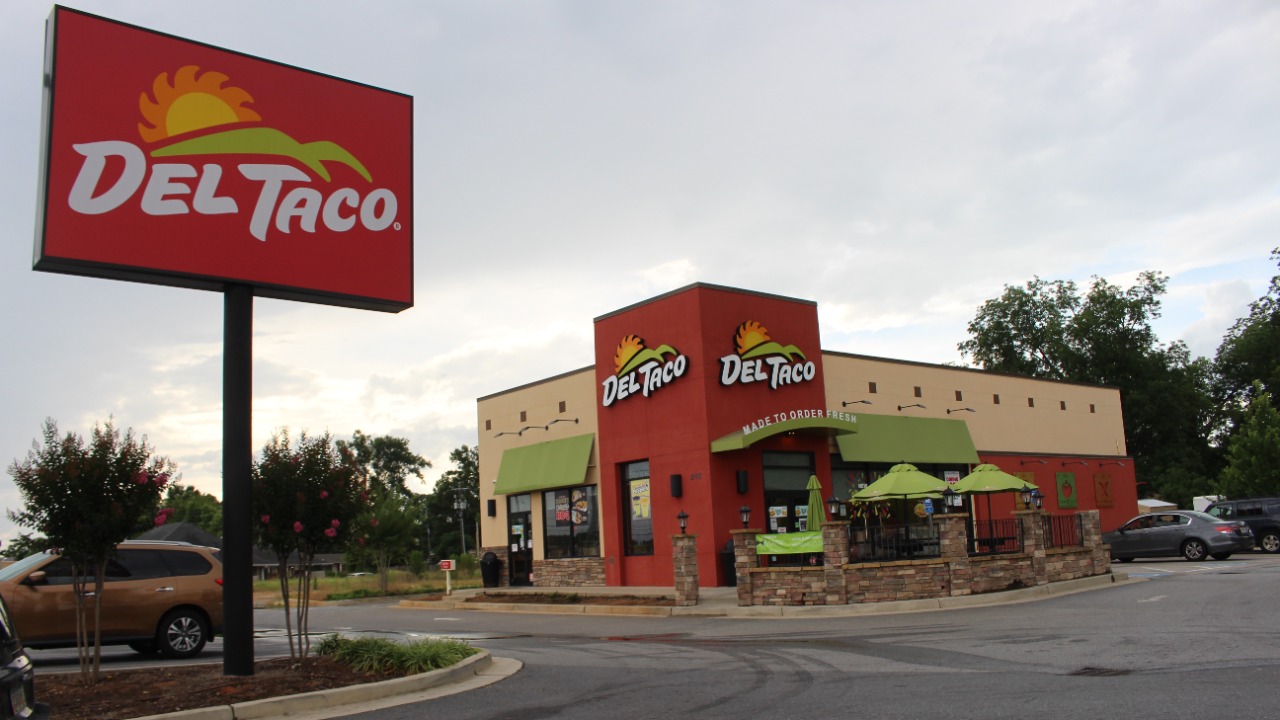
Del Taco’s quiet exit from Florida caps a costly experiment that erased hundreds of millions of dollars in value and underscored how unforgiving the fast-food business can be when strategy, timing, and execution fall out of sync. The chain’s parent company is now absorbing a roughly $460 million hit tied to the brand, a wipeout that effectively resets expectations for Del Taco’s future footprint in the Southeast.
As I trace how a regional taco concept ended up retreating from one of the country’s fastest-growing states, the story that emerges is less about a single bad bet and more about a series of compounding miscalculations: overpaying for growth, underestimating competitive pressure, and struggling to integrate a legacy brand into a broader portfolio.
How a bold Florida push turned into a $460 million write-down
Del Taco’s Florida pullback is the visible end of a much larger financial unwind, centered on a non-cash impairment charge of about $460 million that its parent recorded against the brand’s goodwill and other intangibles. In plain terms, the company is acknowledging that the value it once assigned to Del Taco on its balance sheet no longer matches the cash the business is realistically expected to generate, especially in underperforming markets like Florida. That accounting reset follows several quarters of weaker-than-expected sales and profitability, which forced executives to revisit the assumptions baked into the original acquisition and subsequent expansion plans.
When the parent company acquired Del Taco, it paid a premium based on projections that the chain could scale well beyond its Western roots and become a national growth engine. Those expectations were embedded in the goodwill line that is now being written down, a move the company tied directly to softer traffic, higher operating costs, and slower unit-level returns than initially modeled in newer territories such as Florida. The impairment, which the company quantified at approximately $460 million in recent filings, effectively concedes that the earlier growth thesis was too optimistic and that the brand’s economic value, particularly in distant markets, has diminished relative to what investors were told at the time of the deal, as reflected in the company’s latest regulatory disclosures.
Why Florida never became Del Taco’s breakout market
On paper, Florida should have been fertile ground for a value-focused Mexican fast-food chain, with its rapid population growth, heavy tourism, and dense clusters of quick-service restaurants. In practice, Del Taco struggled to carve out a distinct niche in a state already saturated with entrenched players like Taco Bell, Chipotle, and a long list of regional concepts. Unit volumes lagged internal targets, and several Florida locations cycled through promotional discounts that boosted traffic temporarily but compressed margins, according to performance trends outlined in the company’s recent annual report. Those patterns signaled that the brand was buying visits rather than building durable loyalty.
Real estate and labor dynamics compounded the problem. The company has acknowledged that newer markets faced higher build-out costs and more volatile staffing expenses than legacy territories, which eroded the returns on each new restaurant and made it harder for Florida units to reach the profitability thresholds needed to justify further investment. As the parent reviewed its portfolio, it flagged certain regions where Del Taco’s cash flows and growth prospects no longer supported continued capital deployment, a group that included Florida. That assessment, detailed in the impairment testing discussion in its latest 10-K filing, set the stage for a strategic retreat from the state rather than a slow, store-by-store fadeout.
The acquisition hangover: when synergy promises collide with reality
The financial damage from Del Taco’s Florida exit cannot be separated from the broader acquisition story. When the parent company agreed to buy Del Taco, it pitched the deal as a way to diversify its portfolio and unlock cross-brand efficiencies, from shared supply chains to combined marketing muscle. Those synergies were supposed to support aggressive expansion into new regions, including Florida, while smoothing out the risks of entering unfamiliar markets. Instead, integration proved more complex than projected, and the cost savings and revenue boosts that were expected to offset expansion risks did not fully materialize, a shortfall the company later acknowledged in its impairment analysis.
As I read through the company’s filings, the pattern looks familiar: management paid up for a growth story, then spent the next few years revising that story downward as real-world performance failed to match the model. The $460 million write-down is the clearest expression of that comedown, but it is not the only one. The company has also cited higher integration costs, slower-than-expected adoption of shared technology platforms, and uneven franchisee performance as factors that weighed on Del Taco’s outlook. Those headwinds, documented in the risk factor and management discussion sections of its recent SEC reports, left less room for error in experimental markets like Florida, where the brand lacked the cushion of a long-established customer base.
What the Florida retreat signals for Del Taco’s national ambitions
Pulling out of Florida does not mean Del Taco is abandoning growth, but it does mark a shift toward a more cautious, return-on-invested-capital mindset. The parent has signaled that future expansion will be more tightly focused on regions where Del Taco already has brand recognition and where new units can piggyback on existing supply and marketing infrastructure. That pivot is consistent with the language in its latest strategic updates, which emphasize pruning underperforming assets and concentrating resources in markets with stronger unit economics, a framework laid out in the company’s most recent strategic review.
For investors and franchisees, the Florida exit is a reminder that national ambitions in fast food are not just about opening more doors, they are about opening the right doors in the right places. I read the $460 million impairment as a forced reset that may ultimately make Del Taco a more disciplined, regionally anchored brand rather than a coast-to-coast contender. The company’s own projections now lean more heavily on optimizing existing markets and leveraging operational improvements, such as kitchen automation and digital ordering, to lift margins instead of betting on far-flung new states. Those priorities, outlined in its forward-looking statements and capital allocation plans in recent investor disclosures, suggest that Florida’s chapter is closing so the brand can stabilize where it is strongest.
What Del Taco’s $460 million misstep reveals about the fast-food landscape
Del Taco’s Florida reversal is not an isolated misfire, it fits into a broader pattern of restaurant chains discovering the limits of rapid, debt-fueled expansion in a crowded market. Over the past few years, several brands have taken impairment charges or shuttered units after overextending into regions where their concepts did not resonate or where costs outpaced returns. The pressures are especially acute in value-oriented segments, where rising wages, higher commodity prices, and discount-hungry customers squeeze margins from both sides. Del Taco’s parent has cited those same forces in explaining why certain markets underperformed expectations and why the brand’s long-term cash flow outlook had to be revised downward in its latest financial statements.
From my vantage point, the lesson is less about avoiding bold moves and more about building in realistic guardrails when a company ventures beyond its core. Florida offered growth, but it also demanded a level of marketing investment, operational flexibility, and pricing power that Del Taco, at its current scale, struggled to sustain. The $460 million write-down and the decision to leave the state crystallize that mismatch in a single, stark number. As the company now refocuses on markets where its economics are more predictable, the Florida experiment will stand as a case study in how quickly a high-conviction expansion thesis can unravel when the assumptions underneath it collide with the realities of the modern fast-food business, a tension laid bare in the brand’s most recent annual filing.
More From TheDailyOverview

Grant Mercer covers market dynamics, business trends, and the economic forces driving growth across industries. His analysis connects macro movements with real-world implications for investors, entrepreneurs, and professionals. Through his work at The Daily Overview, Grant helps readers understand how markets function and where opportunities may emerge.

