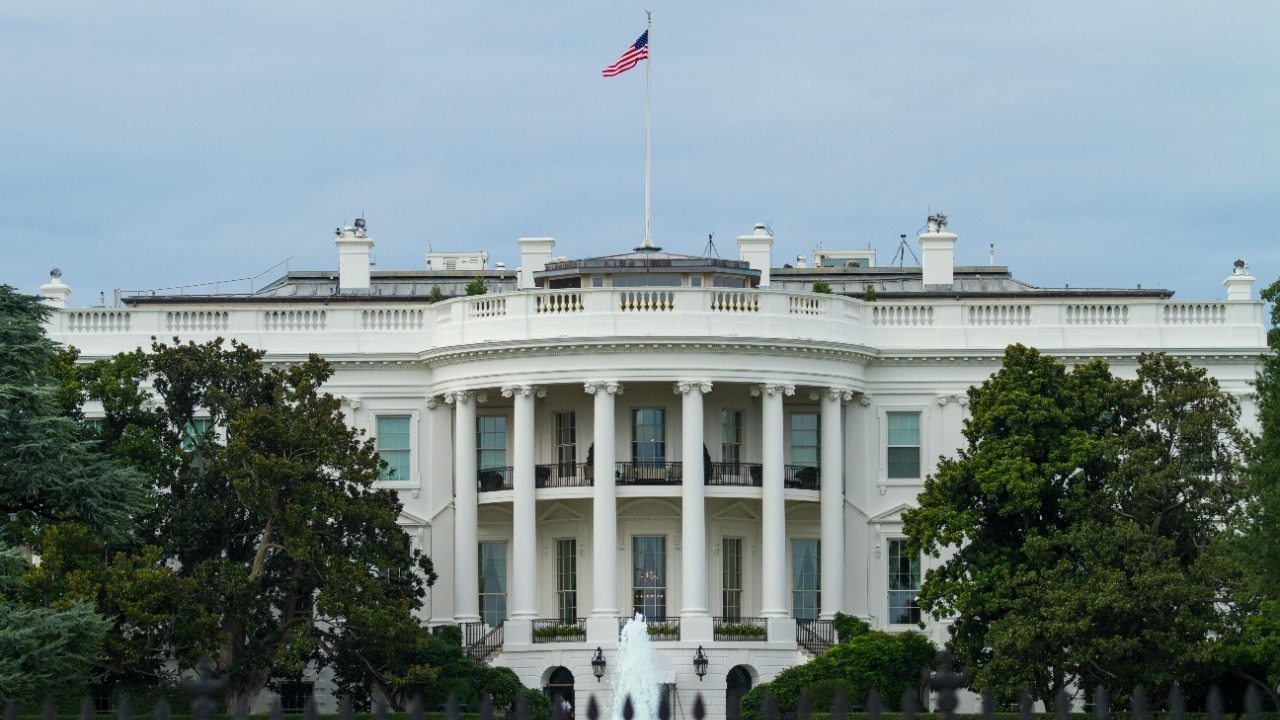
Democrats are escalating their fight over President Donald Trump’s costly White House makeover, effectively sending him a political “invoice” for every undisclosed donor, torn-down wall and blurred ethical line. What began as a splashy plan for a new presidential ballroom and the demolition of the White House East Wing has turned into a running tab of oversight letters, public hearings and fact checks aimed at forcing transparency about who is really paying for the work and what they might want in return.
Instead of a single bill or lawsuit, the opposition strategy looks more like a layered charge sheet: formal document demands, public warnings about a $300 million construction budget, and a coordinated push to debunk viral misinformation that clouds the debate over what is happening to one of the country’s most symbolic buildings.
The ballroom that turned into a $300 million political fight
The core of the dispute is not that Trump wants to renovate the White House, but how he is doing it and who is footing the bill. The centerpiece is a new presidential ballroom, a project that Trump’s team has promoted as a signature addition to the complex and that critics see as a monument to personal branding built inside a public institution. According to Senate inquiries, the construction budget is expected to exceed $300 million, a figure that instantly raised questions about whether the project is a civic necessity or a luxury venue for the president’s political and social circle.
Supporters of the project argue that presidents have long updated the building to suit modern needs and personal tastes, pointing out that Subsequent presidents have refurbished the residence and that Richard Nixon even added a bowling lane. What makes this ballroom different, Democrats say, is the scale of private money involved and the potential for those donors to seek access or influence in return. That tension, between a president’s latitude to shape the White House and the public’s right to know who is underwriting the work, is what turned a construction blueprint into a partisan flashpoint.
East Wing demolition and the scramble to define who pays
The controversy intensified when the Trump administration moved ahead with demolishing the White House East Wing to clear space for the ballroom and related facilities. Crews began tearing into the structure earlier this year, with officials framing the work as part of a broader modernization of the complex. A video report on the project noted that the White House East Wing was being razed under the Trump administration to make room for the new construction, a visual that crystallized for many Americans that this was not a minor interior refresh but a fundamental reshaping of the building’s footprint.
As images of demolition circulated, so did rumors about unpaid contractors and taxpayer exposure. One viral claim asserted that Trump was refusing to pay the construction company handling the East Wing teardown, implying that the federal government or the firm itself would be left holding the bag. Fact checkers later traced that story to a clickbait site and concluded that it was fabricated, with one review flatly labeling it FAKE and another describing it as a Made Up Story. The debunking did not resolve the larger question of who is ultimately paying for the demolition and rebuild, but it did strip away one of the more sensational accusations swirling around the project.
Democrats’ “invoice” takes the form of investigations and letters
Without the votes to halt construction outright, Democrats have turned to oversight tools to demand a detailed accounting of the ballroom project and its backers. In the Senate, the most visible move came when Sen. Adam Schiff of California and several colleagues pressed the White House on Oct 28, 2025, for a “complete accounting” of the financing, including the identities of individual and corporate donors. Their letter, sent on a Tuesday, asked for documentation of how the more than $300 million in promised support was being raised and what, if anything, had been pledged in return.
House Democrats have taken a parallel tack, requesting internal descriptions of the project and any related fundraising pitches. In one letter, they asked for design documents, donor lists and communications that would show how the ballroom was sold to potential benefactors after an initial project description circulated in July. The lawmakers acknowledged that Democrats lack the power to unilaterally subpoena documents, which means their request is voluntary rather than binding, but they framed the ask as a test of the administration’s commitment to transparency. In effect, these letters function as an itemized bill: a list of specific answers and records that Democrats say the White House owes to Congress and the public.
Who is really paying, and what do they want?
At the heart of the “invoice” metaphor is a simple question with complicated implications: if taxpayers are not directly funding the ballroom, what do private donors expect in exchange for covering the costs. The White House has insisted that public money is not being used, with officials stressing in a briefing on Oct 23, 2025, that no taxpayer funds are going toward the ballroom and that the project is instead supported by outside contributions. In that briefing, a spokesperson opened by apologizing for being late and then emphasized that no taxpayer money was being used for the renovation, a line meant to reassure voters who might balk at a nine-figure price tag for a presidential party space.
Democrats are not satisfied with that assurance alone. In their Senate letter, The Democratic lawmakers warned that a project expected to exceed $300 m could become a magnet for influence peddling and other forms of corruption if the donors remain secret. They argued that corporate sponsors and wealthy individuals might view a privately funded White House ballroom as a shortcut to presidential favor, especially if their names are known inside the building but hidden from the public. That concern is echoed in broader debates about campaign finance and dark money, but here it is tied to a physical structure that will host official events, political fundraisers and social gatherings under the same ornate ceiling.
Fact checks, outrage and the politics of White House aesthetics
The fight over the ballroom is unfolding in an information environment where false stories can travel faster than official statements, which is why fact checking has become part of the political battlefield. On Nov 6, 2025, one review of the unpaid-contractor rumor concluded that No, that’s not true, pointing out that the site pushing the claim was filled with fabricated clickbait. By knocking down the most extreme allegations, these checks narrow the argument back to verifiable issues: the scale of the project, the secrecy around donors and the precedent it sets for future presidents who might want to tap private money for public spaces.
At the same time, opinion writers on the right have mocked what they describe as liberal hysteria over Trump’s taste in chandeliers and marble. One commentary noted that Democrats outraged by the ballroom are ignoring the long history of presidents customizing the residence, arguing that Trump, a real estate developer by background, is simply more aggressive and more public about it. That critique frames the backlash as aesthetic snobbery rather than a substantive ethics concern, a narrative the White House is happy to amplify as it casts the project as a matter of presidential prerogative.
From oversight to legislation: turning outrage into rules
Even as they press for documents, Democrats are trying to convert their complaints into guardrails that would outlast Trump’s tenure. Some lawmakers have floated the idea of tightening disclosure rules for large private gifts tied to the White House, arguing that the ballroom saga shows how easily a president can blur the line between public property and private patronage. A recent proposal highlighted topics such as the White House, the new Ballroom, the role of Donations and the risk of Corruption linked to Trump’s renovation plans, with supporters warning that unchecked private funding can become a vehicle for corruption and personal vanity. Unverified based on available sources is any detailed description of the specific legislative text or its sponsors, but the thrust is clear: Democrats want new rules that make it harder for presidents to quietly solicit massive checks for projects inside the executive mansion.
Whether those ideas become law is uncertain, especially in a polarized Congress, but the political message is already in circulation. By tying the ballroom to broader themes of conflicts of interest and donor influence, Democrats are effectively telling Trump that the real cost of his renovation will be paid in hearings, headlines and potential future restrictions on presidential perks. In that sense, the “invoice” they are sending is less about recouping dollars than about setting a price in public scrutiny for any president who treats the White House as a canvas for privately funded ambition.
More From TheDailyOverview
- Dave Ramsey says these two simple questions show whether you’re rich or poor
- Retired But Want To Work? Try These 18 Jobs for Seniors That Pay Weekly
- IRS raises capital gains thresholds for 2026 and what’s new
- 12 ways to make $5,000 fast that actually work

Grant Mercer covers market dynamics, business trends, and the economic forces driving growth across industries. His analysis connects macro movements with real-world implications for investors, entrepreneurs, and professionals. Through his work at The Daily Overview, Grant helps readers understand how markets function and where opportunities may emerge.

