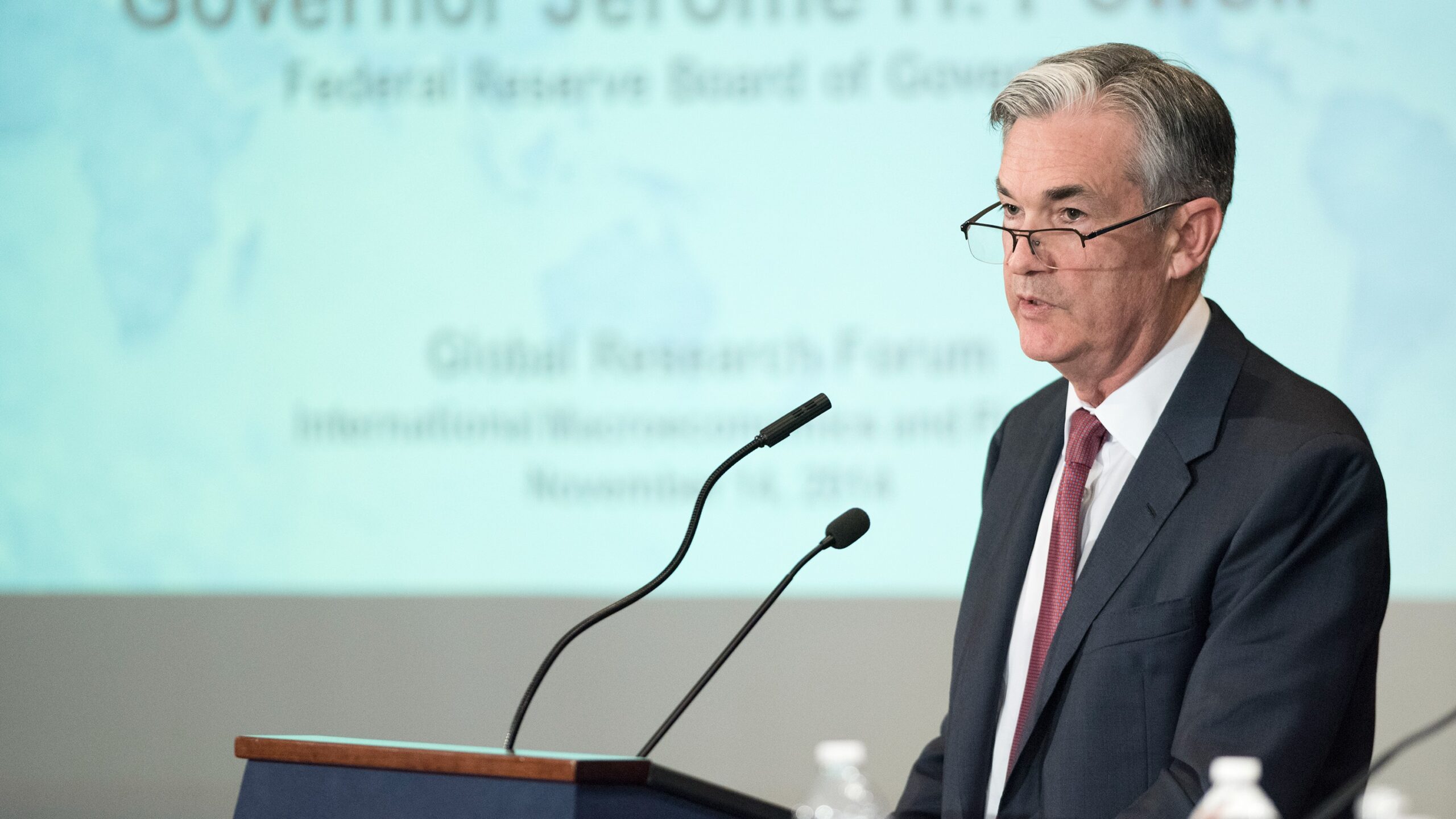
Federal Reserve Chair Jerome Powell has started talking about inflation in a way that puts President Donald Trump’s trade policy squarely in the frame. In his latest press conference, Powell linked today’s stubborn price pressures to the White House’s sweeping tariffs, even as he insisted the central bank is acting independently. I read his comments as the closest he has come to saying out loud that the inflation problem Americans are living with is, in large part, made in Trump’s Washington.
At the same time, Powell is trying to reassure households and markets that the worst of the tariff shock will fade, and that the Federal Reserve can eventually ease off its restrictive stance. The result is a delicate balancing act: acknowledging that Trump’s choices helped ignite the current bout of inflation without sounding like a political actor himself.
Powell’s tariff diagnosis, in plain English
In his latest policy briefing, Fed Chair Jerome Powell did something central bankers usually avoid, he named a sitting president’s policy as the main culprit behind an inflation overshoot. Powell said that Trump’s tariffs are the primary reason inflation has run above the Federal Reserve’s 2 percent goal, describing the impact as a one time jump in prices that has nonetheless left the overall level of costs higher for consumers. In separate remarks, he went further, explaining that inflation on the price of goods is up specifically because of Trump’s tariffs, a point he made during a televised briefing that underscored how directly the trade measures have filtered into store shelves.
Powell has framed this as a story of cause and effect rather than partisan blame. He has stressed that the Fed is responding to a tariff driven shock, not creating it, and that the central bank’s job is to lean against the resulting inflation even when the source is fiscal or trade policy. That is why he has emphasized that the inflation overshoot is tied to Trump’s tariffs and that the spike in goods prices is a consequence of those trade actions, not of monetary policy missteps. By putting the focus on the tariffs themselves, Powell is effectively telling the public that the inflation they see in everyday purchases is rooted in decisions made by President Donald Trump, even if he stops short of using the word “blame.”
How the January Fed meeting sharpened the message
The first Federal Open Market Committee gathering of 2026 crystallized this argument. The Fed held interest rates steady in that meeting, keeping policy tight even as markets had hoped for early cuts, and Powell used the press conference to explain why. He pointed to the way Trump’s tariffs have pushed up import costs and filtered through to consumer prices, reinforcing that the central bank cannot ignore a tariff shock that is still working its way through the economy. Live coverage of the decision highlighted how officials weighed the inflationary impact of the trade measures while choosing to keep rates unchanged in this first policy meeting of the year.
During the same appearance, Powell was pressed on whether he was effectively throwing President Donald Trump “under the bus” by tying inflation so explicitly to the administration’s trade agenda. His answer was careful but pointed, he reiterated that the tariffs are a key driver of current price pressures and that the Fed must respond to the economic reality they create, regardless of who sits in the Oval Office. That exchange, captured in detailed accounts of the meeting, made clear that Powell sees the tariff program as central to the inflation story and is willing to say so even as Trump continues to insist that the real problem is the Fed’s refusal to cut rates more quickly.
Trump’s pressure campaign collides with Fed independence
President Donald Trump has not been shy about telling the Fed what he wants. He has repeatedly demanded immediate rate cuts, arguing that high borrowing costs are choking growth and that the central bank is overreacting to what he portrays as a manageable inflation problem. After the FOMC held rates steady in its latest decision, Trump again called for rapid easing, even as Powell used his post meeting press conference to stress that the inflation spike is rooted in Trump’s own tariffs, not in any lack of monetary support. One detailed account of that day’s events noted that Powell explicitly referenced President Donald Trump’s tariffs while explaining why the Fed could not simply slash rates on demand.
That tension has revived a long running debate about central bank independence. Powell has offered a strong defense of the Federal Reserve’s autonomy, saying that “no one speaks for the Federal Reserve on monetary policy” except the institution itself and that policy decisions must be based on data, not political pressure. Reporting on his remarks emphasized how firmly he drew that line, even as Trump continues to insist that rates be lowered and to criticize the Fed for not cutting more quickly. The clash between a president who wants cheaper money and a Fed chair who insists on staying the course has become a defining feature of the current economic moment, and Powell’s tariff comments only heighten that contrast.
What this means for households feeling the squeeze
For families trying to balance their budgets, the political back and forth matters less than the bottom line, prices are still high and relief has been slow. Powell has acknowledged that Americans are being forced to economize as stubborn inflation squeezes household budgets, pointing to evidence that people are trading down to cheaper brands, cutting discretionary spending, and feeling the strain of higher grocery and goods prices. He has tied a significant part of that squeeze to the tariff driven jump in the cost of imported products, which has rippled through everything from electronics to basic household items.
At the same time, Powell has tried to offer a timeline for when the tariff shock might fade. He has said that the inflation impact of Trump’s tariffs should top out by around midyear, suggesting that the worst of the price surge tied directly to trade policy could be behind the United States by then. Analysts tracking his comments have noted that he expects tariff driven inflation to peak this year, which could open the door for some policy easing if broader price pressures also cool. In other words, while households are still living with the consequences of the tariffs today, Powell is signaling that the specific inflation impulse from those measures is finite, even if the higher price level they created will not simply vanish.
Powell’s tightrope: calling out tariffs without sounding partisan
Powell’s rhetoric reflects a broader evolution in how he has handled Trump’s attacks and interventions. Earlier in Trump’s presidency, the president repeatedly insulted Federal Reserve Chair Jerome Powell, questioning his competence and pressuring him to cut rates, while Powell responded with a low key, technocratic style that avoided direct confrontation. Profiles of his leadership have described how he leaned on calm explanations of data and policy rather than trading barbs, presenting himself as a steady hand even as the president publicly second guessed him. That history makes his current willingness to spell out the inflationary impact of Trump’s tariffs all the more striking.
In his latest press conference, Powell also fielded questions about market volatility and the dollar, at one point saying it was “not appropriate” for him to comment on recent swings in the currency. That restraint contrasted with his relative bluntness on tariffs, where he has been willing to say that Trump’s measures are the main factor behind inflation exceeding the Fed’s target. Coverage of the event highlighted how he balanced those instincts, declining to wade into every politically sensitive topic while still making clear that the trade policies of the current administration have had a direct and measurable impact on prices. It is a tightrope walk, but one that underscores his view that acknowledging economic facts, even when they are politically inconvenient, is part of the Fed’s job.
More From TheDailyOverview
This article was researched with the help of AI, with editors refining and creating the final content.

Grant Mercer covers market dynamics, business trends, and the economic forces driving growth across industries. His analysis connects macro movements with real-world implications for investors, entrepreneurs, and professionals. Through his work at The Daily Overview, Grant helps readers understand how markets function and where opportunities may emerge.

