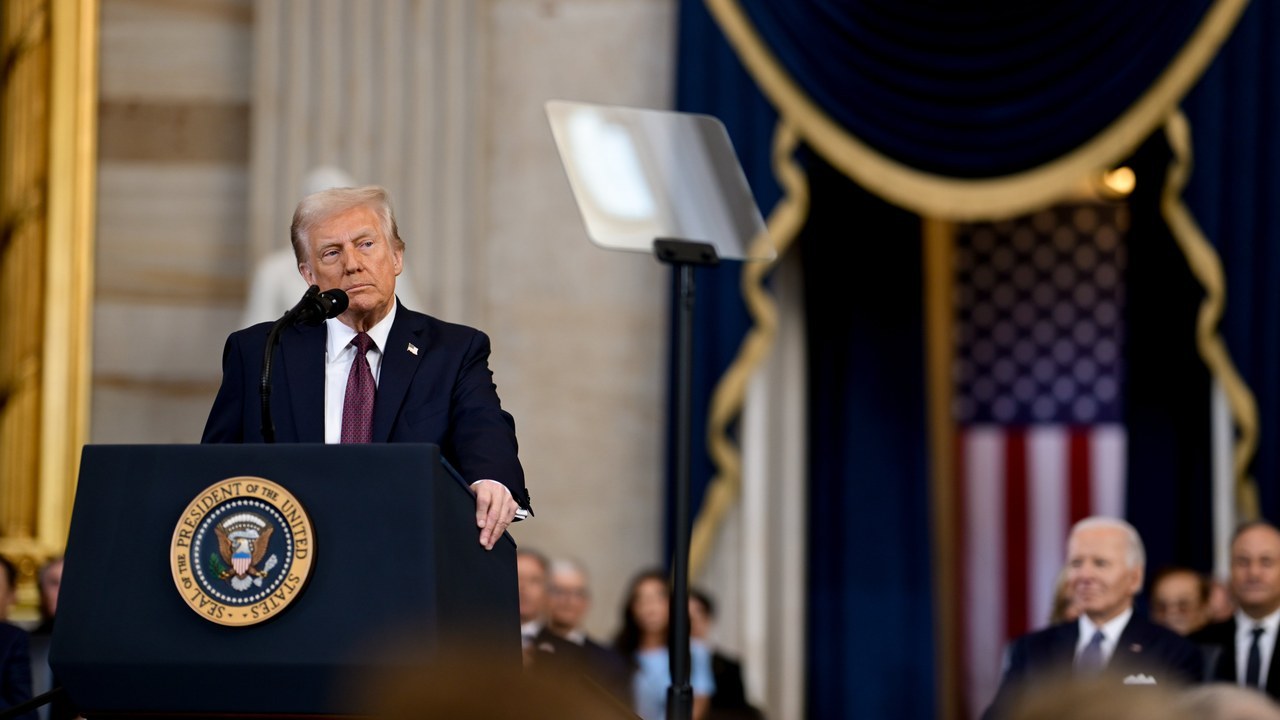
President Donald Trump has declared a national emergency over the foreign supply chain feeding America’s electric grid, invoking emergency economic powers to confront what the administration calls a deliberate vulnerability built into imported power equipment. The order, signed August 26, 2026, gives the Secretary of Energy sweeping new authority to block, condition, or unwind foreign-made hardware sitting inside the substations and transmission lines that keep the lights on. It is the third major grid-security action of Trump’s second term, and by far the most aggressive. The stated fear is not simply unreliable equipment — it is equipment built to be quietly compromised from the outside.
The “Digital Backdoors” Finding at the Center of the Emergency
The order’s own text lays out the threat in blunt terms: foreign-produced bulk-power system equipment “might have digital backdoors built into their systems that allow a foreign country to access that equipment remotely.” That single sentence is the legal and rhetorical foundation for everything that follows — a declaration that ordinary substation hardware, if sourced from the wrong supplier, could double as a remote-access tool for a hostile government.
Trump grounded the finding in the emergency order, invoking the International Emergency Economic Powers Act, the National Emergencies Act, and his authority under 3 U.S.C. 301. The order argues the stakes have grown since his first term, when a similar 2020 action targeted the same concern: the explosive growth of data centers, artificial intelligence infrastructure, and advanced manufacturing has made the country more dependent on abundant, reliable electricity than ever, which means an attack or supply disruption now carries far larger consequences than it once did.
What the Order Actually Bans Starting Now
The prohibition itself is narrower than the headline emergency declaration suggests, and precision matters here. Section 2 bars only transactions initiated after the signing date, and only when the Energy Secretary makes an affirmative finding on two fronts: that the equipment traces back to a “Covered Foreign Entity,” and that the specific transaction poses an undue risk of sabotage, unauthorized remote access, supply disruption, or catastrophic harm to critical infrastructure or the economy. Nothing is banned automatically. No vendor has been named. No product has yet been blocked. The order builds the legal machinery; it does not yet operate it.
That machinery is built to reach deep into the guts of the grid. The order’s definition of covered equipment spans reactors, capacitors, substation transformers, utility-scale and grid-connected inverters, battery energy storage systems, generators, turbines, high-voltage circuit breakers, protective relaying, metering equipment, and industrial control systems, along with the software and firmware running inside them. It applies specifically to the bulk-power system — transmission lines carrying 69,000 volts or more — and explicitly excludes local distribution equipment, meaning the wiring at the neighborhood level is untouched.
The Authority to Order Existing Equipment Ripped Out
The more consequential power sits in Section 2(b), and it applies retroactively to equipment already humming inside American substations. The Energy Secretary may impose conditions on the continued use of foreign-manufactured or foreign-operated equipment installed before the order — including requirements to identify, isolate, monitor, secure, disconnect, replace, or remove it outright. Before ordering anything disconnected or removed, the Secretary must weigh reliability, safety, the availability of secure replacements, and continuity of service, and the order explicitly allows phased compliance rather than an immediate rip-and-replace mandate. Nothing has been disconnected, isolated, or removed as of this writing; the order authorizes that outcome, it does not itself execute it.
Covered Foreign Entity: The Arms-Embargo List Doing the Targeting
The order never names China, or any other country, directly. Instead, Section 5(e) defines a “Covered Foreign Entity” as a country — or any person under that country’s jurisdiction or direction — that is already subject to a U.S. arms embargo or sanctions regime under the International Traffic in Arms Regulations, or one the Energy Secretary separately determines is acting against U.S. national security or foreign policy interests. That embargo list is public and enforced by the State Department: under 22 C.F.R. 126.1, China sits alongside Belarus, Burma, Cuba, Iran, North Korea, Syria, and Venezuela as a country subject to a standing “policy of denial” for defense articles and services.
That legal architecture leaves the Energy Department wide latitude without forcing the White House to single out Beijing by name in the order itself — a structure that lets the administration act against the supplier relationships driving the concern while keeping the formal designation process, and any diplomatic fallout, inside the executive branch’s own rulemaking rather than the text of the emergency declaration.
The Escape Valves Written Into the Order
The order is not a blunt embargo, and the exits built into it will matter as much as the prohibitions. Section 2(c) lets the Energy Secretary design or negotiate mitigation measures that can serve as a precondition for approving a transaction, or an entire class of transactions, that would otherwise be barred outright — a settlement lane for suppliers willing to accept conditions rather than lose the American market. Section 2(e) goes further, authorizing the Secretary to build and publish a list of pre-qualified equipment and vendors exempt from the prohibition altogether, while preserving his power to regulate even those transactions later. And Section 2(f) closes the obvious loophole in advance, banning any transaction structured to evade the order and any conspiracy formed to violate it.
Congress gets paperwork rather than a vote. Section 6 directs the Secretary to submit recurring and final reports on the emergency under the National Emergencies Act and IEEPA, the standard reporting obligation that attaches to every emergency declared under those statutes. That is the entire legislative role the order contemplates — a reminder that the emergency-powers architecture Trump is using here was designed to let a president act first and explain afterward.
The Regulatory Clock Now Running
The emergency declaration takes effect immediately, but the teeth come later, on a fixed federal timeline. Section 3(b) gives the Energy Secretary 120 days from signing — into late December 2026 — to publish the rules and regulations that will actually define which vendors and products get flagged, and how the Covered Foreign Entity determination gets applied in practice. Separately, Section 4 gives the Secretary 180 days to recommend rewriting the Federal Acquisition Regulation so that federal energy-infrastructure purchases prioritize American-manufactured equipment, after which the FAR Council has another 90 days to consider proposing those changes for public comment. Every one of those determinations runs through Energy Secretary Chris Wright, whose department has spent the term pushing to pull critical-materials and energy-infrastructure supply chains back inside American borders.
This is not Trump’s first swing at the grid. In January 2025 he declared a national energy emergency over supply and reliability, and in April 2025 he signed a separate order aimed at keeping existing power plants online rather than letting them retire under state and federal environmental rules — an action the administration credits with keeping 17,000 megawatts of capacity, enough to supply roughly 12.75 million homes, from going offline, according to the White House’s own accounting. The bulk-power equipment order extends that same instinct from keeping plants running to controlling what physically sits inside them, on the theory that a grid dependent on foreign-built hardware cannot be called secure no matter how much capacity it has.
This article was researched and drafted with the assistance of AI tools, with sourcing verified against primary government documents.

Grant Mercer covers market dynamics, business trends, and the economic forces driving growth across industries. His analysis connects macro movements with real-world implications for investors, entrepreneurs, and professionals. Through his work at The Daily Overview, Grant helps readers understand how markets function and where opportunities may emerge.


