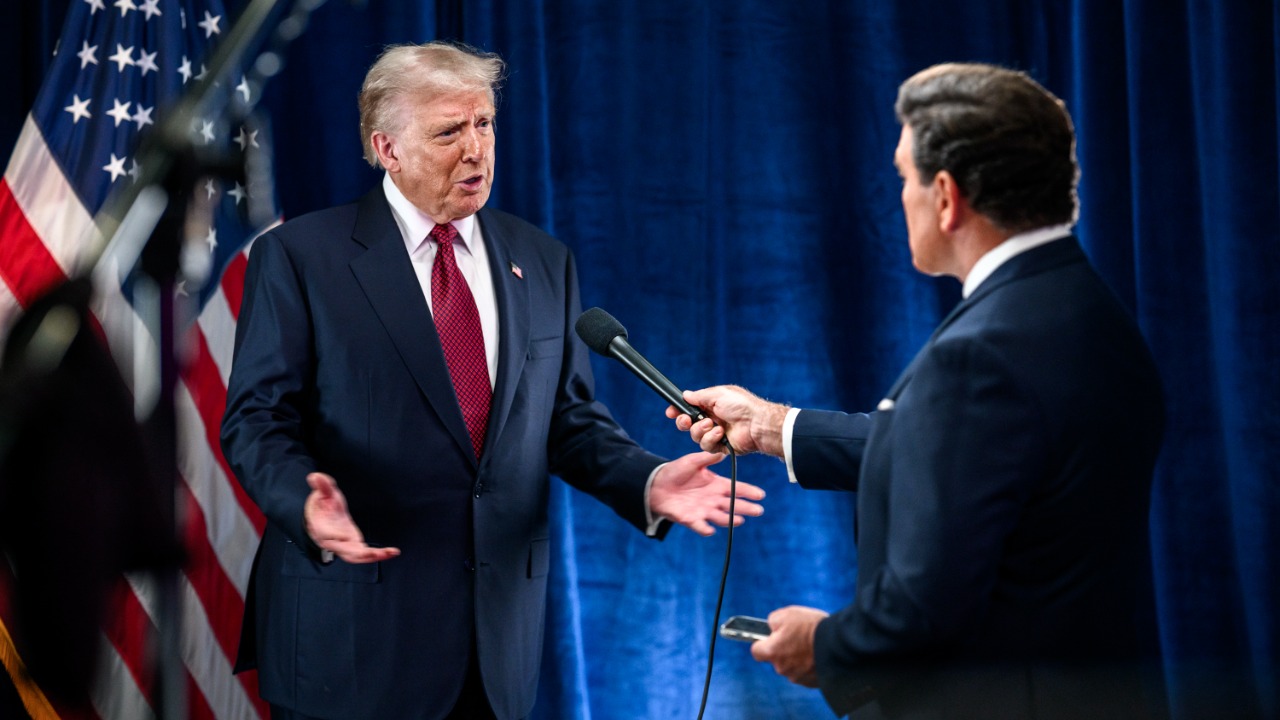
President Donald Trump’s promise of $2,000 “tariff dividend” checks has shifted again, with his latest comments raising as many questions as they answer. After months of teasing direct payments funded by new trade duties, the president is now signaling a different timeline and a looser approach to how, and even whether, those checks will arrive. For households trying to plan around a potential $2,000 windfall, the message is increasingly that nothing is guaranteed.
Trump’s new update folds together three volatile threads: his evolving rhetoric on the size and timing of the $2,000 rebates, his claim that he can bypass Congress to send them, and fresh legal and budget warnings about using tariff revenue this way. I see a widening gap between the political appeal of the promise and the practical hurdles that still stand in the way.
Trump’s evolving promise: from bold pledge to mixed signals
When President Donald Trump first floated the idea, he framed the $2,000 payments as a straightforward dividend from his tariff strategy, telling voters that higher duties on imports would be routed back to “the people of our country” in the form of checks. In more recent remarks, he has repeated that headline figure of $2,000 but paired it with caveats about income limits and eligibility, saying the money would likely exclude “high income people” and focus on lower and middle earners instead, according to his latest comments. That shift alone turns what sounded like a universal payout into a more targeted benefit, with no clear income thresholds yet defined.
At the same time, President Donald Trump appears to be walking back how firm the commitment really is. One detailed account notes that Trump has given “mixed messages” about whether the $2,000 tariff rebate checks are locked in, even as he continues to tout them at rallies and in interviews. In a separate interview, President Trump even seemed to forget he had promised $2,000 tariff dividend checks at all, reportedly responding “When did I do that?” when pressed on the pledge, before delaying the expected timeline again, according to a detailed account. That kind of rhetorical drift is a key reason many policy analysts now treat the checks as a political talking point rather than a concrete program.
What the latest “update” actually changes on timing
Trump’s newest update centers on timing, but it still stops short of a firm delivery date. Earlier this year, he told supporters that the $2,000 tariff dividend checks would arrive in 2026, framing them as a near-term benefit of his trade agenda. Subsequent reporting on the shifting timeline notes that when Trump has been pressed on when Americans might actually see the $2,000 “tariff dividend” payment, he has tended to answer in broad terms about “this year” or “soon” rather than giving a specific month or quarter. That vagueness has only grown as legal and logistical questions pile up.
In a separate briefing focused on when people might “get the $2,000 tariff dividend check,” Trump again updated the timeline but left the details hazy, saying that while he wants the checks to go out in 2026, the exact path to obtain the money “remains unclear,” according to a timeline summary. Another overview of when $2,000 tariff checks could arrive underscores that even within the administration, officials are cautious about promising a date, stressing that several steps still have to fall into place before any payments can be processed, as reflected in a separate analysis. Taken together, the “update” is less a new schedule than a reminder that the calendar is still fluid.
Can Trump really bypass Congress to send the checks?
The most striking element of Trump’s latest remarks is his insistence that he does not need Congress to act before sending out $2,000 tariff rebate checks. During a lengthy press briefing on Tues, he suggested that he could direct the Treasury to issue the payments unilaterally, even though the Constitution gives Congress the power of the purse, according to a detailed account. In a separate report, the President now says Congress does not need to get involved at all, even as legal experts point out that Congress traditionally must authorize new spending programs, as highlighted in coverage of the president’s claim that he can “do that unilaterally.”
Inside his own orbit, there are signs of disagreement. Economic adviser Kevin Hasset has publicly indicated that the $2,000 tariff rebate checks would be up to Congress to decide, stressing that lawmakers would need to authorize such a program, according to a recorded exchange. Another detailed breakdown of whether Trump can send out $2,000 tariff rebate checks without Congress notes that several administration officials have cautioned that the president’s authority is limited and that any attempt to bypass Congress could face immediate legal challenges, as reflected in a separate assessment. I read those internal splits as a warning sign that even if Trump orders agencies to prepare for payments, the legal green light is far from assured.
Who would qualify, and how would the money be funded?
On eligibility, Trump has started to sketch out a narrower target than his early rhetoric implied. In one televised appearance, he said, “But we’d do a $2,000 dividend to the people of our country,” then immediately added that he would “probably set a limit” with an income cap “where it made sense,” signaling that higher earners would be excluded, according to a detailed account. Another report on his latest $2,000 stimulus comments notes that President Donald Trump has repeatedly said the checks would go to low and middle income households and would exclude “high income people,” reinforcing the idea of a means-tested benefit rather than a universal one, as summarized in his recent remarks. Without specific thresholds, though, families cannot yet know whether they would qualify.
On funding, Trump has framed the checks as a dividend from tariff revenue, not as new deficit spending. He has previously floated the idea of using part of the government revenue generated by his new tariffs and returning it to taxpayers, saying that the tariffs are bringing in large sums that can be shared with the public, according to a detailed summary. Independent budget analysis has estimated that Trump’s tariffs may bring in between $200 billion and $300 billion annually, a range that underpins the idea that there is enough money to fund $2,000 payments but also raises concerns about the broader economic impact and the risk of dramatically increasing the federal deficit, as outlined in a fiscal review. That tension between political promise and budget reality is likely to shape any eventual legislation.
Legal, economic and court headwinds to $2,000 checks
Beyond internal debates, there are structural obstacles that could slow or block the $2,000 tariff dividend idea. A recent fact check on January relief payments notes bluntly that no new federal stimulus checks are approved for January 2026 and that Trump’s proposed $2,000 tariff dividend has no finalized legislation behind it, according to The Brief. Another overview of whether Americans are getting a stimulus check in 2026 underscores that, so far, the $2,000 tariff dividend remains a proposal rather than an enacted program, even as Trump continues to talk about it as if it were imminent, as detailed in a broader update. For now, there is no line item in law that authorizes the Treasury or IRS to send out these specific checks.
More From The Daily Overview
*This article was researched with the help of AI, with human editors creating the final content.

Cole Whitaker focuses on the fundamentals of money management, helping readers make smarter decisions around income, spending, saving, and long-term financial stability. His writing emphasizes clarity, discipline, and practical systems that work in real life. At The Daily Overview, Cole breaks down personal finance topics into straightforward guidance readers can apply immediately.

